


Antique Decorative Gong
An antique decorative gong brings resonant tone and striking craftsmanship into a room, spanning styles from Victorian Gothic Revival to Chinese Export.
Antique Decorative Gong
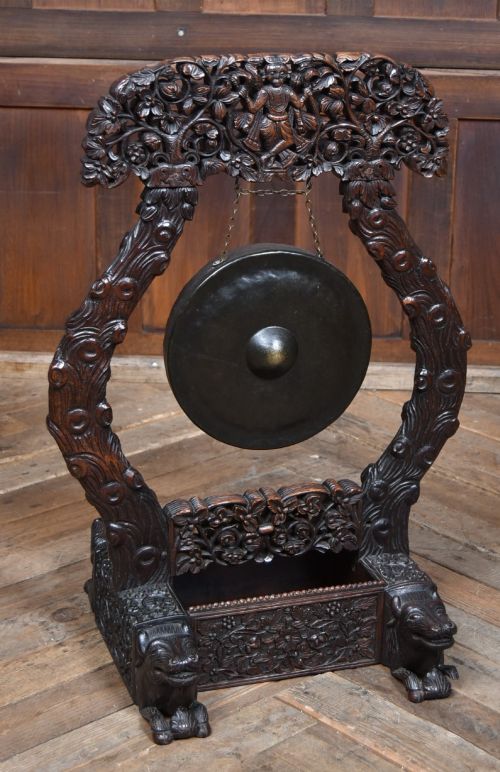
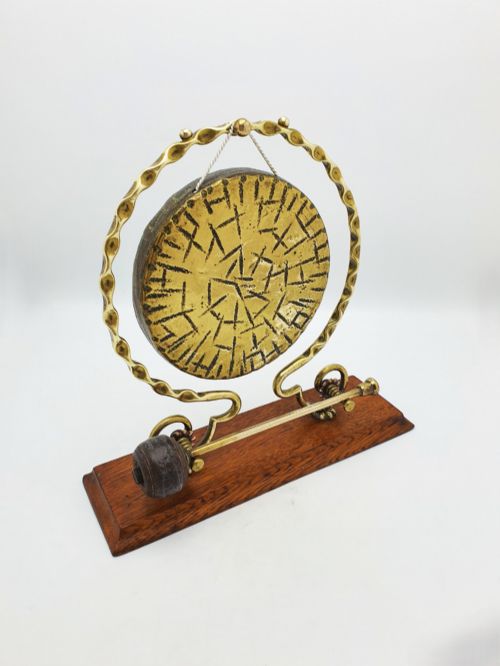
An antique decorative gong is a resonant percussion piece designed for domestic use, frequently serving as a dinner gong or table gong to summon household members. These objects combine metal percussion discs or bells with elaborate frames made from materials such as oak, carved hardwood, and brass.
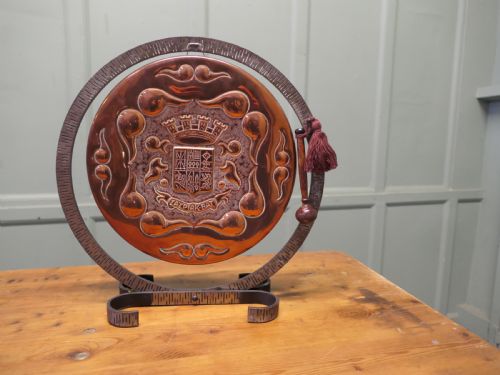
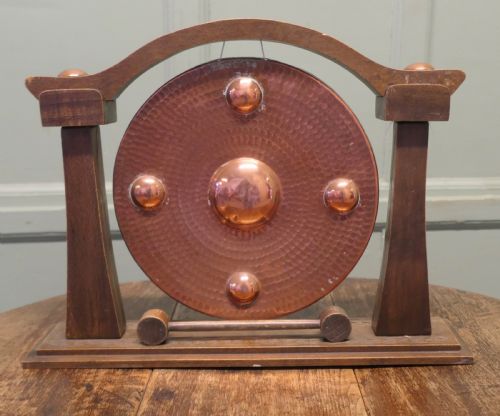
Buyers browsing this selection will most commonly encounter brass and copper iterations mounted upon wooden bases, alongside pieces featuring distinct stylistic influences like Art Nouveau, Arts and Crafts, and Anglo-Indian design. Formats range from compact tabletop versions to wall-hung chimes accompanied by handheld strikers.
The historical scope covers items originating from the nineteenth century through the early twentieth century, including Victorian, Edwardian, and later 1930s examples. Makers utilised diverse regional aesthetics, incorporating carved dragons, elephants, and Basque folk art details into the overall composition.
How they were made
The construction of an antique decorative gong relies upon metalworking techniques applied to brass, bronze, copper, and silver plate. Artisans hand hammered sheets of metal or cast bells and gongs to achieve specific acoustic properties.
Supporting structures demand woodworking skills, utilising oak, carved hardwood, and mango wood to form sturdy bases and hanging frames. Cord and iron elements often secure the suspended bell or gong, allowing proper vibration when struck.
Styles represented in the inventory span Victorian, Art Nouveau, Arts and Crafts, Gothic Revival, Anglo-Indian, Chinese Export, and Basque Folk Art.
What varies in quality
Quality in an antique decorative gong rests upon the depth and clarity of the metal's tone when struck, together with the precision of the hand hammering or casting. Superior examples exhibit a sustained resonance rather than a dull thud.
The artistry of the supporting frame separates standard production from finer work, visible in the sharpness of carved dragons, floral motifs, or figurative elements. Harmony between the metal gong and its wooden base indicates thoughtful design and construction.
The Antique Decorative Gong Glossary
- Dinner gong
- A percussion instrument mounted on a stand, traditionally utilised in large houses to announce meals. These assemblies typically incorporate a wooden base and a metal striker.
- Table gong
- A smaller version of the percussion instrument designed to sit upon furniture rather than hang from a wall or large floor stand. They often feature brass or copper plates paired with oak or carved wood.
- Handheld striker
- The mallet or small rod used to hit the gong or bell to produce sound. These implements frequently match the primary metal or wood of the main assembly.
- Silver plate
- A thin layer of silver applied to a base metal object. This finish appears on specific decorative pieces to provide a brighter visual appearance.
Antique Decorative Gong: Frequently Asked Questions
How do you clean an antique brass gong?
Dust the wooden base and metal surfaces gently with a soft dry cloth to preserve the finish and patina. Avoid harsh chemical cleaners that might strip historical patination from the brass or copper.
Test any mild cleaning solution on a hidden area first if deeper conservation is required. Professional advice should be sought for valuable silver plated or bronze pieces.
What is the difference between a table gong and a dinner gong?
Table gongs are smaller in scale and built to sit on a desk or side table within a room. Dinner gongs are generally larger assemblies intended to project sound across multiple rooms to gather people.
Both types utilise similar materials like brass, copper, and oak, but their physical footprint dictates where they were historically placed in a home.
Can these gongs still be played?
Most antique decorative gongs remain fully functional percussion instruments capable of producing a clear resonant tone when struck with the correct mallet. Care should be taken to use appropriate force and a suitable striker to protect the aged metal.
Regular playing does not typically harm sturdy pieces, provided the suspension cord and frame remain secure and stable. Inspect the cord periodically for signs of wear.
How do I identify the period of a gong?
Period attribution relies upon examining stylistic markers such as Art Nouveau sinuous lines, Arts and Crafts hand hammered textures, or Victorian Gothic Revival motifs. Materials like early silver plate or specific oak framing styles also provide chronological clues.
Look for any stamped maker marks or registration numbers on the metal components, though many items from this category remain unmarked.