




Antique Cutlery Storage
These antique cutlery storage pieces organise silver and steel with craftsmanship from Georgian times to the Art Deco era.
Antique Cutlery Storage
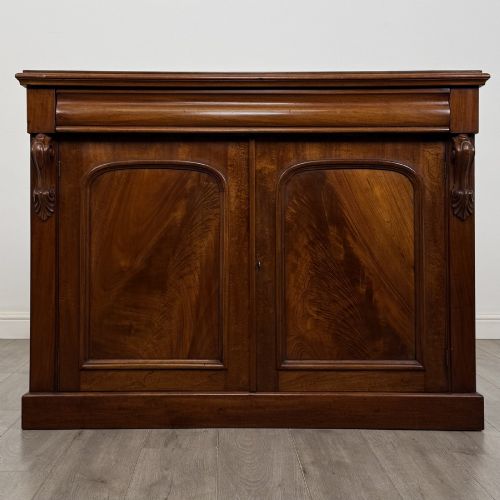
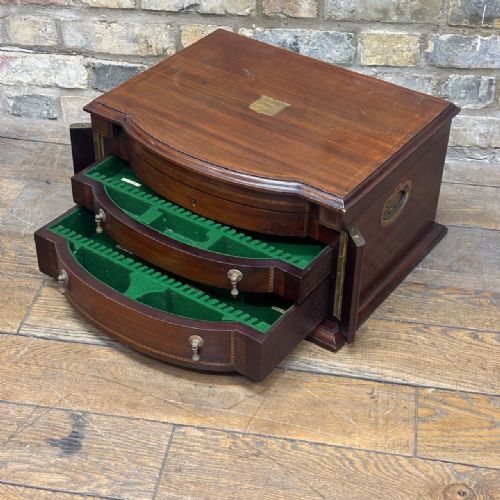
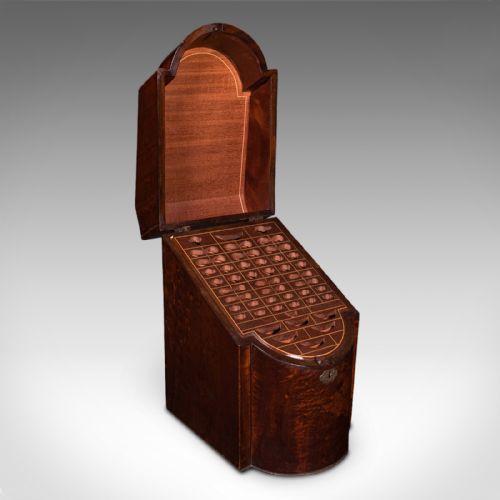
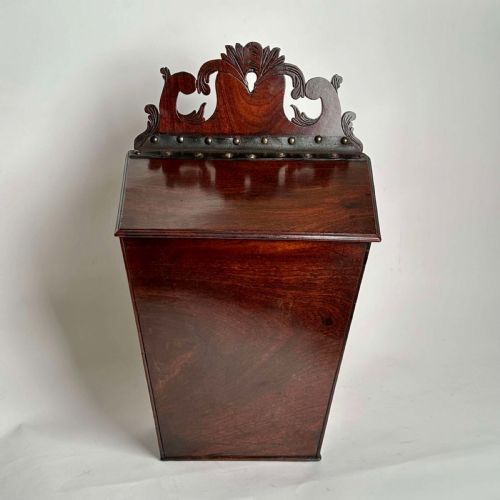
When you search for antique cutlery storage, you look for dedicated vessels designed to protect and present flatware and knives. The selection ranges from tabletop knife boxes and spoon racks to large sideboards, canteens, and fitted chests.
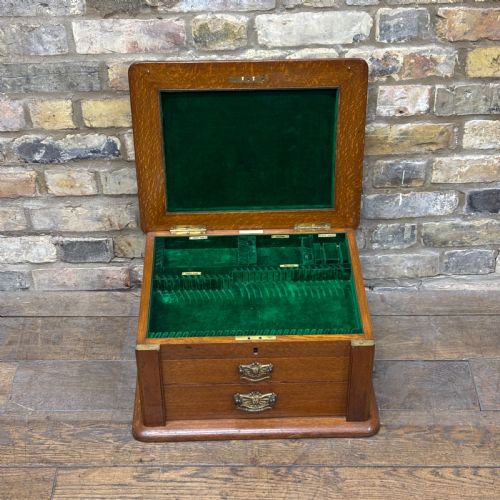
The pieces on this page span several centuries, with Georgian mahogany knife boxes, Victorian oak campaign trunks, and Art Deco canteens appearing most frequently. Each form reflects the dining customs and domestic organisation of its specific period.
Domestic spaces of the eighteenth and nineteenth centuries required robust containers to secure valuable silverware from tarnishing or loss. Today, these items serve the dual purpose of practical storage and period display within modern dining rooms.
Materials and construction methods
Cabinetmakers relied heavily on timbers such as mahogany, oak, and walnut, frequently selecting figured veneers and delicate wood inlay to adorn the exterior surfaces of finer knife boxes and chests.
Interior fittings often incorporated baize, felt, and brass handles or escutcheons to secure individual blades and spoons while providing a soft lining to prevent scratching.
Rustic pieces demonstrate simpler construction in pine or toleware, whilst sophisticated examples utilise serpentine fronts and dovetail joints executed by skilled workshops.
Antique Cutlery Storage Retail Price Guide 2026
Typical asking prices for cutlery storage among the pieces listed under this phrase on Sellingantiques today, from the lower quarter to the upper quarter. They describe what is for sale here now, not the wider market.
The listings show diverse storage forms spanning Georgian oak spoon racks to Art Deco canteens and Victorian campaign trunks.
Judging quality and craftsmanship
The distinction between standard utility boxes and superior examples rests in the selection of timber grain, such as burr walnut or figured mahogany, and the precision of the cabinetwork.
Original brass hardware, intact internal partitions, and functioning locks distinguish better-preserved items from those with replaced components or altered interiors.
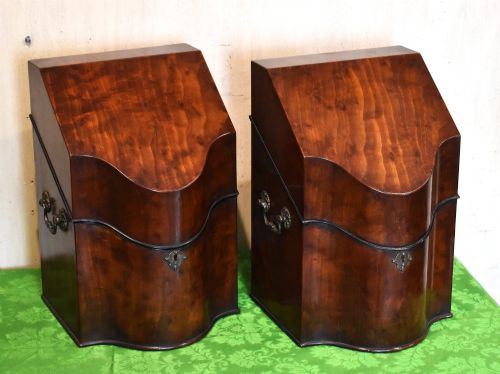
Proportion and decorative restraint govern the appeal of Georgian serpentine knife boxes, where graceful curves and subtle stringing elevate the piece far beyond basic utilitarian storage.
Walker & Hall, Sheffield
The Antique Cutlery Storage Glossary
- Serpentine front
- A convex centre section flanked by two concave curves, frequently seen on eighteenth-century knife boxes. This shaping requires expert woodworking skill to achieve balance and symmetry.
- Canteen
- A fitted box, chest, or cabinet designed specifically to hold a complete set of cutlery. These interiors usually feature slotted trays and compartments lined with felt.
- Escutcheon
- A flat plate surrounding a keyhole, typically cast in brass. It protects the surrounding wood from wear caused by the insertion of the key.
- Toleware
- Lacquered or enamelled metalware produced in tinplate. Maid's buckets and kitchen containers in this medium offered durable storage for domestic tasks.
- Campaign chest
- A portable trunk or box constructed in sections with recessed brass fittings for military travel. These pieces utilise sturdy timbers like oak or mahogany to withstand journeys.
Antique Cutlery Storage: Frequently Asked Questions
What is the difference between a knife box and a canteen?
A knife box generally refers to upright tabletop vessels from the Georgian period designed with vertical slots for individual blades. These often feature sloping lids and serpentine fronts intended to stand on side tables.
A canteen is a larger chest, box, or fitted cabinet created to hold an entire service of flatware including forks, spoons, and knives. Canteens often contain multiple tiered trays rather than upright compartments.
How do I care for antique wood storage boxes?
Keep wooden chests and boxes away from direct heat sources and drastic humidity changes to prevent the timber and veneer from splitting. Natural beeswax applied sparingly will maintain the lustre of mahogany, oak, and walnut.
Avoid using modern chemical polishes which can build up a sticky residue over time. A soft, dry cloth is usually sufficient for routine dusting of both exterior surfaces and internal felt linings.
Can modern cutlery fit into antique canteens?
Many antique canteens feature fitted slots and compartments sized precisely for nineteenth or early twentieth-century flatware patterns. Modern cutlery is frequently larger or heavier and may not slide easily into the original partitions.
It is advisable to check the internal dimensions and slot widths before attempting to store a contemporary dining service in a period box.
How do I identify a Georgian knife box?
Georgian knife boxes typically date from the eighteenth century and display characteristic tapered profiles with sloping lids hinged at the back. Finer examples utilise figured mahogany, subtle string inlay, and serpentine shaping.
Internal compartments are usually drilled and slotted to hold knives vertically with the handles uppermost for easy access during formal dining.