



Antique Cutlery Chest
An antique cutlery chest keeps flatware orderly and handsome, and these sturdy wooden boxes bring period character straight to the dining room.
Antique Cutlery Chest
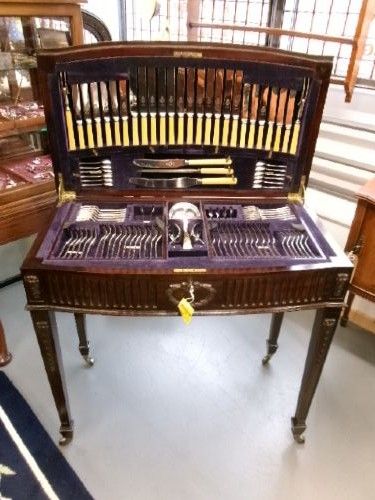
An antique cutlery chest encompasses freestanding canteens, table-top boxes, and fitted cabinets designed to store domestic flatware securely. Most examples encountered here date from the eighteenth, nineteenth, and early twentieth centuries, reflecting changing domestic habits across multiple eras.
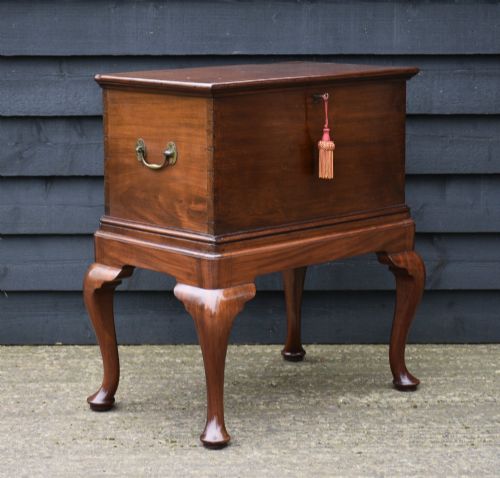
Common forms range from mahogany boxes on stands to oak campaign trunks and streamlined Art Deco canteens. Buyers frequently meet Edwardian and Victorian oak or mahogany pieces fitted with original silver-plated or steel sets.
Origins span formal Georgian dining rooms to early twentieth-century households, with makers such as Walker & Hall and Mappin & Webb appearing among the inventory. The primary function remains straightforward: protection and presentation of fine tableware.
Materials and Construction
Cabinet makers relied predominantly on dense hardwoods like mahogany, oak, and burr walnut to construct durable frames capable of supporting heavy flatware. These timbers often featured brass mounts, drop handles, and fitted interiors lined with velvet or felt to cushion individual pieces.
Interior architecture matters as much as the exterior timber, utilising tiered trays, slotted divisions, and brass hardware to keep each fork and spoon secure. Metal components combine solid silver mounts on earlier boxes with durable silver plate and steel within later canteens.
Antique Cutlery Chest Retail Price Guide 2026
Typical asking prices for cutlery chest among the pieces listed under this phrase on Sellingantiques today, from the lower quarter to the upper quarter. They describe what is for sale here now, not the wider market.
Evaluating Craftsmanship
Quality rests in the precision of the internal joinery and the selection of figured timbers such as burr walnut or figured mahogany. Superior chests display thoughtful division layouts and robust brass hinges that withstand frequent use without sagging.
The presence of complete, matched flatware sets alongside original locking mechanisms and keys elevates an individual piece. Lesser examples might feature simplified interiors or later replacements where original trays once stood.
Walker & Hall·Mappin & Webb
The Antique Cutlery Chest Glossary
- Canteen
- A fitted box, chest, or cabinet designed specifically to hold a set of cutlery. These interiors use shaped slots and baize linings to organise each spoon and fork.
- Silver Plate
- A base metal, often nickel or copper, coated with a thin layer of pure silver. This technique offered durable domestic tableware without the cost of solid silver.
- Campaign Trunk
- A portable storage chest constructed for travel, typically featuring reinforced brass corners and robust carrying handles. Victorian examples often housed silverware for journeys.
- Bow Front
- A convex curved cabinet front that swells outward in the centre. This decorative shaping appears on select eighteenth-century cutlery boxes.
Antique Cutlery Chest: Frequently Asked Questions
How do I date a cutlery chest?
Dating relies on timber choice, construction methods, and hardware styles. Georgian boxes often display curved fronts and solid silver mounts, while Victorian and Edwardian examples lean toward robust oak canteens. Nomenclature and maker stamps provide additional clues to the era of manufacture.
Where were these chests used?
These chests originated in formal dining rooms, country houses, and substantial town residences where large sets of silverware required secure storage between meals. Some robust oak variants were built as campaign trunks for travel, allowing households to transport table silver safely.
How do I care for the wood?
Maintain timber surfaces by keeping them away from direct sunlight and sudden temperature shifts that cause wood to dry and split. Regular gentle dusting preserves the finish without harming the patina. Interior velvet and felt linings benefit from careful vacuuming using a low-suction attachment.