
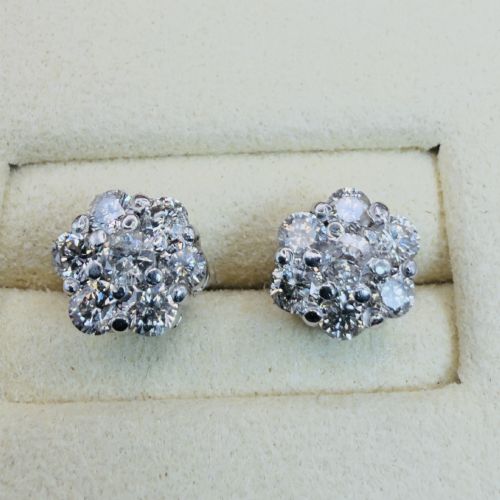
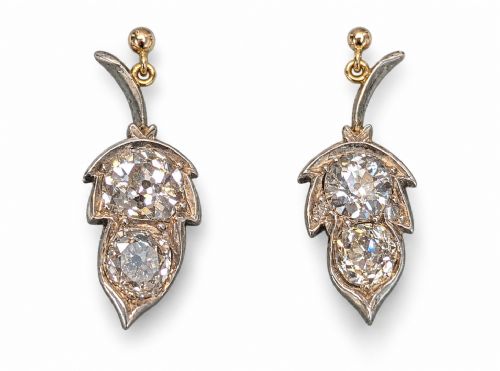
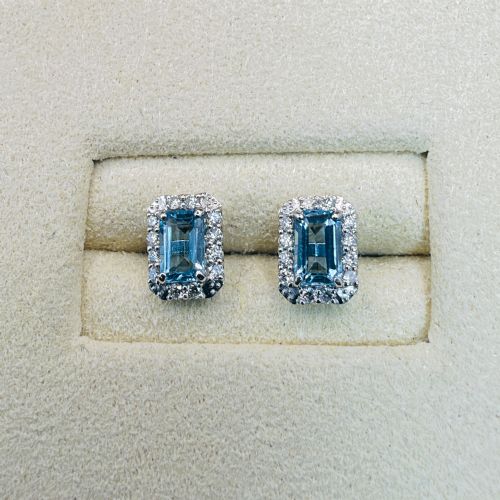
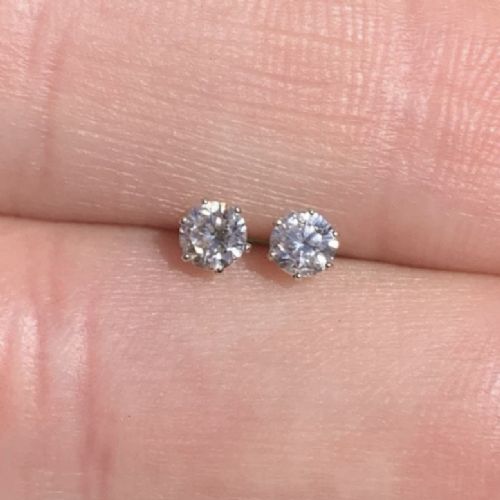
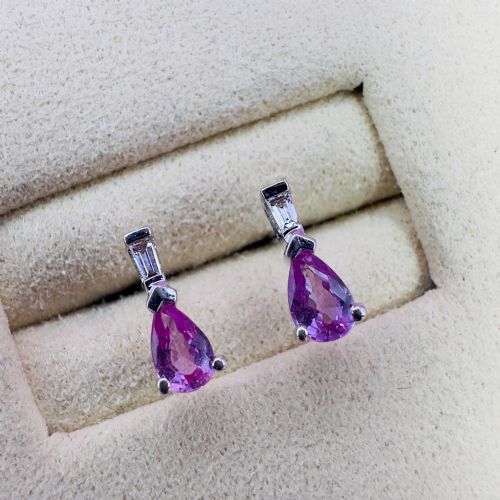
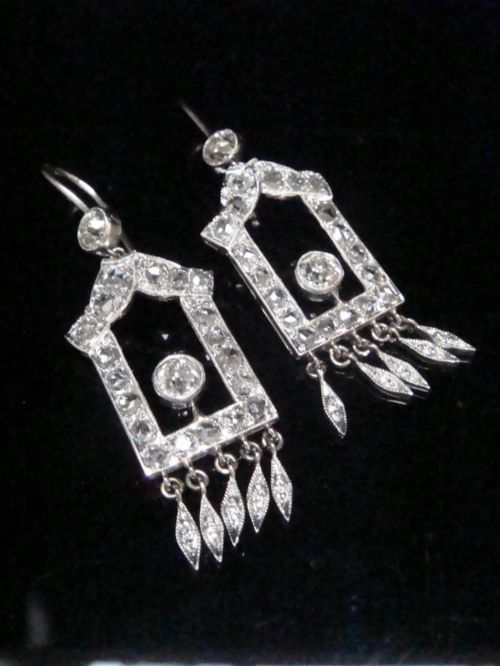


Antique Cut Diamond Earrings
Antique cut diamond earrings combine historic hand-cut stones with precious metals, offering a tangible link to Georgian, Victorian, Edwardian, and Art Deco design.
Antique Cut Diamond Earrings
Antique cut diamond earrings encompass a range of historical styles, from Georgian night and day drops to Victorian cluster studs and Edwardian platinum creations. Buyers seeking antique cut diamond earrings find pieces designed to catch candle or gaslight, featuring softer facets than modern brilliant cuts.
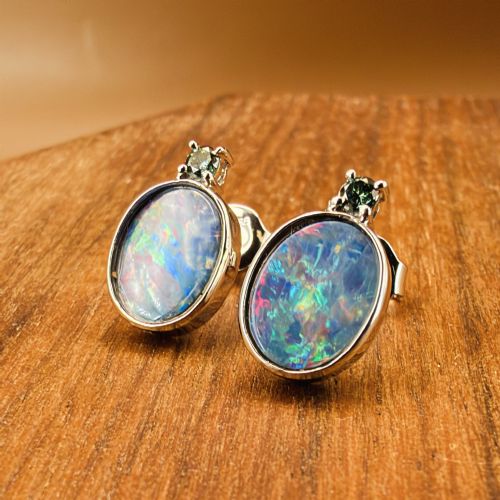
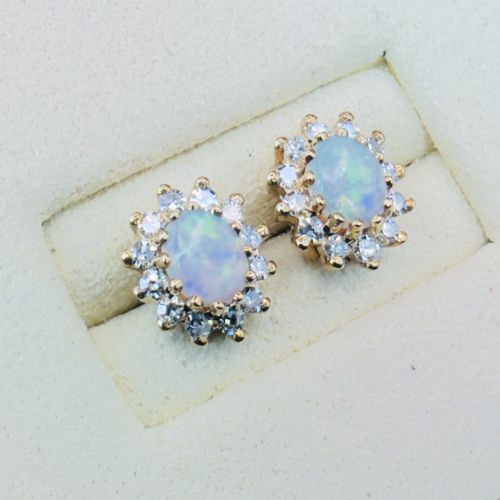
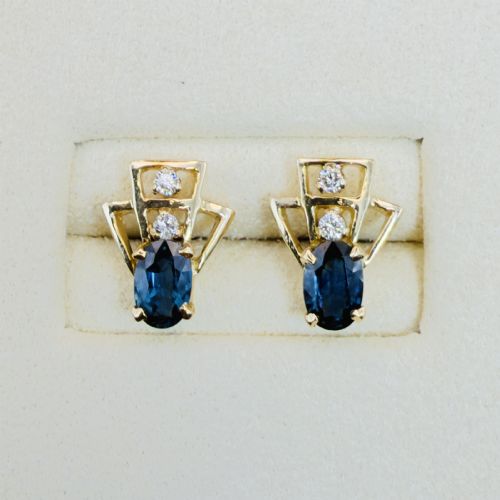
The inventory on this page spans several eras, with Edwardian and Art Deco drop earrings appearing frequently alongside Victorian floral and cluster designs. These pieces range from simple stud configurations to elaborate multi-stone dangles incorporating sapphires, rubies, and pearls.
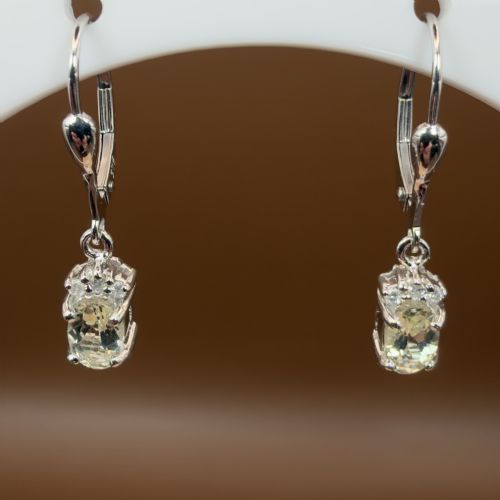
Forms include secure clip-ons, screw-backs, lever-backs, and traditional pierced-ear drops. Each configuration reflects the fashion and fastening technology of its respective decade, maintaining historical integrity while serving modern wearers.
How They Were Made
Goldsmiths utilised combinations of yellow gold, rose gold, silver, and platinum to mount the stones. Silver was frequently topped onto gold in earlier periods to provide a bright, white foil that enhanced the appearance of the diamonds.
Diamonds were shaped by hand using older cutting styles such as old mine cuts, rose cuts, and old European cuts. These techniques produced fewer, wider facets compared to modern stones, resulting in a distinctive pattern of light return.
Settings relied on closed or open-backed foil work in Georgian times, evolving into delicate claw settings, millegrain borders, and pierced platinum frameworks during the Edwardian and Art Deco periods.
Some Victorian earrings feature tiny integrated tassels that swish as you move, proving that the Victorians understood the joy of kinetic jewellery.
What Varies in Quality
Quality depends upon the precision of the hand-cutting and how well the stones match within a pair. Stones shaped by hand exhibit natural variations in symmetry and proportion, influencing the overall visual harmony.
The integrity of the metalwork defines the calibre of the piece, particularly the delicacy of the millegrain edges and the security of the claw or bezel settings. Original, unaltered settings preserve the historical character more effectively than later repairs.
The integration of secondary gems, such as natural pearls, emeralds, rubies, or sapphires, dictates the distinction of the piece. Well-matched colour stones paired with clean old cut diamonds elevate the piece within its period.
The Antique Cut Diamond Earrings Glossary
- Old European cut
- A round diamond shape popular from the late nineteenth century to the mid-twentieth century, featuring a small table, high crown, and large culet.
- Rose cut
- An early diamond cut characterised by a flat base and a domed crown covered in triangular facets, resembling an unopened rosebud.
- Millegrain
- A decorative jewellery technique involving a line of tiny, raised metal beads along the edge of a setting.
- Dormeuse
- A style of French antique earring designed to be comfortable enough to wear while sleeping, often featuring a secure lever-back closure.
- Night and day earrings
- Convertible eighteenth-century earrings where a lower drop section could be detached for daytime wear, leaving a simpler stud for the evening.
Antique Cut Diamond Earrings: Frequently Asked Questions
How do I care for antique earrings?
Clean these pieces gently with soft brushes and mild soapy water, avoiding harsh ultrasonic cleaners that can dislodge foil-backed stones or damage natural pearls.
Store them individually in lined boxes to protect delicate platinum or gold millegrain work from friction against other jewellery.
Can I convert screw-back earrings to posts?
Conversion is possible through a skilled jeweller, though altering the original fixings may diminish the historical integrity and collectable nature of the piece.
Many buyers prefer to preserve the original mechanisms, such as dormeuse levers or screw-backs, as evidence of period manufacturing techniques.
What is an old mine cut diamond?
An old mine cut is an early form of diamond cutting common in Georgian and Victorian jewellery, possessing a somewhat square outline with rounded corners.
These stones display a smaller table and a deeper pavilion than modern brilliant cuts, producing a distinctive, chunky pattern of light.
How do I distinguish Edwardian from Art Deco earrings?
Edwardian pieces generally employ platinum and yellow gold with lace-like filigree, floral motifs, and softer, romantic designs inspired by garlands.
Art Deco examples lean towards geometric precision, symmetry, and stark contrasts, frequently utilising calibration-cut sapphires and heavy platinum frameworks.