


Antique Cut Crystal Salts
Antique cut crystal salts bring brilliance to the dining table, offering collectors practical vessels shaped by Georgian, Victorian, and Edwardian hands.
Antique Cut Crystal Salts
When you search for antique cut crystal salts, you encounter small open cellars, fitted pairs, and larger cruet sets designed to hold condiments. These vessels appear across multiple eras, including Georgian, Victorian, Edwardian, and Art Deco periods, often accompanied by silver or silver-plated mounts.
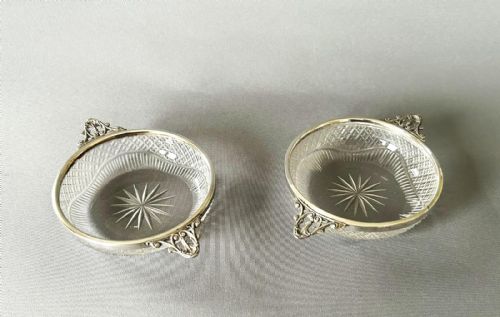
The pieces on this page span individual table salts with draped swag designs, pairs with fitted saucers, and multi-bottle cruet frames. Materials range from lead crystal and ruby glass to sterling silver and silver plate.
How they were made
The glass elements rely on heavy lead crystal or cut glass, shaped by hand-cutting techniques that create sharp facets and deep prisms. Artisans combined these glass bodies with hallmarked sterling silver rims, collars, or fitted saucers.
Silver plating and cast metal frames support more complex condiment sets, whilst individual pieces feature direct silver mounts secured to ruby glass or clear crystal bodies.
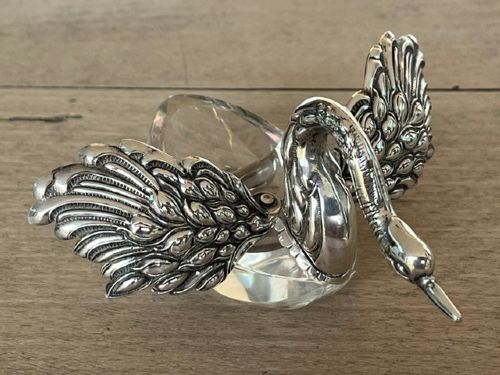
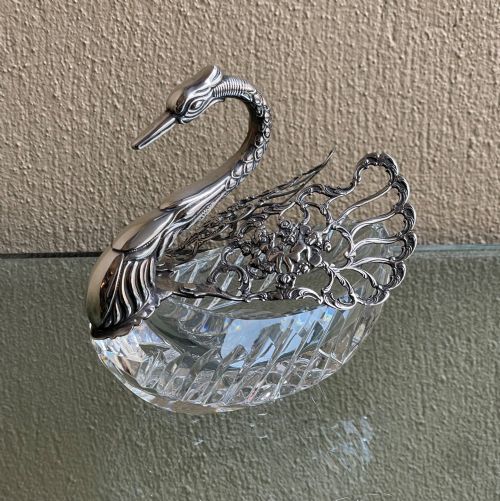
Some Victorian and mid-century examples take the form of swimming swans with movable silver wings, holding salt upon their backs.
What varies in quality
Quality rests in the crispness of the glass cutting and the weight of the lead crystal. Heavy, deeply faceted hand-cut pieces separate themselves from lighter, simpler pressed glass alternatives.
The metal components further distinguish the tier of the piece, with hallmarked sterling silver mounts and fitted silver saucers marking out finer examples than standard silver-plated frames.
The Antique Cut Crystal Salts Glossary
- Lead crystal
- A dense glass variety containing metal oxide that increases weight and refractive brilliance. This material allows for deep, sharp hand-cutting.
- Cruet set
- A matched collection of condiment bottles or salt cellars held within a metal frame. These sets often incorporate multiple cut glass bottles for oil, vinegar, and sauces alongside open salts.
- Sterling silver
- An alloy consisting of ninety-two point five percent silver by mass. It frequently forms the rims, spoons, and frames accompanying the crystal vessels.
- Silver plate
- A base metal coated with a thin layer of silver. This technique provided the decorative finish for many Edwardian and Victorian condiment frames.
- Ruby glass
- A deep red coloured glass produced by adding gold or copper compounds to the molten batch. It appears on scent bottles and select table wares.
Antique Cut Crystal Salts: Frequently Asked Questions
How do I date an antique salt?
Dating relies on the style of the glass cutting, the form of the silver mounts, and any visible hallmarks. Georgian examples often display deep geometric cutting, whereas Edwardian and Art Deco pieces introduce lighter frames and heavier lead crystal.
Examining the base for pontil marks and wear helps confirm age. Silver components with legible town marks and date letters provide the most precise chronological indicator.
What is the difference between a salt cellar and a cruet set?
A salt cellar is an individual open vessel designed to hold salt at the table, sometimes accompanied by a small spoon or fitted saucer. A cruet set is a larger collection of bottles and cellars held within a central frame.
Cruet sets often combine mustard pots, oil cruets, and salt cellars into a single portable unit. Both forms utilise cut crystal and silver components across the Georgian and Victorian eras.
Are these salts safe for daily use?
Most antique cut crystal salts remain structurally sound for holding dry condiments like salt or pepper. Modern table use is common, provided you wash them by hand rather than placing them in a dishwasher.
Avoid using antique crystal for acidic liquids over extended periods. Gentle handling preserves both the sharp hand-cut facets and the older silver plating.