
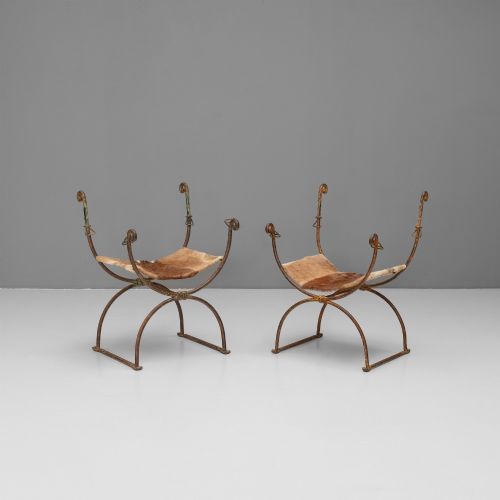


Antique Curule Seat Pair
These antique curule seat pairs bring X-frame geometry and folding lines into a room, offering classical lineage and sturdy seating.
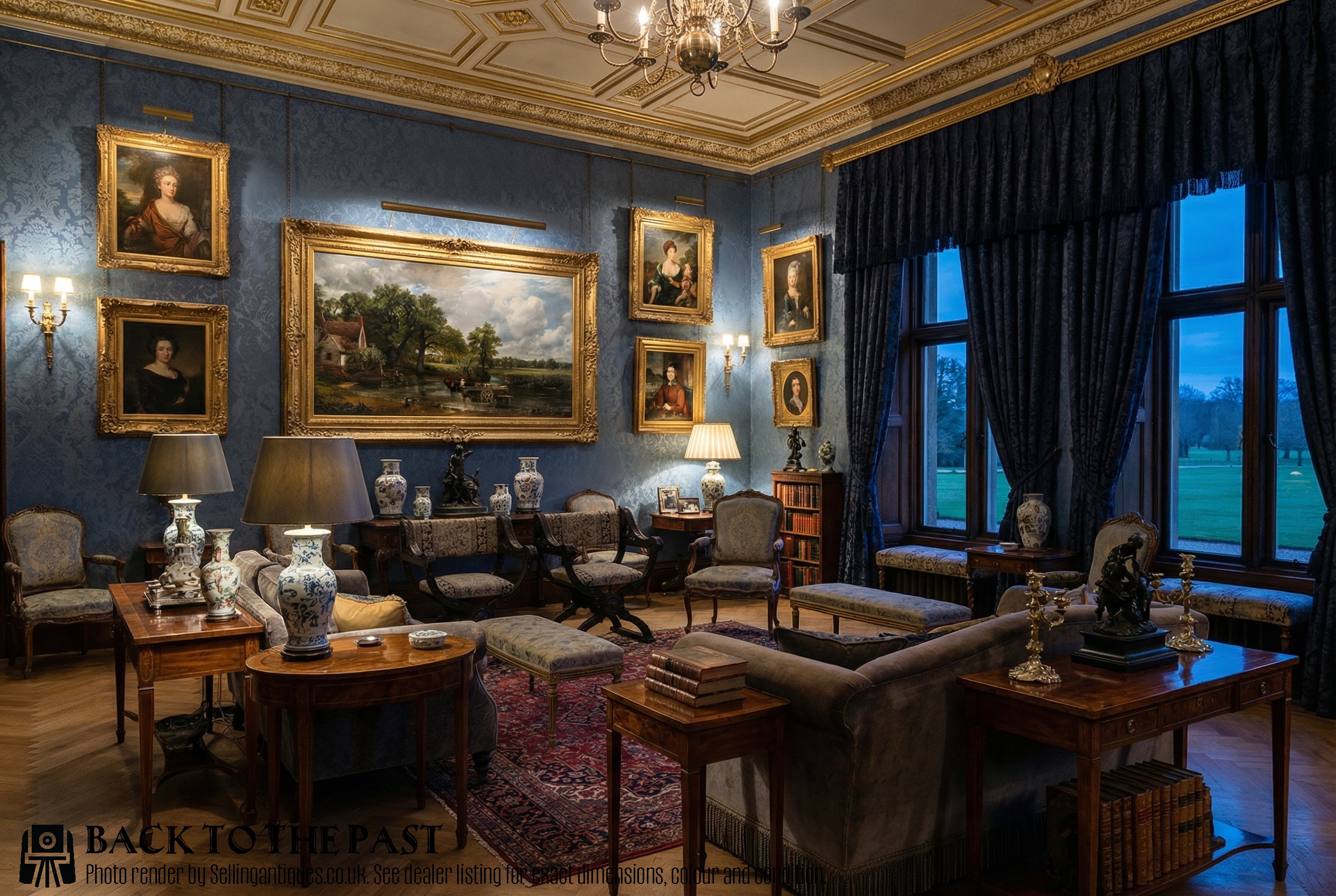
Antique Curule Seat Pair
An antique curule seat pair comprises matching folding-frame stools, benches, or armchairs modelled on ancient Roman magistral seats. When browsing these pieces, a buyer encounters forms rooted in X-shaped supports that fold or simulate folding.
The selection on this page ranges across the 18th Century, Regency, Victorian era, and 1930, taking shape as side chairs, armchairs, window seats, stools, and hall chairs. Renaissance Revival, Gothic Revival, Georgian, and Italian Empire styles dominate the design vocabulary.
Most examples rely on timber frames such as mahogany, oak, walnut, or painted wood, occasionally paired with wrought iron or brass details. Upholstery materials include textile, fabric, and cowhide to complete the seating surface.
Materials and construction
Joiners and cabinetmakers built these frames from dense hardwoods like mahogany, oak, and walnut, ensuring the intersecting X-shaped legs could bear considerable weight. Iron and brass components reinforced stress points or provided structural pivots on specific folding models.
Surface decoration involved carving, painting, or finishing the timber to match prevailing historicist revivals. Seats and backrests received textile, fabric, or cowhide coverings, secured by traditional methods to the rigid frame.
Listed objects span armchairs, window seats, stools, side chairs, hall chairs, and benches.
Assessing quality
The sophistication of the carved detail and the integrity of the intersecting frame members dictate the standing of a pair. Crisp joinery at the pivot or cross-joints separates finer workshop output from simpler utilitarian seating.
Material selection also defines the tier, with finely figured mahogany or seasoned oak outlasting softer painted woods. The authenticity and preservation of original textile, fabric, or cowhide upholstery contribute substantially to the character of the piece.
White, Allom & Co.
The Antique Curule Seat Pair Glossary
- Curule
- An ancient Roman X-shaped seat form lacking a backrest, later revived in furniture design as a symbol of authority. This geometry underpins the entire category.
- Savonarola
- A specific type of folding armchair featuring multiple intersecting wooden slats that form a curved back and X-frame base. It is frequently associated with Renaissance Revival styles.
- Dante chair
- An X-frame armchair typically featuring padded arms and a back strip, structurally similar to the Savonarola but often more rectilinear. It appears within Renaissance Revival groupings.
- X-frame
- A structural arrangement where two diagonal supports cross to form an X shape, providing both support and a mechanism for folding. This is the defining trait of the curule design.
- Regency
- A British design period spanning the early 19th century, known for drawing inspiration from classical Greek, Roman, and Egyptian motifs. Pieces from this era often display clean lines and dark hardwoods.
Antique Curule Seat Pair: Frequently Asked Questions
What is a curule seat?
A curule seat is a chair or stool built around an intersecting X-frame design, originating from ancient Roman folding seats.
Over the centuries, cabinetmakers revived this classical shape during periods like the Renaissance and the 19th century revival movements.
How were these chairs used?
These pieces served as portable seating, occasional chairs, or formal hall seats in grand interiors, often moved about as needed.
Their distinctive X-frame construction allowed certain models to fold flat for storage or transport, though many surviving examples are fixed frames.
Where do these seats originate?
The listings show diverse origins, including British Georgian and Regency workshops, French cabinetmakers, Austro-Hungarian makers, and Italian makers.
Stylistic revivals such as Renaissance Revival and Gothic Revival shaped how makers interpreted the classical forms across Europe.
How do I date a pair?
Dating relies on identifying the prevailing stylistic vocabulary, such as Georgian, William IV, or Victorian Gothic Revival, alongside the timber species used.
Materials like mahogany, oak, and wrought iron, combined with period construction techniques, help narrow the era of manufacture.