



Antique Curb Bracelet
An antique curb bracelet offers solid gold links and secure padlocks or dog clips, bringing traditional charm to everyday wear.
Antique Curb Bracelet
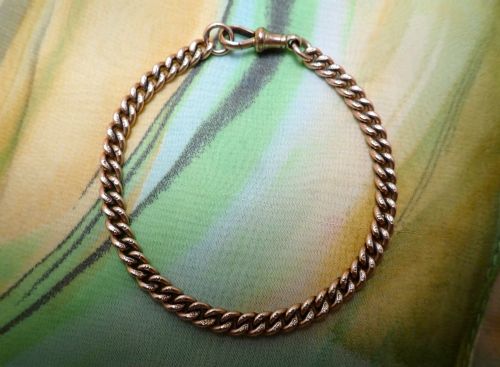
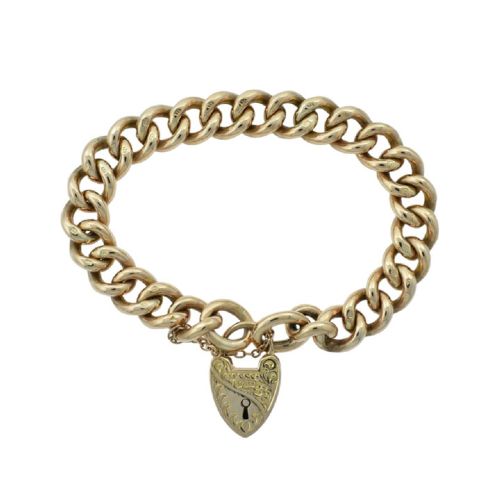
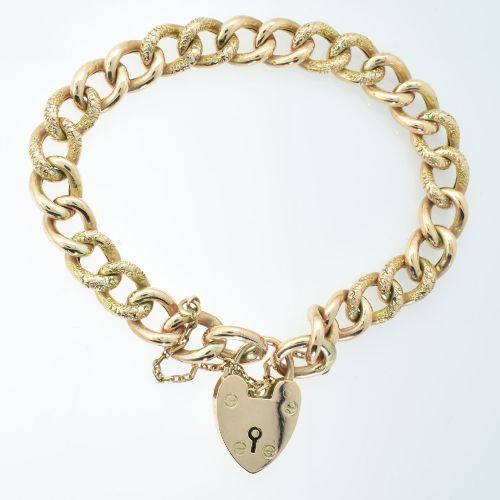
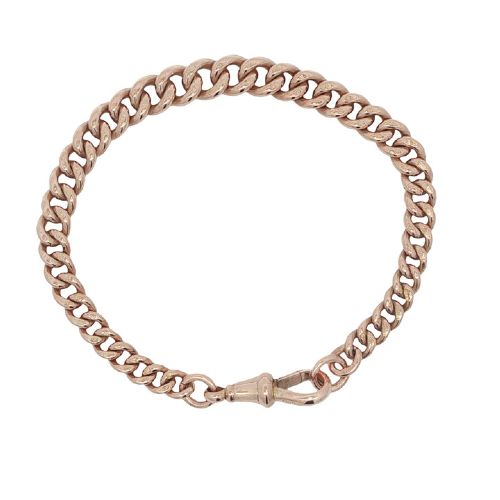
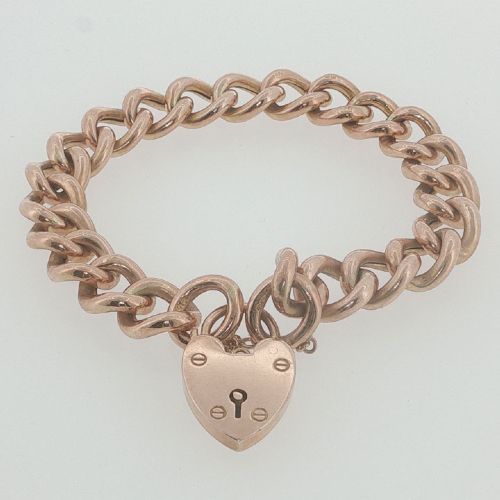
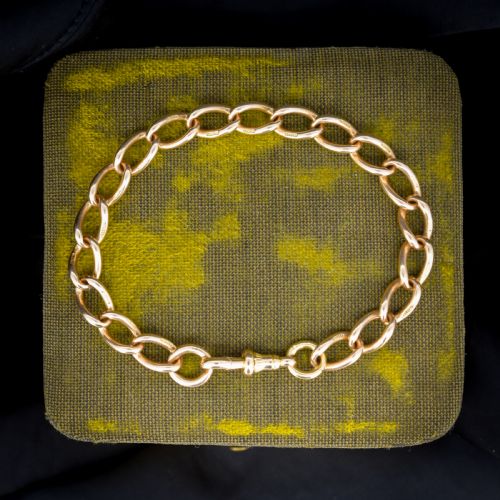
An antique curb bracelet consists of interlocking metal links that lie flat against the wrist, forming a sturdy and continuous band. This specific style ranges across Victorian, Edwardian, and vintage twentieth-century periods, capturing the substantial metalwork characteristic of those eras. Buyers frequently encounter rose gold and yellow gold variants alongside sterling silver examples.
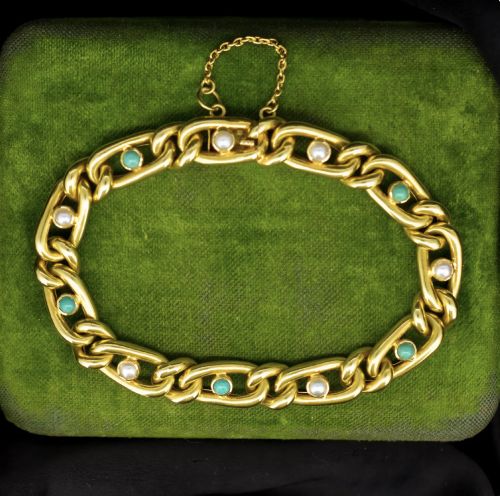
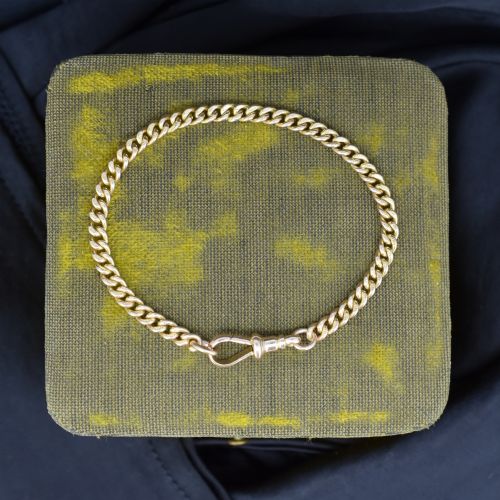
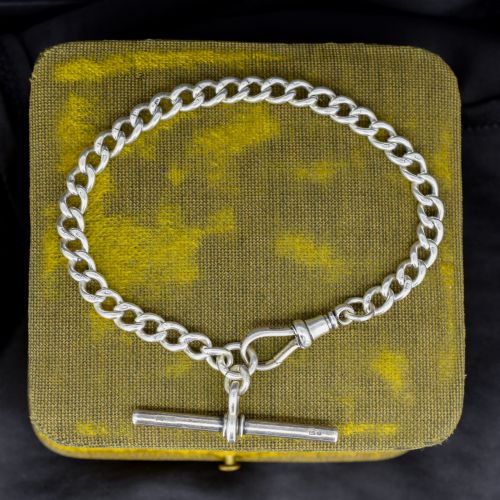
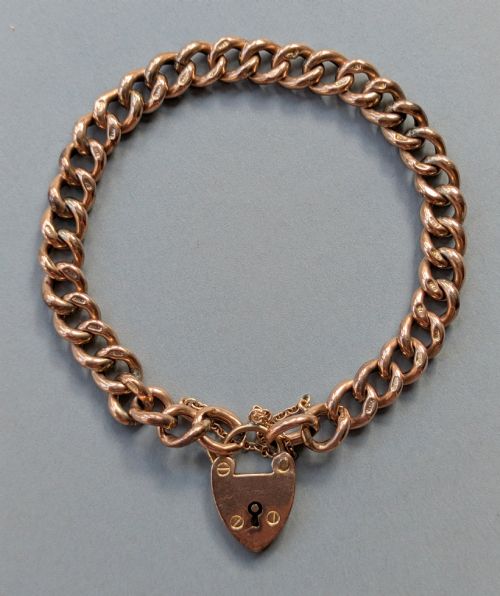
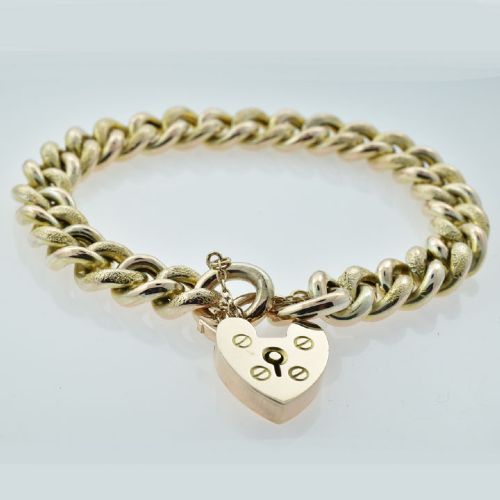
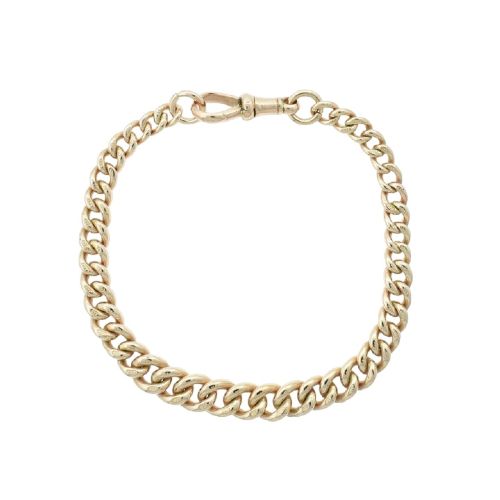
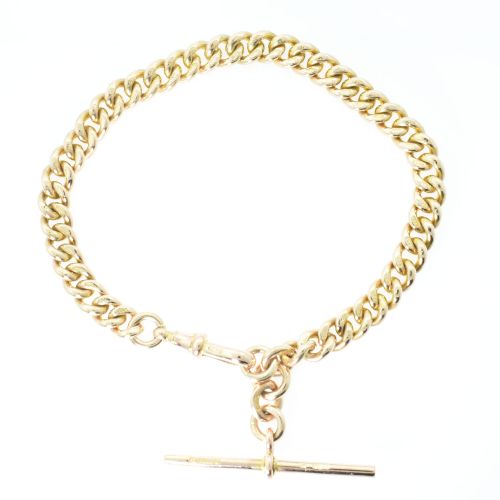
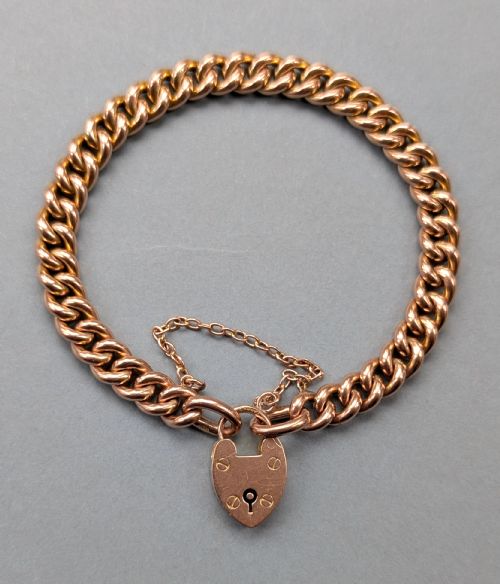
The most common version met on this page is the nine carat rose gold curb chain, often secured with a heart padlock or a dog clip. These pieces frequently incorporate half engraved surface patterns, graduations in link size, or integrated Albert chains and T-bars. Gemstones such as turquoise, pearls, rubies, and diamonds occasionally appear set into the central clasps or link motifs.
Originating as pocket watch chains or substantial daily adornments, these bracelets survive in various lengths and weights. The selection includes specific regional hallmarks, such as Chester marks on Edwardian chains, alongside pieces featuring safety chains and fitted boxes. Every variant relies on the fundamental strength of the interlinked curb design.
Materials and construction
Metals form the structural foundation of an antique curb bracelet, with nine carat rose gold, fifteen carat gold, eighteen carat yellow gold, and sterling silver dominating the recorded pieces. Goldsmiths fashioned these links from solid or substantial hollow stock, soldering or joining each section to create flexible yet resilient chains capable of daily wear. The warmer hue of rose gold predominates in Victorian and Edwardian examples.
Surface decoration and gemstone settings elevate the basic link construction through hand engraving and secure bezel or flush settings. Artisans applied half engraved scrolling patterns to the face of individual links, and incorporated seed pearls, turquoise cabochons, rubies, and rock crystals into knot work or padlock clasps. Functional elements like dog clips and heart padlocks were engineered with internal spring mechanisms to secure the heavy chains.
Antique Curb Bracelet Retail Price Guide 2026
Typical asking prices for curb bracelet among the pieces listed under this phrase on Sellingantiques today, from the lower quarter to the upper quarter. They describe what is for sale here now, not the wider market.
Listings feature periods spanning from the late Victorian era through Edwardian times up to the nineteen sixties, utilising nine carat rose gold, fifteen carat gold, and sterling silver.
Assessing quality and craftsmanship
The standard of an antique curb bracelet depends heavily upon the weight and solidity of the metal links and the integrity of their joints. Heavier grams and fully solid links distinguish top tier examples from lighter hollow alternatives that dent or wear thin over decades of use. Precision in the interlocking mechanism ensures the chain drapes smoothly without twisting or catching on fabric.
Clasp reliability and the crispness of hand engraving mark the difference between standard production and superior craftsmanship. Original heart padlocks, dog clips, and matching safety chains that retain strong spring action and clear hallmarks elevate a piece. Furthermore, clean, deep half engraved patterns demonstrate the hand of a skilled artisan rather than a hurried stamp.
The Antique Curb Bracelet Glossary
- Curb link
- A type of jewellery chain formed of identical interlocking links that have been twisted and flattened to lie evenly on the skin. This design provides exceptional tensile strength.
- Dog clip
- A spring loaded swivel clasp commonly used on watch chains and heavy bracelets to secure the piece to a ring or padlock. It operates via a thumb lever that retracts an internal spring gate.
- Albert bracelet
- A heavy chain style adapted from nineteenth-century watch chains originally designed to attach pocket watches to garments. They often retain integrated T-bars and padlocks.
- Padlock clasp
- A heart shaped locking mechanism functioning as the primary closure for many nineteenth and early twentieth century bracelets. It usually opens by pressing a concealed spring tension bar.
- Seed pearl
- A very small, naturally formed or cultured pearl used in clusters or crescents to decorate nineteenth century clasps and settings. They are typically half drilled and glued or pegged onto a metal backing.
Antique Curb Bracelet: Frequently Asked Questions
What is an antique curb bracelet?
An antique curb bracelet is a wrist ornament made from interlocking, flattened metal links dating from the Victorian, Edwardian, or later periods. They are built for durability and frequently feature functional clasps like padlocks or dog clips.
These pieces reflect the robust jewellery manufacturing techniques of the nineteenth and early twentieth centuries, utilising yellow gold, rose gold, and silver.
Can I wear mine every day?
Solid gold and silver antique curb bracelets are generally robust enough for daily wear, provided the links and clasp mechanisms remain in good condition. Checking the jump rings and safety chains regularly will prevent accidental loss.
Lighter hollow variants require more care to avoid crushing or denting the individual links during strenuous activities.
How do I date my bracelet?
Dating relies on hallmarks, clasp styles, and overall construction traits typical of periods like the Victorian era or Edwardian years. Chester and other regional assay office marks provide specific year letters when present.
Design elements such as half engraved patterns, turquoise cabochons, and specific dog clip shapes also help narrow down the decade of manufacture.