


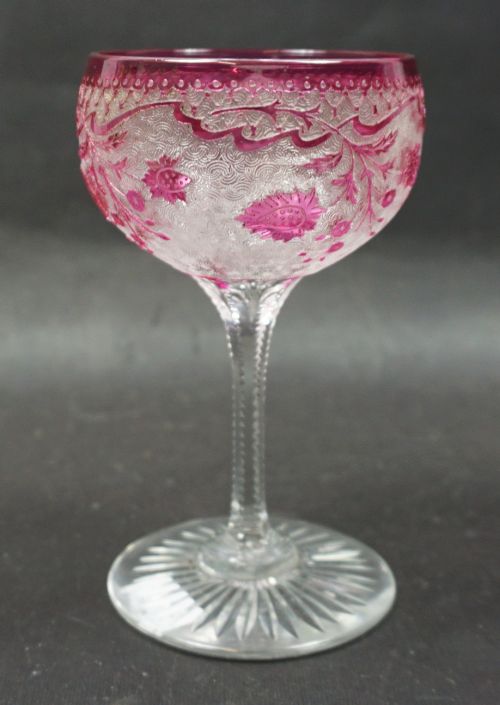





Antique Crystal Hock
These antique crystal hock glasses bring colour and height to a table, combining generous bowls with long stems designed for German white wines.
Antique Crystal Hock
When you search for antique crystal hock glasses, you encounter tall vessels designed for Germanic white wines, featuring coloured bowls or elaborate overlay glass. The pieces on this page span the Victorian era through the Art Deco and Art Nouveau periods, taking the form of wine glasses, roemers, and tall decanters.
You are most likely to meet coloured or cased glass examples from makers such as Baccarat, St Louis, and Theresienthal, alongside Bohemian engraved pieces. These tall stems lift the drink above the table, often paired with green, amber, or multi-coloured cased crystal layers.
The selection ranges from matched sets of six to pairs and individual glasses, showing styles from Jugendstil floral enamels to geometric Art Deco cuts. They serve as both decorative table settings and functional glassware for hock and other white wines.
How they were made
Maker workshops utilised lead crystal and lead glass blown into moulds or free-blown before undergoing extensive hand-cutting. This process created deep facets that caught the light, particularly on pieces featuring cased glass and overlay glass.
Decoration involved wheel engraving, gold leaf application, and hand-painted enamel floral motifs fired onto the surface. Skilled artisans cut through coloured overlay layers to reveal the clear crystal underneath, producing sharp contrasts in tone.
Antique Crystal Hock Retail Price Guide 2026
Typical asking prices for crystal hock among the pieces listed under this phrase on Sellingantiques today, from the lower quarter to the upper quarter. They describe what is for sale here now, not the wider market.
Materials recorded across the inventory include gold leaf, enamel, and cased glass in green and amber tones.
What varies in quality
Quality rests in the depth and precision of the hand-cutting and engraving across the crystal surface. Superior pieces show crisp edges on every facet and well-balanced proportions between the tall stem and the generous bowl.
The complexity of the enamel decoration and the richness of the cased colour layers separate standard production from finer workshop output. Consistency across a matched set of six dictates the desirability of the grouping.
Baccarat·St Louis·Theresienthal
The Antique Crystal Hock Glossary
- Hock glass
- A tall-stemmed wine glass traditionally used for Germanic white wines. The elongated form allows space for the aromatic notes of the wine to develop.
- Cased glass
- Glass composed of two or more distinct layers of different colours fused together during blowing. Artisans cut through the outer layer to expose the contrasting colour beneath.
- Roemer
- A traditional Germanic wine glass featuring a large bowl set on a cylindrical stem decorated with applied glass prunts. They frequently appear in green or amber glass.
- Enamel decoration
- Opaque glass paints applied to the surface of the vessel and subsequently fired in a kiln. This technique introduces vibrant floral and geometric motifs onto clear or coloured crystal.
Antique Crystal Hock: Frequently Asked Questions
What is a hock glass used for?
These glasses were traditionally used for hock, a British term for German Rhine wines. The long stem kept the hand away from the bowl, preventing the wine from warming.
The tall capacity also accommodated the generous pours typical of formal Victorian and Edwardian dining.
How do I date antique crystal hock glasses?
Dating relies on stylistic clues such as Art Nouveau curves, Jugendstil florals, or geometric Art Deco cuts. Maker marks, pontil scars on the base, and the specific hues of cased glass also help establish the era.
Comparing the manufacturing technique against known production periods narrows down the decade of manufacture.
Can I use antique hock glasses for dining?
Many collectors use these glasses for special dinners, though hand washing is essential to preserve the enamel and gold leaf. Lead crystal requires careful handling to avoid chipping the delicate rims and long stems.
Store them securely in cabinets with adequate headroom for their height.
Why are some hock glasses coloured?
Coloured bowls and cased glass layers helped protect light-sensitive white wines while adding decorative splendour to the table. Different houses utilised specific hues like green, amber, and ruby to distinguish their glassware ranges.
The coloured overlay allowed craftsmen to cut away sections to create striking two-tone visual effects.