

Antique Crystal Ceiling Fixture
An antique crystal ceiling fixture catches the light and warms a room with the soft refraction of cut glass and polished metal.
Antique Crystal Ceiling Fixture
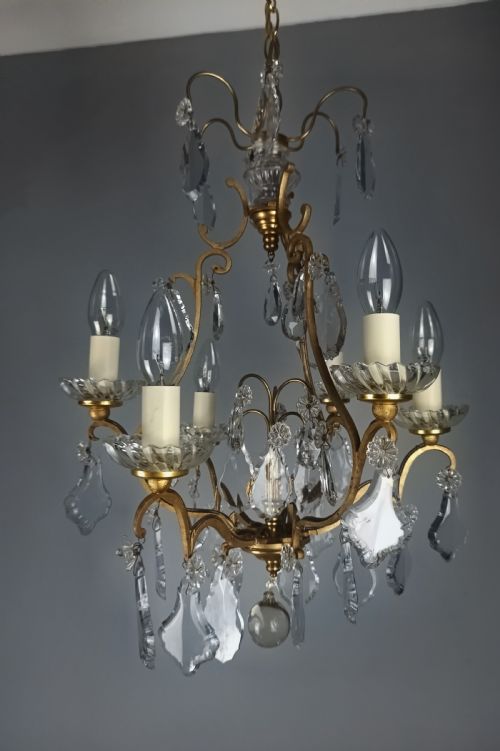
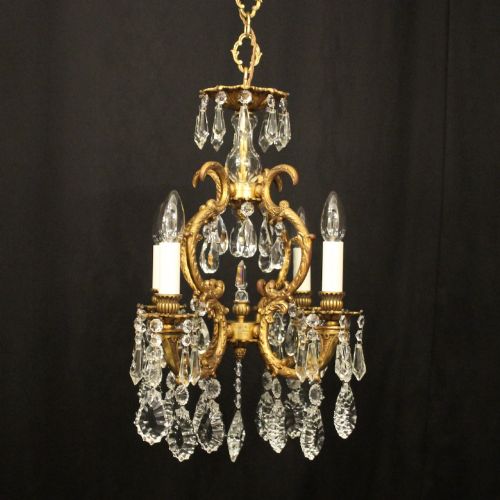
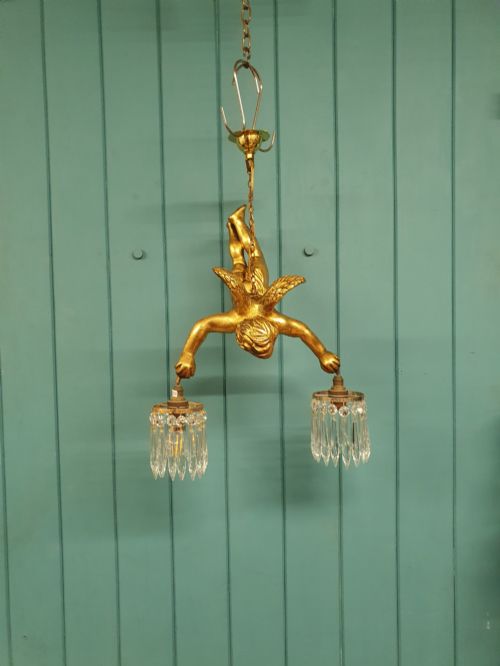
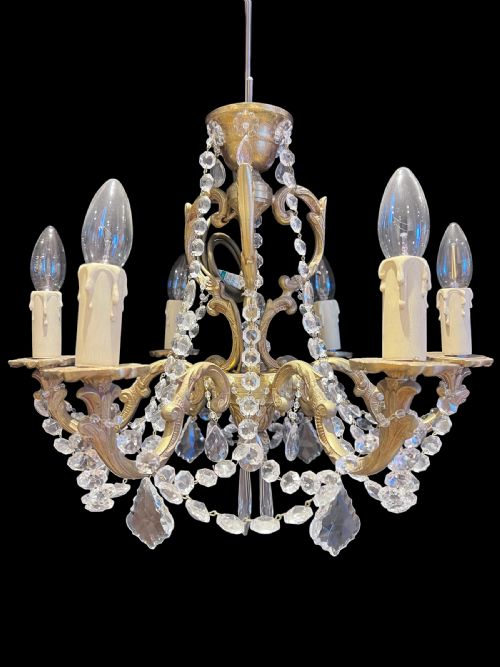
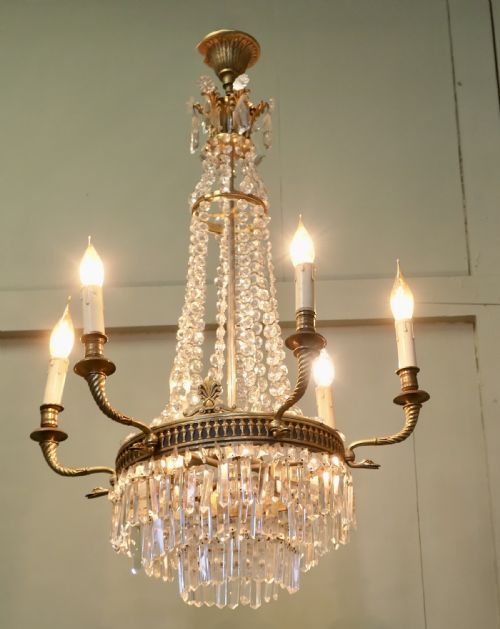
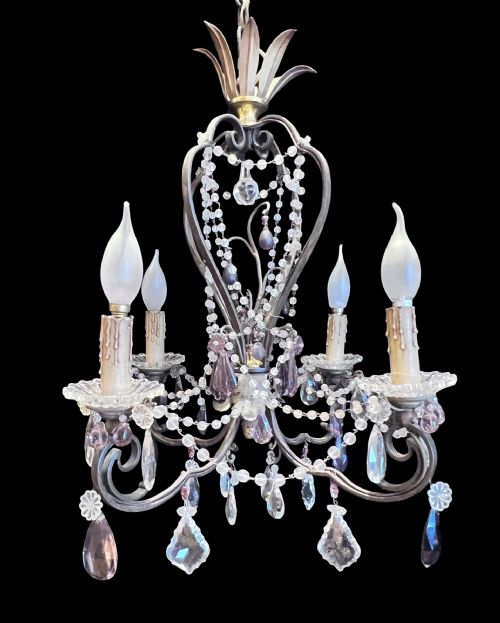
An antique crystal ceiling fixture encompasses chandeliers, pendant lights, and plafonniers designed to illuminate large spaces from above. When searching for an antique crystal ceiling fixture, buyers encounter numerous French and Italian examples dating from the late nineteenth century through the 1930s.
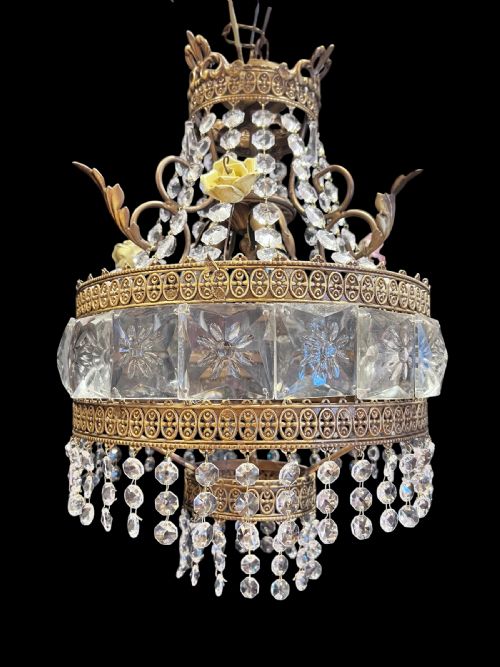
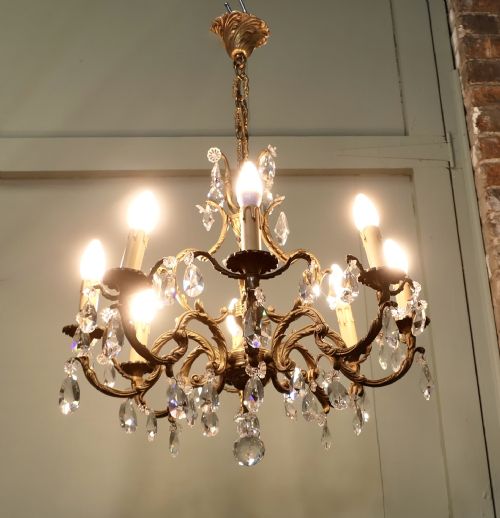
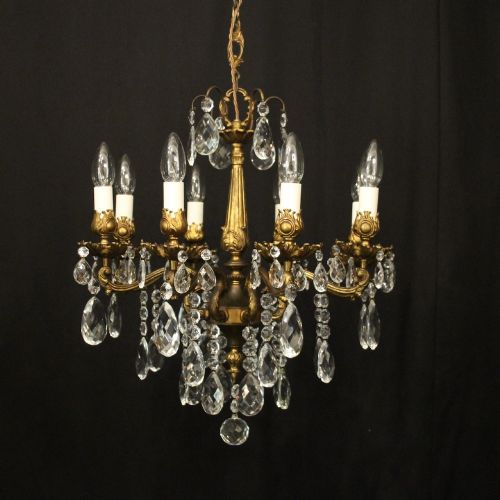
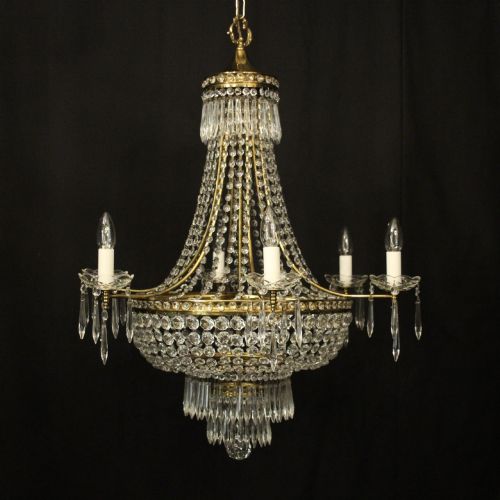
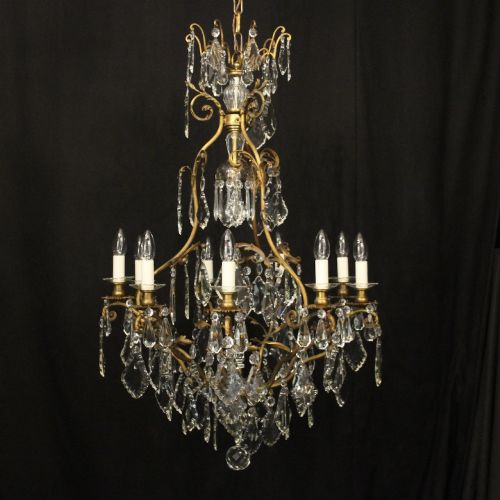
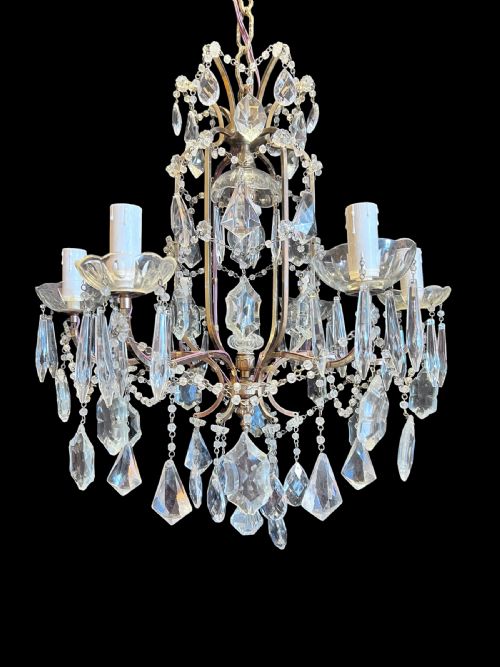
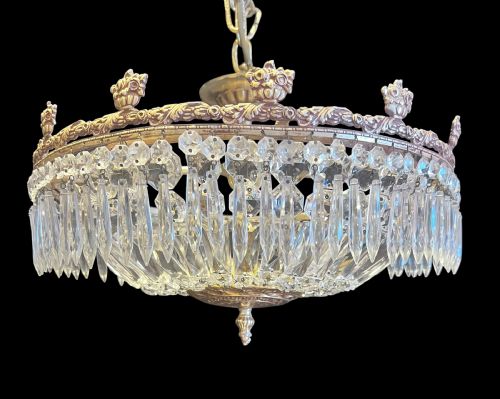
The selections on this page heavily feature French chateau, Empire, and Rococo styles alongside Italian Florentine designs. Brass, gilt bronze, and cut glass dominate the constructions, often taking the form of multi-armed chandeliers or flush-mounted plafonniers.
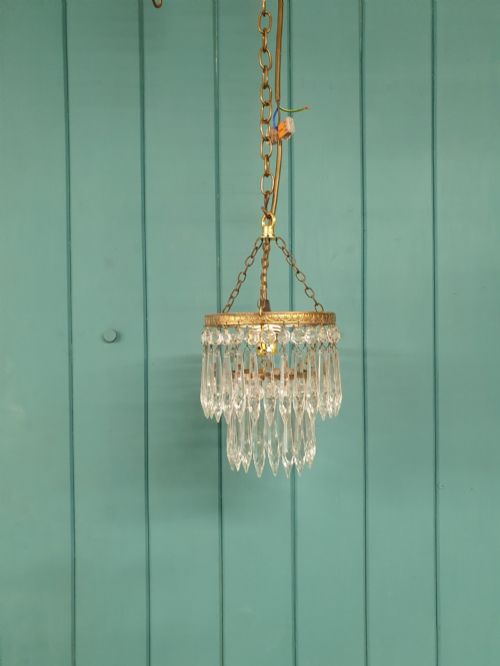
Smaller Edwardian dome top and spike chandeliers appear frequently alongside grander tent and waterfall configurations. These pieces range from intimate single-light pendants to sprawling multi-armed fixtures suitable for ballrooms.
Materials and construction methods
Metals such as brass, gilt bronze, and silver-gilded brass provide the structural frames that support the weight of the glass components. Artisans cast or forge these metallic elements into intricate arms and bands, often applying gilt or painted finishes.
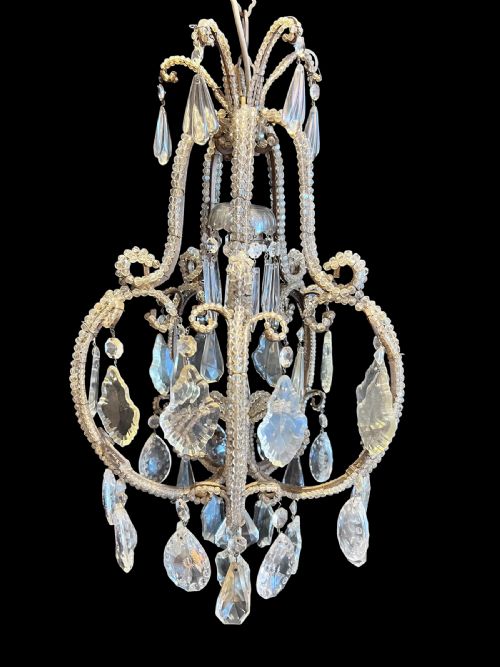
Cut glass and crystal elements, including lustres, beads, and coffin prisms, hang from the metallic frames using wire connections. Specialised cutting techniques create faceted surfaces that maximise the reflection and dispersion of light from internal bulbs or candles.
Listings span the late nineteenth century, the Edwardian era, and the 1920s and 1930s, utilising brass, gilt bronze, and cut glass.
Assessing quality in period lighting
The distinction between ordinary and superior pieces rests on the precision of the metal casting and the clarity of the crystal. Finely chased bronze frames and hand-cut crystal drops with sharp facets indicate skilled workmanship.
Proportion and structural integrity separate substantial chandeliers from lesser examples. A well-balanced composition where drops, beads, and arms harmonize creates the visual weight expected in high-status period lighting.
The Antique Crystal Ceiling Fixture Glossary
- Plafonnier
- A flush-mounted ceiling light designed to sit close to the plaster. These fixtures often feature dome or bowl shapes made of cut glass and brass.
- Tent and waterfall
- A chandelier style characterised by an upper canopy of strings of beads forming a tent shape, dropping down into a cascade of cascading lustres.
- Coffin prism
- A long, flat, faceted glass drop shaped like a coffin, commonly hung from the rims of Edwardian and early twentieth-century ceiling lights.
- Lustre
- A cut glass pendant hung from a chandelier to refract light. They appear in various shapes including spears, drops, and icicles.
- Gilt bronze
- An alloy of copper and zinc treated with a gold wash or mercury gilding. It provides a durable, warm metallic surface for French chandelier frames.
Antique Crystal Ceiling Fixture: Frequently Asked Questions
How do I hang a heavy antique chandelier?
Suspending a heavy antique crystal ceiling fixture requires locating a ceiling joist and installing a rated metal hook or brace box to support the combined weight of the metal and glass.
Professional electrical installation ensures the wiring can safely handle the load and connects the fixture securely to the domestic power supply.
What rooms suit a tent and waterfall chandelier?
Large tent and waterfall chandeliers require generous ceiling height and floor space to allow the tiered glass drops and multi-armed frame to hang in proper proportion.
Dining rooms, entrance halls, and drawing rooms provide the architectural scale needed for these grand French and Italian designs.
How do I clean an antique crystal ceiling fixture?
Routine maintenance involves dusting the glass components in situ using a soft feather duster or microfiber cloth dampened with a mild cleaning solution.
For thorough cleaning, delicate crystal drops can be unhooked individually and washed by hand in lukewarm soapy water before being dried and rehung.
How can I tell an Edwardian plafonnier from later pieces?
Edwardian plafonniers and dome top lights typically display specific glass-cutting patterns, such as acorn motifs or simple starbursts, mounted on modest brass frames.
These compact ceiling fixtures reflect the domestic lighting needs of the early twentieth century before larger multi-armed chandeliers regained popularity in the 1920s and 1930s.