


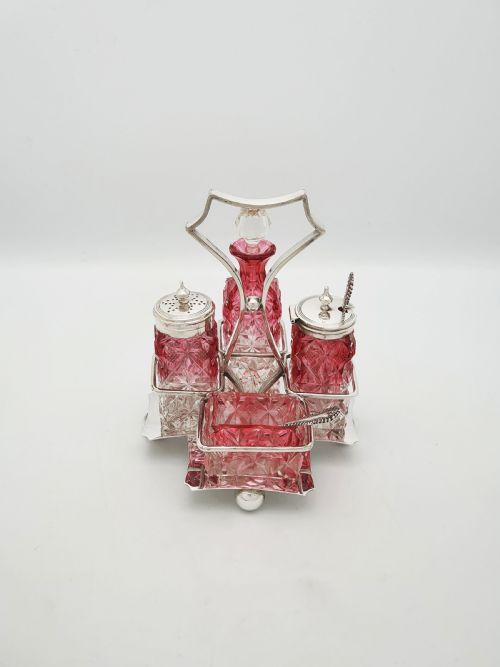
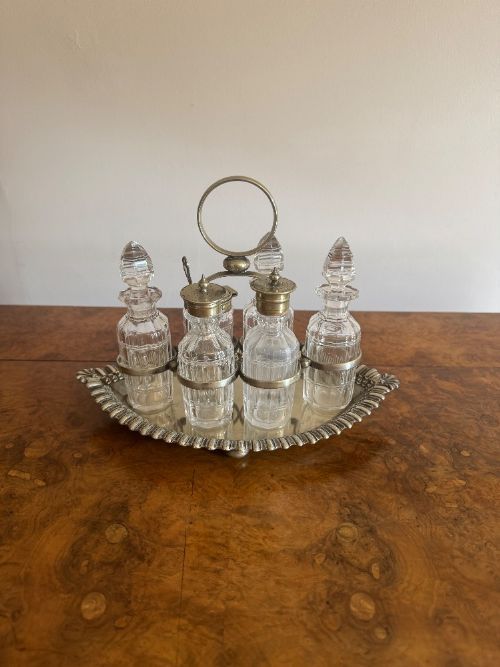


Antique Cruet Bottles
These antique cruet bottles bring dining room history to the table, holding oil, vinegar and condiments in cut glass and silver.
Antique Cruet Bottles
When you search for antique cruet bottles, you find small glass vessels designed to hold condiments, oil, vinegar and sauces for the dining table. They sit within frames or stands made from silver plate, sterling silver, mahogany or old Sheffield plate.
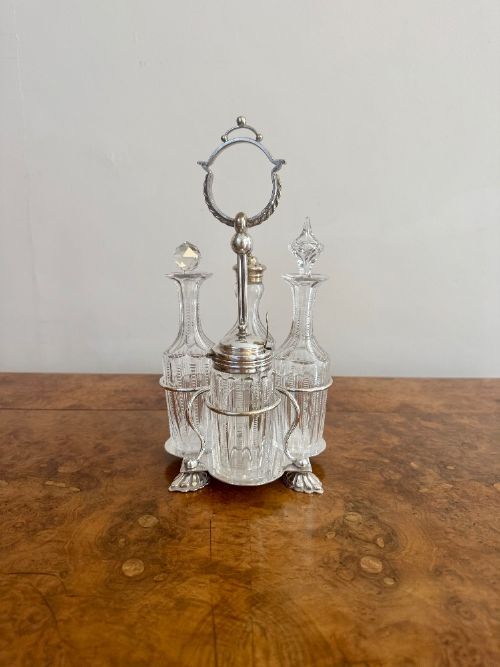
Most examples on this page date from the Georgian, Victorian and Edwardian periods, ranging from single oil and vinegar pairings to large multi-bottle sets containing up to eight pieces. You encounter individual bottles alongside complete sets that retain their original stands and stoppers.
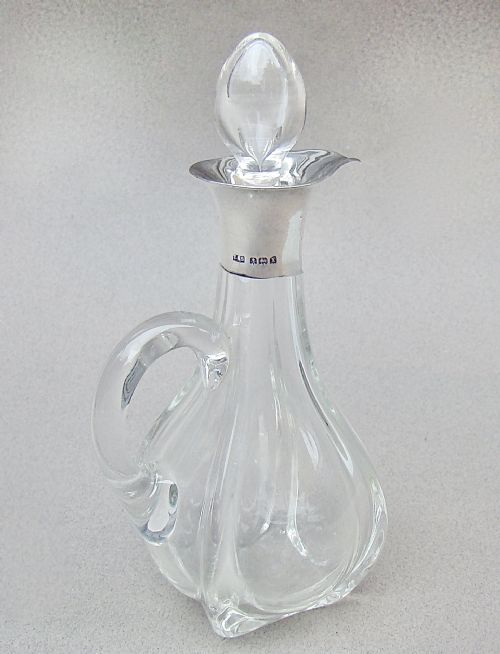
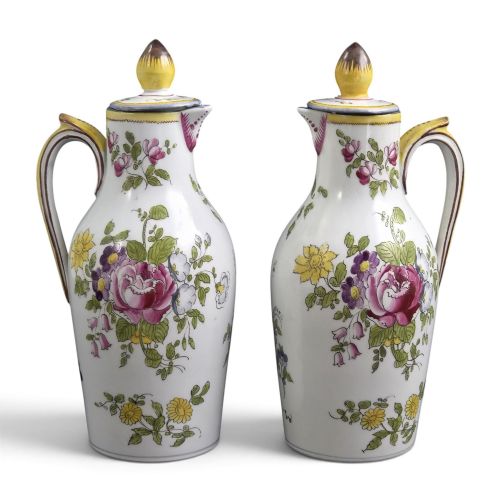
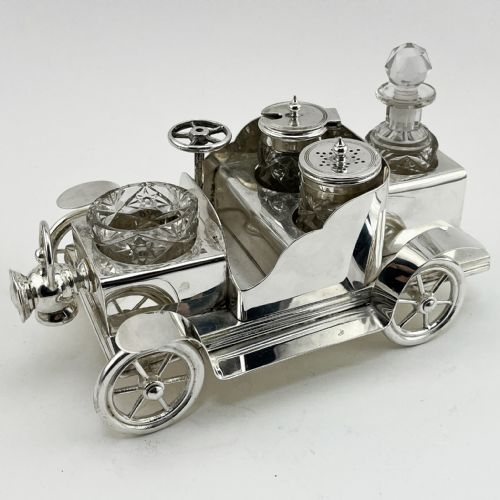
Forms include cut glass cruets, earthenware jugs, and novelty silver-mounted decanters. These items served dining rooms across centuries, shifting from grand Georgian mahogany holders to ornate silver plated Victorian frames.
How they were made
Makers shaped the bottles from heavy lead crystal, cranberry glass, and faience, often finishing the glass with deep hand-cut patterns or flashed colour. Potters also utilised tin-glazed earthenware and polychrome methods for specific regional jugs.
Metal mounts, stands and bottle collars were cast or spun in sterling silver, silver plate and old Sheffield plate, sometimes incorporating intricate French Rococo or Gothic design elements. Wooden frames relied on turned mahogany and ebonised treen construction.
Silversmiths and manufacturers fitted these stands with handles, central shields, and secure stoppers to hold the individual bottles upright during dining service.
Antique Cruet Bottles Retail Price Guide 2026
Typical asking prices for cruet bottles among the pieces listed under this phrase on Sellingantiques today, from the lower quarter to the upper quarter. They describe what is for sale here now, not the wider market.
What varies in quality
The distinction between standard and superior sets rests on the weight of the cut glass and the execution of the metal mounts. Heavy lead crystal with crisp, deep hand-cut facets separates finer bottles from lighter, moulded glass alternatives.
Maker attribution and hallmarks elevate certain pieces significantly. Sets produced by known makers such as Elkington and Co, Walker and Hall, or Hester Bateman demonstrate superior silversmithing standards in their frames and mounts.
Completeness dictates overall desirability. Sets retaining all their original matching bottles, stoppers and correctly hallmarked silver components command greater appreciation than assembled groupings with replacement parts.
Charles Thomas Fox·Elkington and Co·Hester Bateman·Walker and Hall·Wade Wingfield Wilkins·Veuve Perrin Marseille
The Antique Cruet Bottles Glossary
- Cruet set
- A collection of glass bottles or cruet bottles housed in a shared frame or stand for table condiments.
- Old Sheffield plate
- A composite material made by fusing a thin sheet of silver to a copper base, common in items predating standard electroplating.
- Cranberry glass
- A type of glass coloured by the addition of gold chloride, producing distinct red and pink hues seen on Victorian cruets.
- Treen
- Small handmade wooden household objects and utensils turned on a lathe, including historical bottle holders.
- Faience
- Tin-glazed earthenware produced in Europe, often featuring hand-painted polychrome decoration on jugs and oil vessels.
Antique Cruet Bottles: Frequently Asked Questions
What were antique cruet bottles used for?
These vessels held table condiments like mustard, pepper, oil and vinegar during formal meals. Diners poured liquids or spooned sauces from them directly at the table.
Over time, the contents shifted according to dining fashions, moving from simple oil and vinegar pairings to larger condiment assortments.
How do I date an antique cruet set?
Silver frames often carry hallmarks that identify the exact year and assay office of manufacture. Stylistic clues, such as Georgian mahogany stands or ornate Victorian silver plate, also narrow down the era.
Glass cutting styles and manufacturing techniques provide further supporting evidence for dating.
Are original stoppers important?
Matching original stoppers contribute significantly to the authenticity and completeness of individual cruet bottles. Finding pieces that retain their factory-original glass stoppers is a key consideration for collectors.
Replacements often differ slightly in tint, weight or ground glass fitting.
How do I clean silver plated cruet stands?
Silver plate requires gentle cleaning with a soft cloth and proprietary silver polish to preserve the underlying metal. Avoid harsh abrasives that wear away the thin silver layer over the base metal.
Glass bottles can be washed separately in warm soapy water using a bottle brush.