



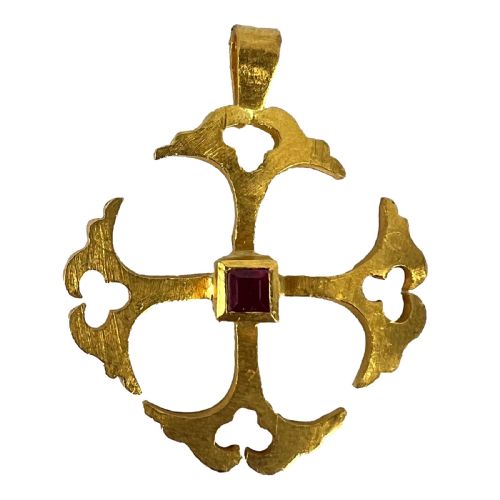


Antique Cross Necklace
An antique cross necklace brings centuries of devotional and decorative craft to the neck, combining precious metals with fine stones.
Antique Cross Necklace
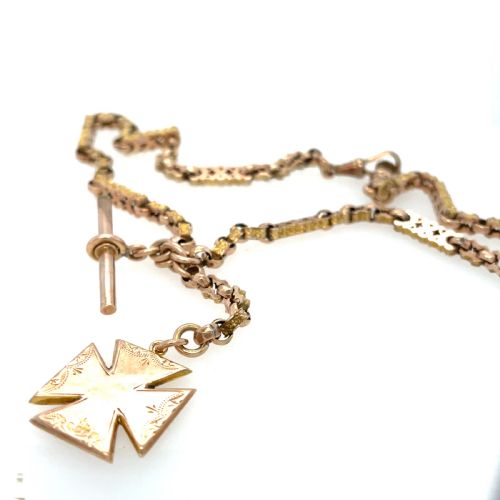
An antique cross necklace takes many forms across the Georgian, Victorian, and Edwardian periods, appearing most frequently as a pendant suspended from a chain or incorporated into an Albert chain. You will commonly meet pieces fashioned from 9ct gold, silver, and yellow gold, often enriched with seed pearls, turquoise, or paste stones.
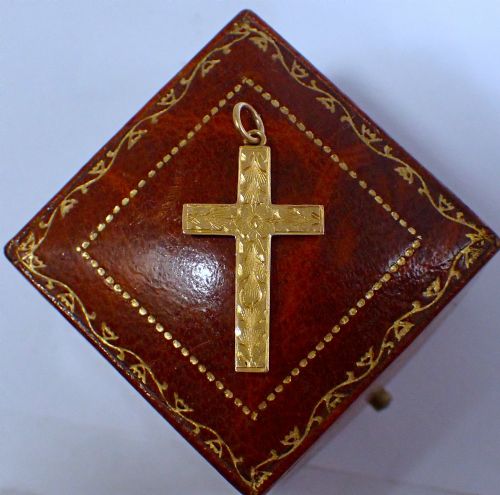
The selection ranges from simple engraved gold crosses of the Edwardian era to elaborate Georgian pieces set with foiled amethyst paste or coral and seed pearls. Styles lean heavily towards the traditional, encompassing Victorian, Edwardian, Arts and Crafts, and Gothic Revival aesthetics.
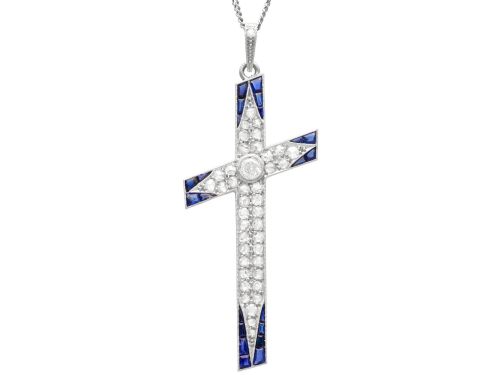
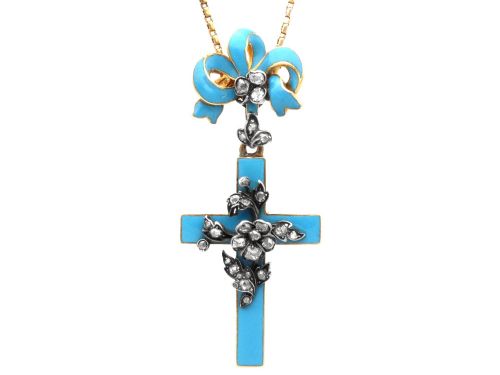
Makers and workshops across Britain and the Continent produced these pieces as both personal expressions of faith and fashionable ornaments. The cross pendant remains the central focus, whether rendered in plain engraved metal or densely populated with sapphires, diamonds, and enamel.
How they were made
Goldsmiths and silversmiths utilised traditional hand-working techniques to shape precious metals, employing engraving, chasing, and box-setting to secure stones. Gold variations from 9ct and 15ct up to 18ct and 24K were cast or hammered into structural frames before being hand-finished.
Stones such as seed pearls, turquoise, sapphires, and foiled paste were meticulously hand-set into bezel or collet settings, whilst decorative elements like blue enamel added vibrant colour contrast. Continental silver and British gold pieces alike relied on the steady hand of the artisan for fine channel work and surface engraving.
Antique Cross Necklace Retail Price Guide 2026
Typical asking prices for cross necklace among the pieces listed under this phrase on Sellingantiques today, from the lower quarter to the upper quarter. They describe what is for sale here now, not the wider market.
Listings feature pieces spanning the Georgian, Victorian, Edwardian, and mid-twentieth-century periods, constructed from gold, silver, paste, and seed pearls.
What varies in quality
The distinction between tiers of work rests on the complexity of the stone-setting and the depth of the hand engraving. Pieces featuring high-carat gold, genuine Montana sapphires, or finely graded seed pearls demonstrate a superior level of material selection by the maker.
Structural integrity and the preservation of delicate enamel or foil-backed paste also determine the standing of a piece. Finer examples maintain crisp engraving lines and securely mounted stones that reflect the original artisan's precision without modern intervention.
Henry Cook
The Antique Cross Necklace Glossary
- Albert chain
- A short length of chain historically designed to attach a pocket watch to a waistcoat, frequently adapted to hold pendants. It often includes a T-bar and decorative fob.
- Seed pearl
- A very small, naturally occurring or early cultured pearl, commonly drilled and threaded or glued onto jewellery pieces. They were widely utilised in Victorian and Georgian floral and religious motifs.
- Rivière necklace
- A necklace composed of a continuous strand of gemstones of similar cut and size, often graduated. They are frequently designed so that a pendant may be hung from the centre.
Antique Cross Necklace: Frequently Asked Questions
How do I date an antique cross necklace?
Dating relies on examining the hallmark stamps, the type of metal used, and the style of the stone-setting. Georgian and Victorian pieces often display distinct hand-engraving and closed-back settings.
Later Edwardian and 1920s examples show shifts toward lighter mounts and specific design movements like Arts and Crafts. Comparing the construction methods to known period pieces clarifies the age.
What metals are commonly found in these necklaces?
The listings show a prevalence of 9ct gold, 15ct yellow gold, 18ct gold, and sterling silver. Rose gold is also frequently observed in Georgian and Edwardian examples.
High-carat variations, such as 24K yellow gold, appear in specific vintages. Each metal grade reflects the prevailing standards and trends of its manufacturing period.
Were these crosses worn for faith or fashion?
Cross pendants served both devotional purposes and as high-fashion accessories, particularly during the Gothic Revival and Victorian periods. Religious symbolism merged seamlessly with decorative trends.
Pieces ranged from austere Continental silver crucifixes to ornate gemstone-laden pendants worn as statement jewellery. This dual purpose ensured their widespread popularity across multiple decades.
What stones are typically set into these crosses?
Common stones include seed pearls, turquoise, diamonds, and sapphires, alongside historical materials like coral and foiled amethyst paste. Enamel work is also utilised for colour.
The choice of stone often indicates the period, with seed pearls and turquoise dominating Victorian designs, while sapphires and diamonds mark later Edwardian and twentieth-century pieces.
Can I swap the chain on my pendant?
Most antique cross pendants are fitted with a jump ring or bail that accommodates various chains, provided the scale matches the pendant. Many pieces are acquired separately from their original necklaces.
Care should be taken to pair older gold or silver pendants with chains of a matching metal tone and appropriate weight to maintain balance.