

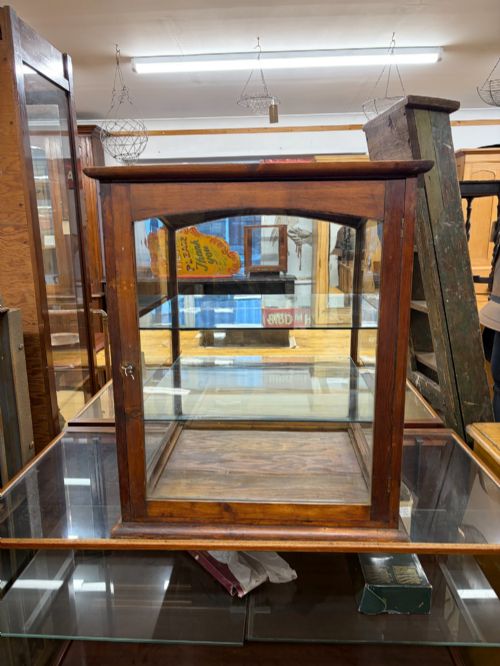




Antique Counter Top Showcase
An antique counter top showcase is a practical shop display cabinet designed to present small wares cleanly to customers.
Antique Counter Top Showcase
When you search for an antique counter top showcase, you are looking at glazed cases built to sit on retail counters and attract attention. The versions you are most likely to meet on this page span the Victorian and Edwardian periods, as well as the early twentieth century.
These pieces take the form of display cases, shop display cabinets, and table top cabinets designed for merchants. They range from simple oak or mahogany boxes to branded shop fittings associated with makers like Fry's and Cadbury's.
Many examples date from nineteen hundred through to nineteen thirty, showing the evolution of commercial presentation. The evidence shows styles running from standard Victorian designs to industrial commercial and Edwardian commercial forms.
How they were made
Makers built these cabinets using sturdy timbers such as oak and mahogany, paired with ebonised wood for darker finishes. Glass panels formed the viewing areas, allowing customers to inspect contents from multiple angles.
Brass fittings provided structural support and opening mechanisms, while internal surfaces often featured felt or velvet linings to cushion delicate goods. Some larger examples incorporated drawers beneath the main display chamber for supplementary stock.
Antique Counter Top Showcase Retail Price Guide 2026
Typical asking prices for counter top showcase among the pieces listed under this phrase on Sellingantiques today, from the lower quarter to the upper quarter. They describe what is for sale here now, not the wider market.
One exceptional showcase doubled as a dispenser for Venus pencils, keeping early writers sharp and supplied.
What varies in quality
The distinction between standard commercial units and superior pieces rests on timber selection and original branding. Cabinets bearing authentic period sign-writing for firms like Venus Pencil or Cadbury's carry particular distinction.
Construction details also separate the range, with precision joinery and heavier brass hardware indicating a higher grade of manufacture. Pieces by known makers such as Quincy Showcase Works demonstrate the sturdier side of period shop fittings.
Quincy Showcase Works·Cadbury's·Venus Pencil
The Antique Counter Top Showcase Glossary
- Counter top showcase
- A glazed display cabinet built specifically to sit upon a shop counter. These units placed small merchandise directly at eye level for retail customers.
- Sign-written
- Lettering painted directly onto the glass or timber of a cabinet to advertise specific goods. This commercial lettering often names historical brands such as Fry's or Cadbury's.
- Ebonised wood
- Timber treated with a dark stain or chemical finish to imitate ebony. This material gave nineteenth-century shop fittings a formal appearance.
- Display case
- A freestanding or tabletop enclosure featuring glass panels designed to protect items while permitting visibility. These objects formed the backbone of Edwardian shop interiors.
Antique Counter Top Showcase: Frequently Asked Questions
What were counter top showcases used for?
Merchants utilised these glazed cabinets on shop counters to display small, valuable items securely to the public. The design kept merchandise visible while protecting stock from dust and handling.
Goods ranged from confectionery and writing equipment to general retail novelties. Branding was often added to promote specific manufacturers directly at the point of sale.
How do I date an antique showcase?
Dating relies upon timber choices, construction methods, and the style of any integrated sign-writing. Victorian and Edwardian examples typically feature heavier timbers and traditional hand-cut joinery.
Later pieces from the nineteen twenties and thirties often show sleeker commercial lines. Hardware styles and glass manufacturing techniques also offer clear clues to the period of origin.
Can I use these cabinets at home?
These cabinets suit modern domestic interiors for displaying small collections on sideboards or tables. The glass panels and timber frames provide a clear view of stored items.
Internal linings of felt or velvet protect delicate pieces from scratches. Their compact proportions allow them to sit easily on standard furniture.
What is sign-writing on cabinets?
Sign-writing refers to hand-painted commercial lettering applied to the glass or wood of a showcase. These inscriptions advertised specific products sold within the shop.
Examples include historical branding for chocolate and pencil manufacturers. Original sign-writing adds significant interest for collectors of commercial antiques.