






Antique Counter Island
These antique counter island pieces are utilitarian shop fixtures and work tables brought home to anchor modern rooms.
Antique Counter Island
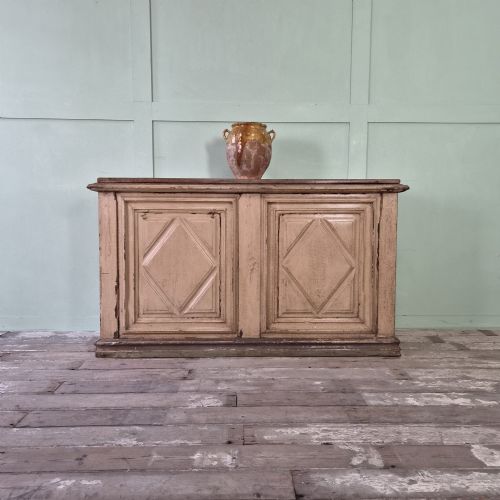
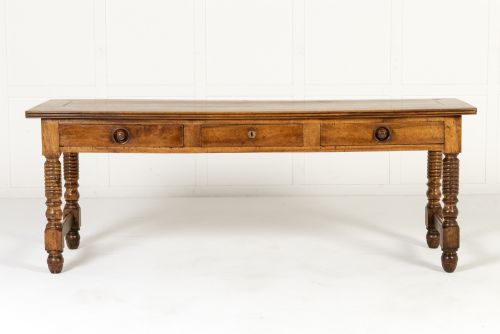
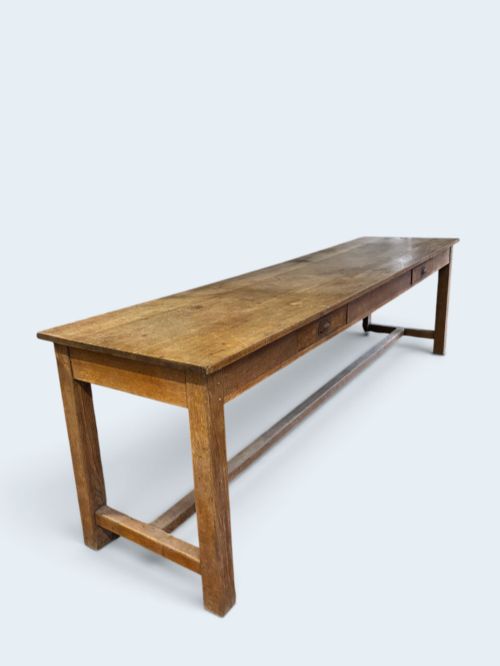
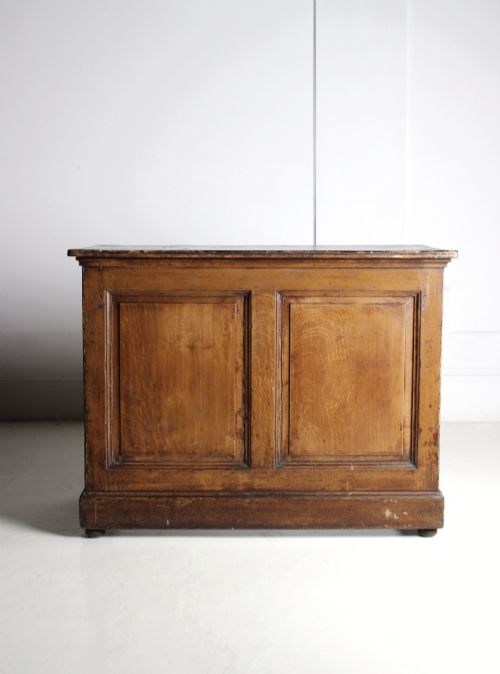
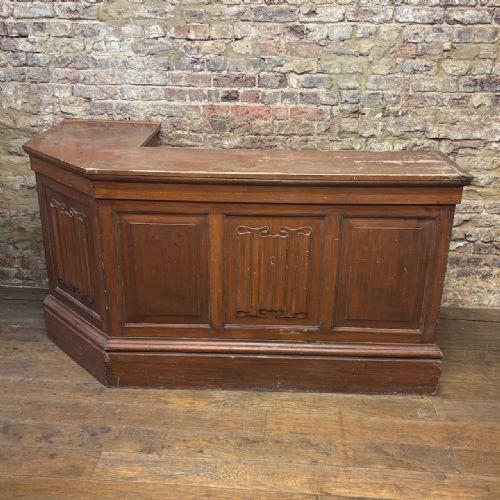
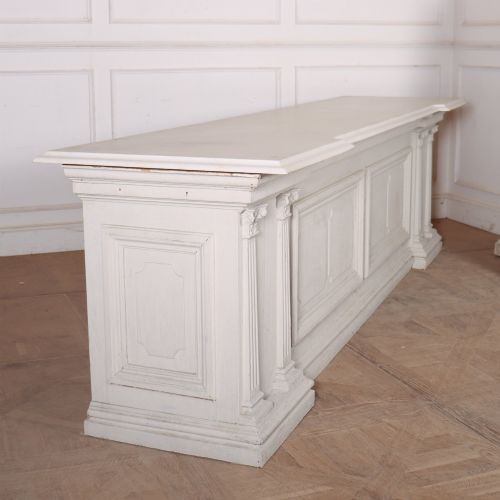
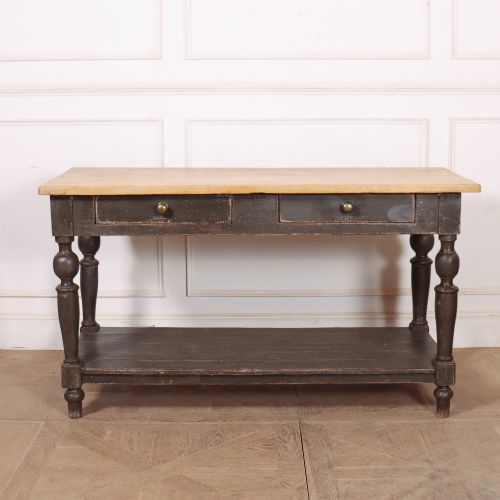
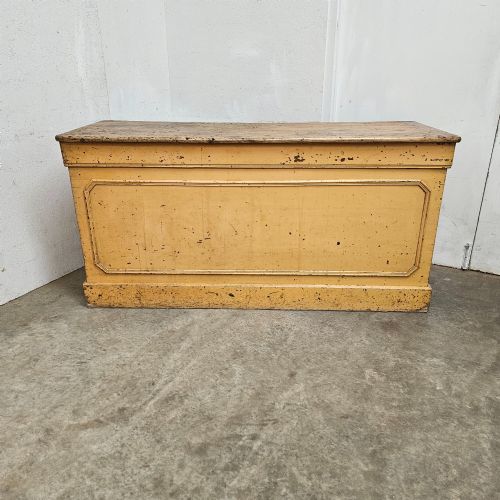
When you search for an antique counter island, you find heavy work tables, drapers tables and shop counters built for commercial and domestic service. The selection spans the nineteenth century through to the mid-twentieth century, with French country drapers tables appearing frequently alongside Victorian shop counters.
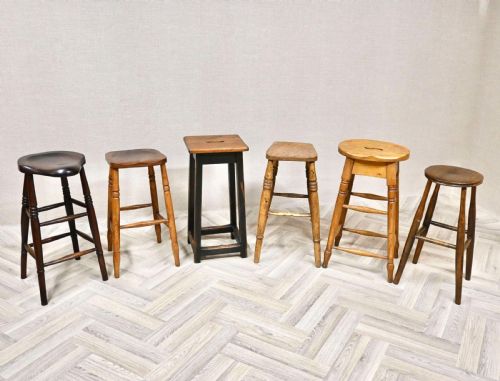
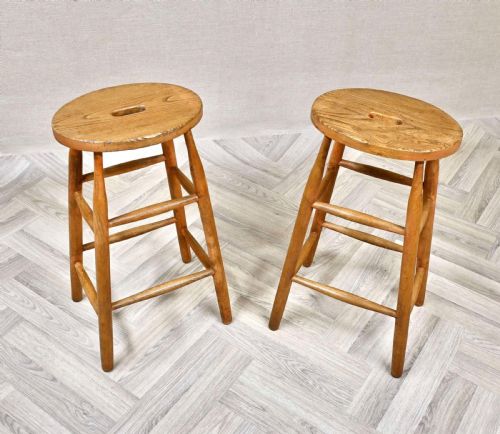
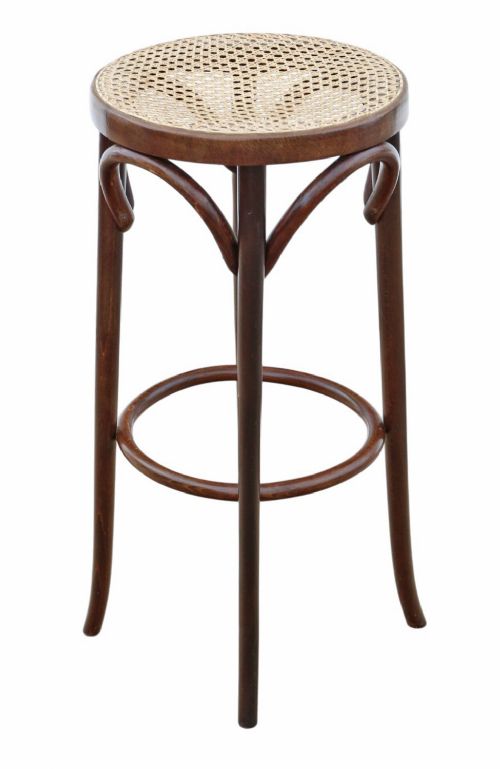
Forms range from monumental four-metre oak tables to smaller pine prep tables and industrial bar stools with iron bases. Oak and pine dominate the structural timber, while original painted finishes and bleached surfaces define the visual character of these utilitarian survivors.
Materials and construction
Makers built these pieces primarily from solid pine, oak, beech and elm, selecting timber for strength rather than display. Cast iron appears in gear cog bases and heavy seats on industrial stools, while brass and sycamore feature in specific fittings and work surfaces.
Joinery relies on sturdy framing designed to endure constant commercial use. Surfaces show the marks of daily labour, with painted pine, faux oak finishes and bleached grain resulting from decades of scrubbing and wear.
Antique Counter Island Retail Price Guide 2026
Typical asking prices for counter island among the pieces listed under this phrase on Sellingantiques today, from the lower quarter to the upper quarter. They describe what is for sale here now, not the wider market.
Listings feature nineteen-century French drapers tables alongside Victorian shop counters and industrial iron bar stools.
Assessing quality and authenticity
Quality rests on the integrity of the original structure and the honesty of the surface finish. Pieces retaining their early or original paint schemes command attention because many utilitarian counters were stripped or repainted repeatedly over generations.
Proportion and scale dictate desirability, particularly in large drapers tables where long spans of solid oak or pine remain straight and stable. The presence of maker details, such as cast-iron foundry marks, elevates pieces above standard workshop output.
Blackstone and Co·Trussant and Cie
The Antique Counter Island Glossary
- Drapers table
- A long, narrow work table traditionally used in fabric shops for measuring and folding textiles. These pieces feature deep proportions and often include lower shelves.
- Shop counter
- A substantial retail fixture designed to face customers, usually fitted with panelled fronts, drawers or display surfaces. They originate from nineteenth-century commercial premises.
- Bentwood
- Wood softened by steam and bent into curved structural forms, commonly utilised in tall stools from the early twentieth century. This technique creates resilient, lightweight seating.
- Faux oak
- A decorative painted finish applied to render cheaper softwoods like pine in imitation of superior hardwoods. Artisans practiced this graining technique to elevate utilitarian shop fittings.
Antique Counter Island: Frequently Asked Questions
What is an antique counter island?
An antique counter island is a heavy commercial or domestic work table, such as a drapers table or shop counter, adapted for modern kitchen and living spaces.
These pieces provide substantial surface area and storage while bringing historical character and robust utilitarian construction into a room.
How do I use a drapers table at home?
Drapers tables function exceptionally well as kitchen islands, serving stations, or console tables due to their narrow, elongated proportions.
Their open lower shelves offer practical storage for baskets, crockery, or books while keeping the floor space visually light.
Are these counters made from solid wood?
The pieces utilise solid timbers such as oak, pine, elm, beech and sycamore rather than modern manufactured boards.
This solid construction explains their heavy weight and enduring survival across centuries of hard use.
How do I identify a French drapers table?
French examples typically feature pale bleached oak or scrubbed pine surfaces, generous lengths, and simple, sturdy underframes.
They often present characteristic wear from textile work, distinguishing them from domestic tables of the same period.