






Antique Counter Chest
These antique counter chest examples are utilitarian storage pieces built for trade, offering robust character and historic compartmentalisation for modern interiors.
Antique Counter Chest
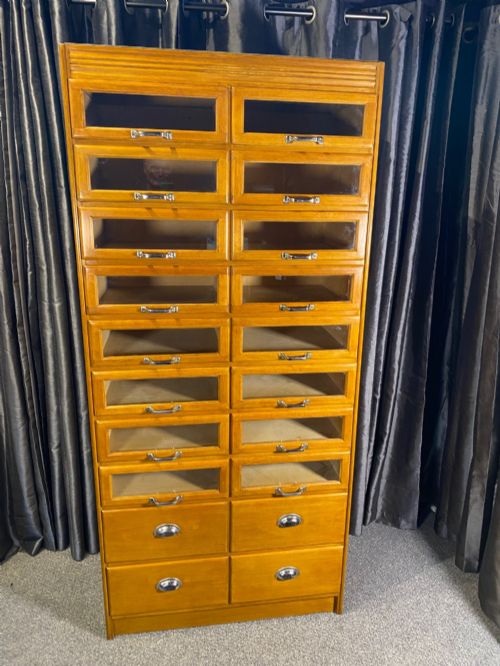
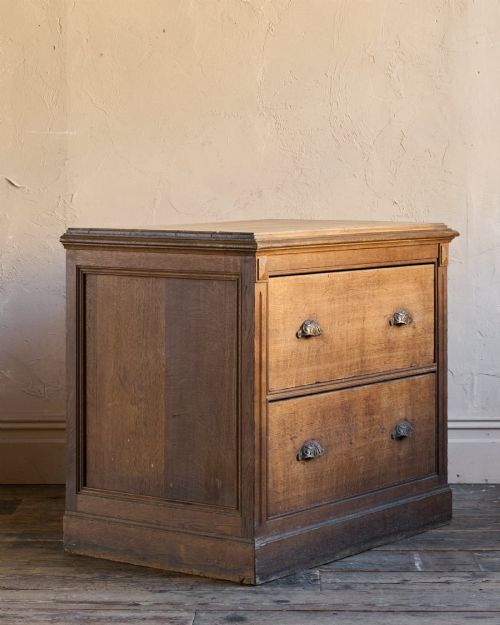
An antique counter chest serves as a functional storage piece originating from commercial and trade settings, encompassing banks of drawers and shop fittings. Buyers searching this phrase encounter multi-drawer configurations designed for efficient retail or workshop organisation.
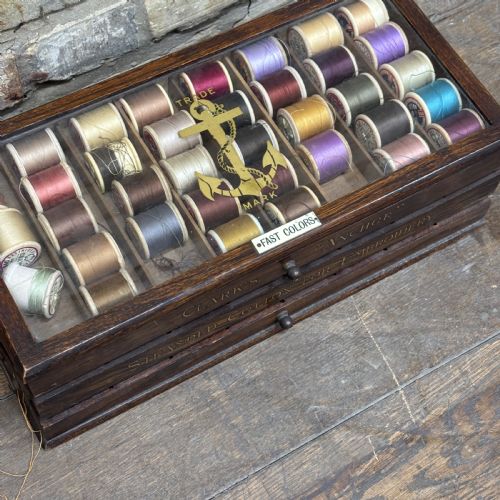
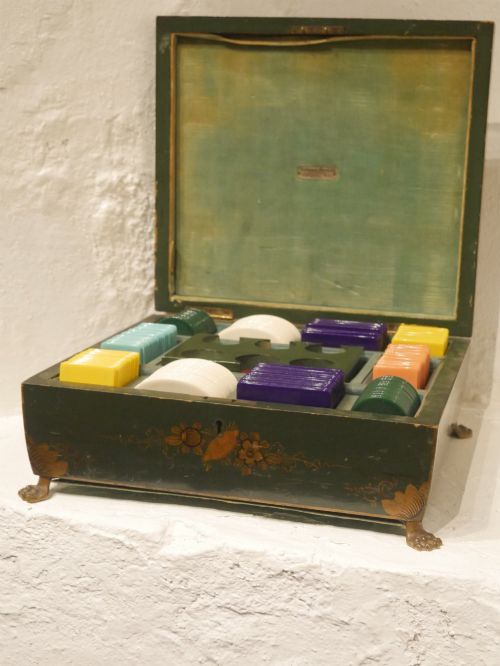
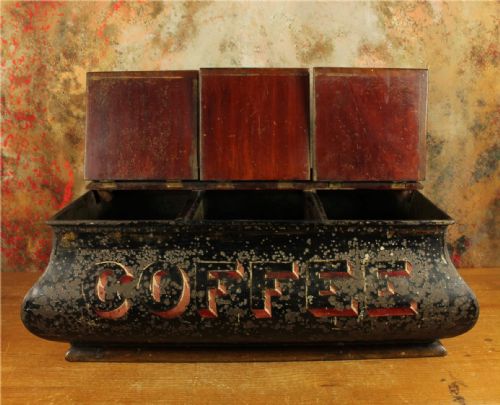
The pieces span various forms including haberdashers drawers, watchmaker's cabinets, apothecary boxes, and drapers chests. Victorian and Edwardian examples predominate, often constructed from pine or oak with brass hardware.
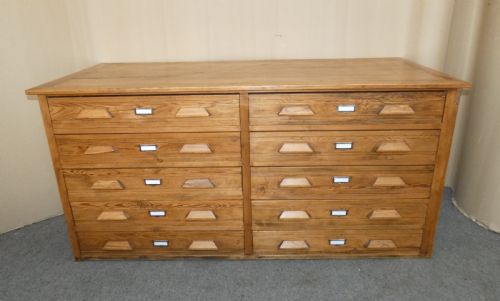
Origins vary across English, French, and Hungarian workshops, reflecting the practical demands of nineteenth and early twentieth century commerce. These items range from compact display cases to large fifty-drawer shop fittings.
How they were made
Construction relies primarily on timbers such as pine, oak, mahogany, and walnut, chosen for structural endurance in busy commercial environments. Drawers frequently feature brass pulls, cup handles, and occasionally glass panels for viewing contents.
Surfaces exhibit original paint finishes in white, cream, light green, or indigo alongside polished wood treatments. Metal elements like iron and brass provide reinforcement and secure locking mechanisms for valuable goods.
Antique Counter Chest Retail Price Guide 2026
Typical asking prices for counter chest among the pieces listed under this phrase on Sellingantiques today, from the lower quarter to the upper quarter. They describe what is for sale here now, not the wider market.
Materials recur in pine, oak, mahogany, and walnut, complemented by functional brass and iron hardware.
What varies in quality
The distinction between tiers rests upon the integrity of the original finish and the complexity of the drawer configuration. Multi-drawer shop fittings with untouched painted surfaces or branded display glazing command greater interest than plain utility boxes.
Joinery execution and hardware completeness dictate standard variations across these commercial survivals. Original brass fixtures and intact glass elements elevate the standing of a piece within its respective period.
Manoah Rhodes & Sons Ltd·Chadwick·Ermen & Roby
The Antique Counter Chest Glossary
- Haberdashery cabinet
- A multi-drawer storage unit originally utilised in shops to organise threads, buttons, and sewing accessories. These cabinets often incorporate glass fronts or slender proportions.
- Shop fitting
- A permanent or semi-permanent fixture built for commercial interiors, including large banks of drawers designed to stand behind or beneath a counter. They showcase practical craftsmanship tailored for daily retail use.
- Graduated drawers
- A series of drawers arranged vertically in order of increasing depth from top to bottom. This design balances visual proportion with functional storage capacity.
- Toleware
- Metalware painted and lacquered with decorative finishes, frequently taking the form of boxes and canisters used in nineteenth-century commerce. It combines utility with durable surface decoration.
- Apothecary box
- A compact compartmentalised container made for storing medical ingredients, powders, or small instruments. These boxes often feature secure locks and multiple internal divisions.
Antique Counter Chest: Frequently Asked Questions
What is an antique counter chest?
An antique counter chest is a trade storage unit built with multiple drawers or compartments to serve shopkeepers, apothecaries, and craftspeople during the nineteenth and early twentieth centuries.
These pieces were deployed behind service counters or within workshops to organise small goods, cottons, and tools for rapid daily access.
How were drapers chests used?
Drapers chests held textiles, ribbons, and sewing supplies in retail establishments, allowing shop assistants to serve customers efficiently.
The shallow, numerous drawers kept fabrics sorted by type and colour while protecting them from dust and light exposure.
How do I identify a watchmaker cabinet?
Watchmaker cabinets feature very small, specialised drawers designed to store delicate watch components, springs, and tiny tools.
They are commonly constructed from dense hardwoods like oak or mahogany and often bear maker plaques from precision trade suppliers.
Are painted finishes period correct?
Many trade pieces received functional coats of paint in commercial colours like cream, white, or green to brighten shop interiors.
Original painted surfaces on Hungarian and English shop fittings are preserved by collectors for their authentic historic character.
Where should I place a shop fitting?
These large drawer units suit kitchens, living spaces, or studies where their abundant compartmentalisation offers practical storage solutions.
Their robust commercial build allows them to function effectively as sideboards, console units, or statement storage furniture.