




Antique Corner Basin
An antique corner basin fits neatly into a room, offering practical furniture shaped to make use of neglected angles.
Antique Corner Basin
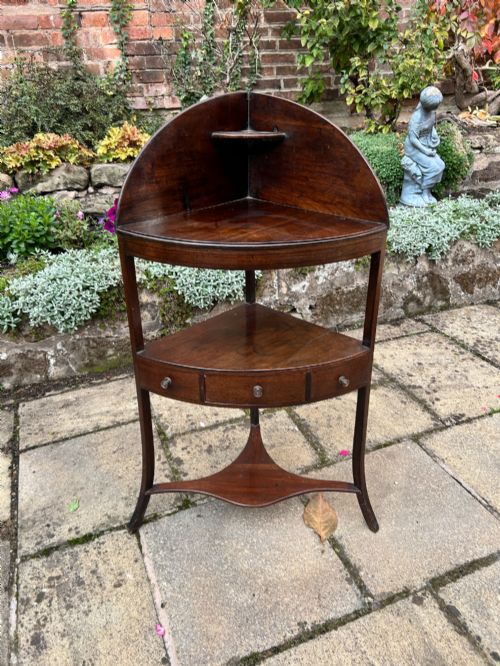
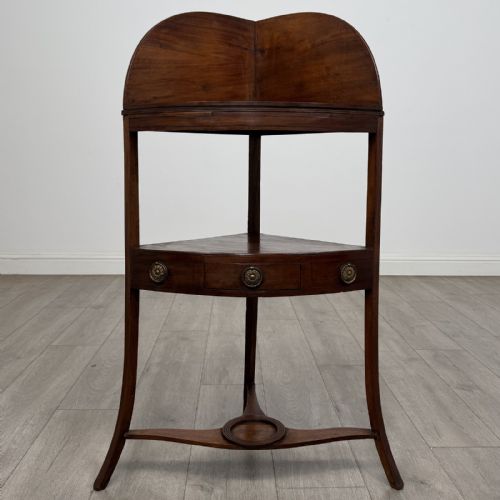
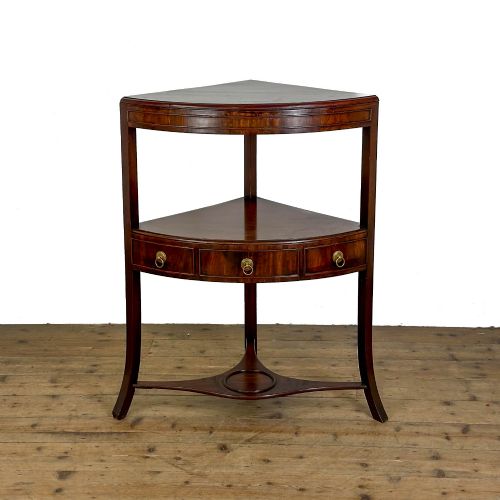
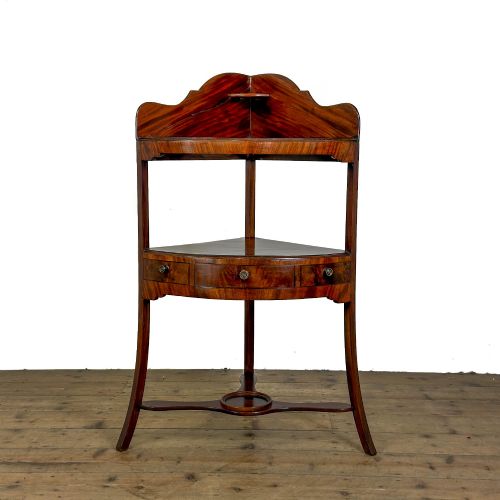
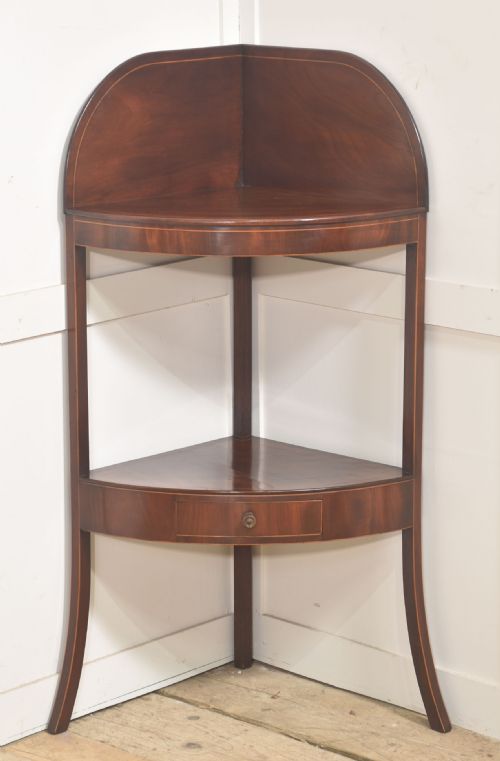
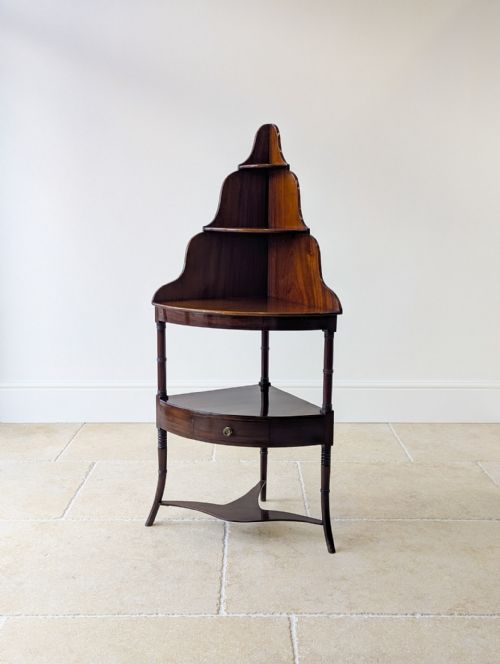
An antique corner basin, frequently described in listings as a corner washstand or corner stand, is a specific form of furniture designed to tuck into the junction of two walls. These pieces serve to utilise dead space while providing a stable surface for ablutions or display.
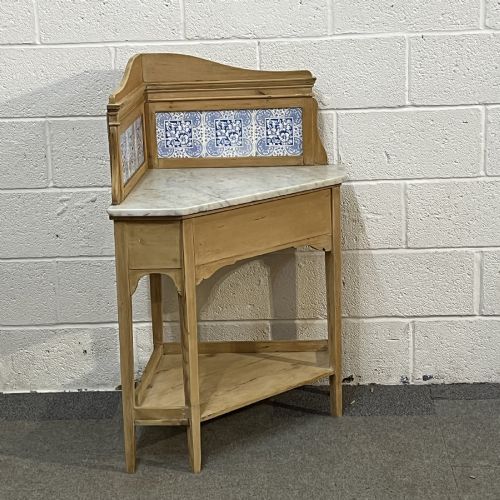
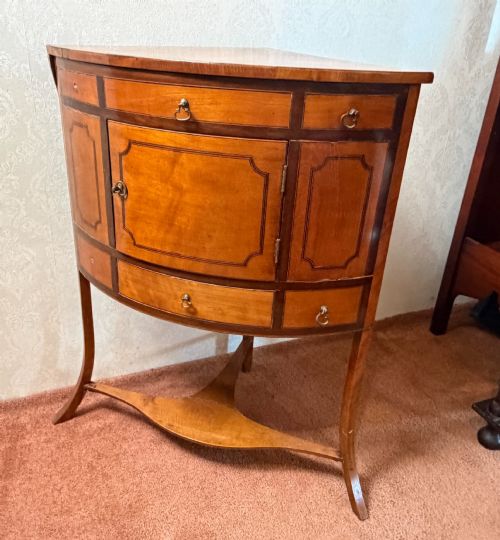
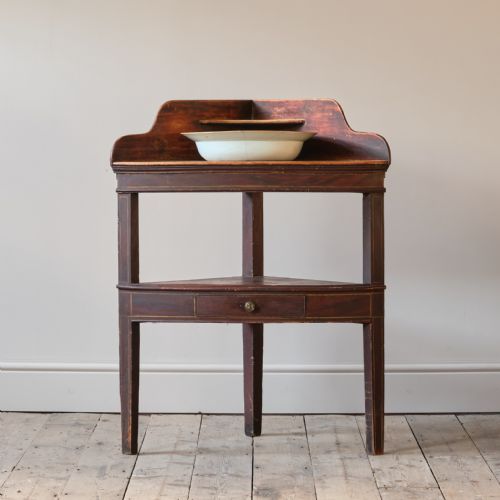
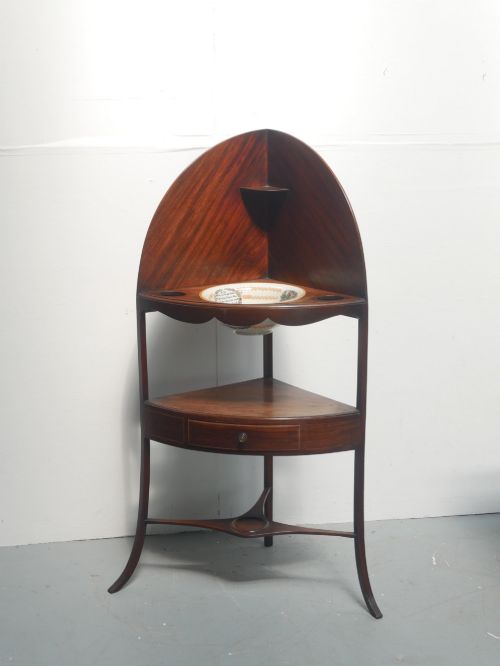
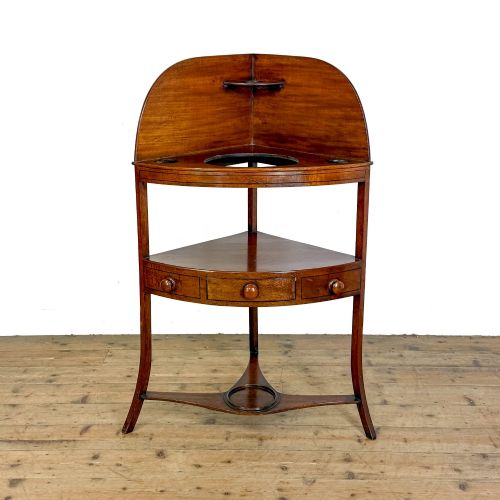
The versions most commonly met on this page date from the Georgian and Regency periods through to the Victorian era. They appear in forms such as tiered stands, bow fronts, and pieces fitted with raised galleries or fold-down tops.
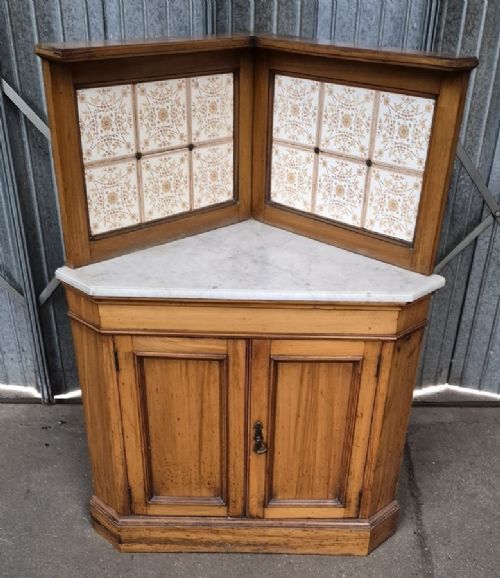
Makers constructed these items primarily in mahogany, alongside walnut, pine, and satinwood, occasionally incorporating boxwood inlay or marble tops. Alongside traditional washstands, the evidence also records related pieces like corner cabinets and wig stands.
How they were made
Makers relied heavily on solid and veneered mahogany, shaping the timber to follow tight angles and curved bow fronts. Carpenters utilised boxwood inlay to ornament the surfaces of finer examples.
Construction methods involved tiered platforms supported on slender uprights, alongside enclosed lower cupboards designed to house chamber pots or storage vessels. Brass fittings and marble inserts appear on specific variants, adding weight and utility to the design.
Antique Corner Basin Retail Price Guide 2026
Typical asking prices for corner basin among the pieces listed under this phrase on Sellingantiques today, from the lower quarter to the upper quarter. They describe what is for sale here now, not the wider market.
Listings span the Georgian, Regency, and Victorian periods, with mahogany serving as the dominant timber alongside walnut, pine, and satinwood.
What varies in quality
Quality rests on the crispness of the cabinetmaker's joinery and the selection of figured timber. Pieces featuring subtle boxwood stringing or dense, well-matched mahogany distinguish themselves from plain utilitarian examples.
Proportion and structural cleverness dictate the hierarchy of these stands. Well-balanced tier heights and smoothly operating folding lids or original paint finishes elevate a piece above standard domestic workshop production.
Walker And Sons·Gillows Lancaster
The Antique Corner Basin Glossary
- Bow front
- A convex, outwardly curved front contour characteristic of certain Regency and Georgian pieces. This shape softens the harsh ninety-degree angle of a room corner.
- Tiered stand
- Furniture constructed with multiple open shelves arranged vertically in steps. These tiers provide graduated display or storage space.
- Wig stand
- A small specialised variant of a basin stand featuring a small circular aperture at the top intended to hold a gentleman's wig powdering basin.
Antique Corner Basin: Frequently Asked Questions
What is an antique corner basin?
An antique corner basin is a fitted piece of furniture designed to occupy the corner of a room. These stands provided a dedicated space for washing before plumbed bathrooms became standard.
Today, they function as decorative or occasional tables in hallways and bedrooms, utilising awkward angles without dominating the floor space.
How do I date a corner washstand?
Dating relies on timber selection, structural styling, and cabinetmaking details. Georgian and Regency examples often display fine mahogany grain and delicate tier supports.
Victorian pieces introduce materials like marble and walnut, while earlier 18th-century versions lean towards simpler, sturdy lines and original painted surfaces.
Where were these placed in a room?
These washstands were positioned directly into room corners where two walls met. Their triangular footprints allowed them to sit flush against both surfaces.
This placement kept washing equipment out of main thoroughfares while making use of space that standard rectangular furniture could not occupy.
Can I use an antique corner washstand today?
These stands adapt easily to modern interiors as plant tables, lamp stands, or corner display surfaces. The lower shelves provide convenient storage for books or decorative objects.
While original basins are rarely present, the upper ring or cutout accommodates bowls or acts as a stable ledge for ornaments.