


Antique Coral Jewellery
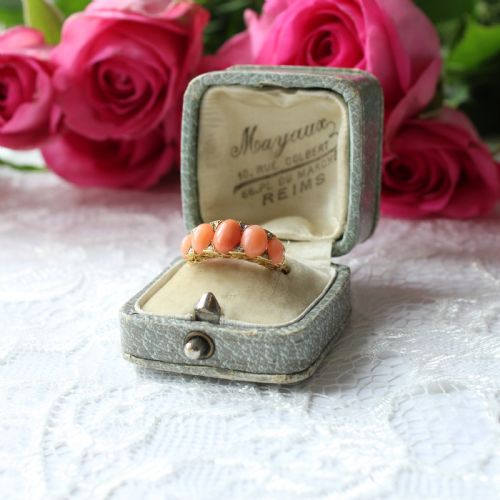
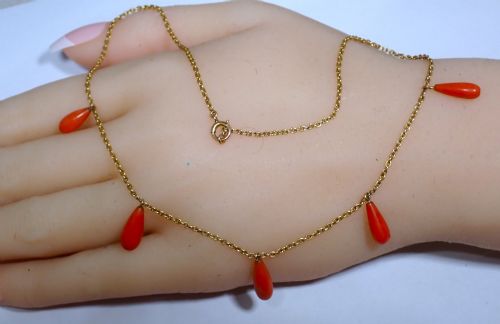
Antique coral jewellery brings together natural red and salmon branches transformed into Victorian necklaces, brooches, and Art Deco earrings.
What antique coral jewellery is
Antique coral jewellery comprises necklaces, pendants, brooches, and earrings shaped from marine skeletons. These pieces span the Victorian and Art Deco eras, capturing distinct historical tastes in ornamentation.
The single stranded beaded salmon coral necklace with silver clasp represents the simpler strung bead form found on the page. Meanwhile, complex cluster designs showcase carved natural coral alongside precious metals.
How they were made
Maker's hands shaped raw coral into smooth beads, faceted drops, and detailed cameos. These organic elements were then mounted securely into gold, silver, or platinum settings.
Metals such as eighteen-carat gold, fifteen-carat gold, and silver provide structural support for the coral components. Diamonds and emeralds occasionally accent these settings, particularly in Art Deco pieces.
Retail Price Guide 2026
Typical UK retail prices for coral jewellery, calculated from the Sellingantiques database of over a million retail prices indexed since 2003. This retail price guide relies exclusively on Sellingantiques data; no external sources or auction records are used, so the figures do not describe the wider market.
A fifty-one inch salmon coral strand gives you plenty of length to drape twice.
What varies in quality
Quality rests in the uniformity and colour saturation of the coral material itself. Evenly matched salmon beads or crisply carved cameos elevate a piece significantly above irregular or faded alternatives.
The choice of precious metal framework also defines the standard of a piece. Settings utilising higher carat gold, platinum, or incorporating diamonds and emeralds reflect superior craftsmanship.
The Antique Coral Jewellery Glossary
- Cameo
- A method of carving where a raised image stands out from a contrasting background. Victorian artisans frequently applied this technique to coral for pendants.
- Cluster brooch
- An arrangement of multiple stones or coral elements grouped tightly around a central point. The fifteen-carat gold salmon coral six tier domed cluster brooch demonstrates this layered form.
- Natural coral
- Unaltered marine material harvested for jewellery without artificial colour enhancement. This organic substance forms the core of pieces ranging from Victorian necklaces to Art Deco earrings.
- Silver clasp
- A fastening mechanism forged from silver, securing long bead strands. These clasps offer a durable and functional closure for fifty-one inch necklaces.
Frequently Asked Questions
What periods do these pieces span?
The available selection primarily dates from the Victorian era, alongside examples from the nineteen-thirties and nineteen-fifties.
These dates correspond with specific stylistic movements, such as Victorian ornamentation and Art Deco design.
How are the coral elements mounted?
Coral components are secured using various precious metals including eighteen-carat gold, fifteen-carat gold, silver, and platinum.
Craftspeople also combined diamonds and emeralds with natural coral in certain earrings and brooches.
What forms do these items take?
The inventory includes necklaces, pendants, brooches, and earrings. Items range from single stranded bead necklaces to multi-tiered cluster brooches.
Carved cameos also appear as central motifs in pendant designs.
How should I care for antique coral jewellery?
Organic coral requires gentle handling to protect its natural surface from harsh chemicals, perfumes, and abrasives.
Storing pieces away from harder gemstones prevents scratching on the softer coral material.