





Antique Console Commode
An antique console commode brings architectural proportion and refined surface work to a hallway or drawing room.
Antique Console Commode
An antique console commode sits flush against a wall, combining the narrow shelf space of a side table with the enclosed storage of a small cabinet. Buyers search for these pieces to anchor a formal entrance or reception room with distinct period character.
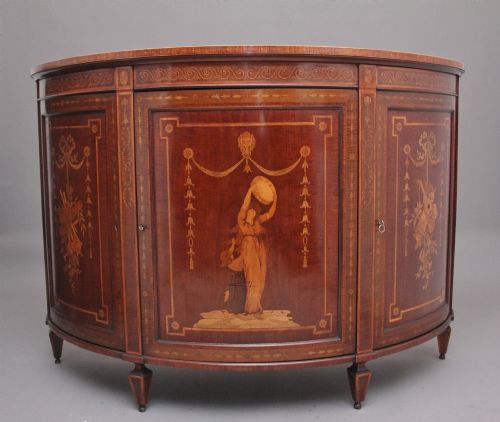
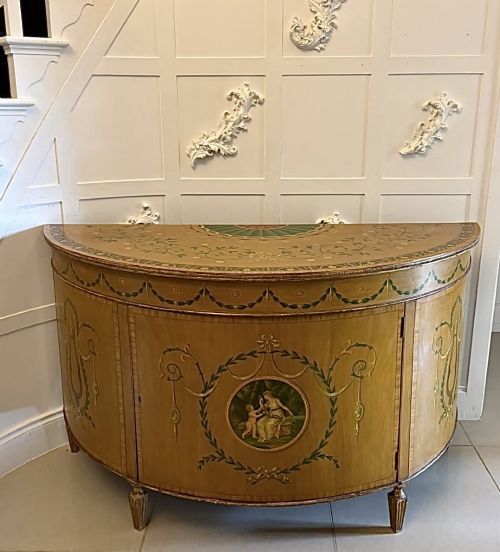
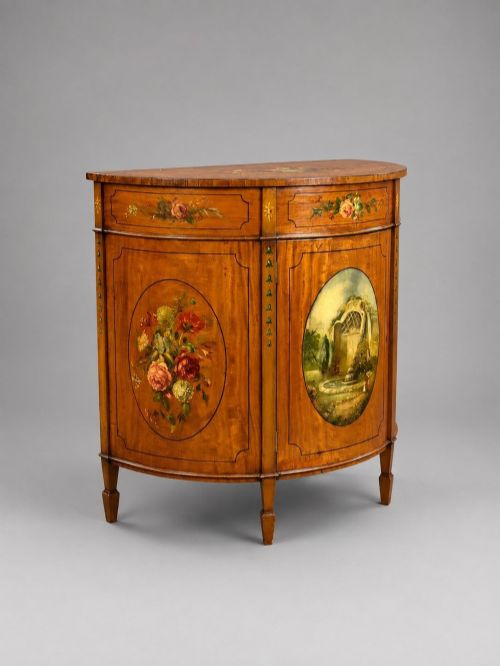
The versions most commonly met on this page take the semi-circular demi-lune form, often standing on slender tapered legs. They draw on Neoclassical, Sheraton Revival, and Louis XVI design vocabularies that prioritize symmetry and restrained ornament.
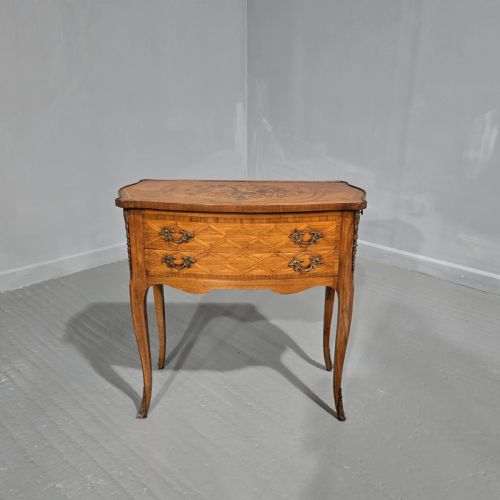
The material palette runs from figured mahogany and walnut to satinwood panels embellished with painted motifs. Makers of these pieces utilised marquetry inlay and parcel gilt details to catch the light in domestic interiors.
How they were made
Cabinetmakers constructed the carcase from solid timbers such as mahogany and walnut, applying fine veneers of satinwood across the curved drawer fronts and top surfaces. Marquetry inlay was carefully cut and fitted by hand to create classical urns, floral swags, and geometric banding.
Surfaces frequently received hand-painted decorations depicting classical panels or delicate foliage, sealed beneath clear polish. Heavy Italian and French marbles were shaped to fit the sweeping curves of the demi-lune tops, resting securely on the timber frames below.
Antique Console Commode Retail Price Guide 2026
Typical asking prices for console commode among the pieces listed under this phrase on Sellingantiques today, from the lower quarter to the upper quarter. They describe what is for sale here now, not the wider market.
Listings feature demi-lune side cabinets and commodes spanning the nineteenth and twentieth centuries, executed in satinwood, mahogany, and walnut with marble tops.
What varies in quality
The distinction between standard production and exhibition grade work lies in the depth of the marquetry and the precision of the painted panels. Finer examples display intricate multi-timber inlay and hand-rendered classical scenes rather than simple transfer prints.
Structural integrity depends on the seasoning of the timber used for the curved carcase and the thickness of the marble slab. Superior pieces retain original brass mounts, well-fitted drawers, and hand-cut joinery that withstands changes in humidity.
Pietro Ferrario
The Antique Console Commode Glossary
- Demi-lune
- A half-moon shape used for the footprint and top of console commodes and side cabinets. This curved profile allows the furniture to project minimally into a hallway while offering a generous surface.
- Marquetry inlay
- Decorative patterns formed by fitting contrasting veneers into a prepared wooden ground. Artisans used tinted woods and shell to build up complex pictorial scenes.
- Sheraton Revival
- A late nineteenth and early twentieth century design movement that reinterpreted the light, neoclassical forms of eighteenth century cabinetmaker Thomas Sheraton. Pieces in this style feature satinwood and delicate painted details.
- Parcel gilt
- Woodwork accented with thin applications of gold leaf on carved details or mouldings. This technique highlights specific architectural motifs against a dark or painted ground.
- Neoclassical
- A style drawing inspiration from the classical art and architecture of ancient Greece and Rome. It emphasises straight lines, symmetry, and classical motifs such as urns and swags.
Antique Console Commode: Frequently Asked Questions
Where should I place an antique console commode?
These pieces suit narrow circulation spaces like hallways and landings where a deep chest of drawers would obstruct movement. Their finished backs and decorative tops also allow them to sit against living room walls beneath a mirror.
The shallow profile provides a surface for lighting and decorative objects without dominating the floor plan. Placing them away from direct heat sources protects the fragile satinwood veneers and painted panels.
How do I care for marble top commodes?
Marble surfaces require regular dusting with a soft cloth and immediate blotting of acidic liquids like wine or citrus juice. Avoid abrasive household cleaners that dull the polished stone.
Applying a neutral wax paste helps protect the marble from staining over time. Lift the heavy stone slab carefully only when necessary during professional relocation.
What is the difference between a commode and a side cabinet?
Historically, a commode refers to a low chest of drawers or a cabinet with doors designed for bedroom or reception room use. Side cabinets often feature cupboards or open shelving configured specifically for dining or drawing rooms.
In modern usage across antique markets, the terms frequently overlap, particularly for demi-lune forms that combine drawer space with enclosed lower cupboards.
How do I identify a Sheraton Revival piece?
Sheraton Revival furniture dates primarily from the late nineteenth and early twentieth centuries rather than the eighteenth century. Look for light satinwood timbers, tapered legs, and painted neoclassical decoration.
Construction details such as machine-sawn secondary timbers or modern hardware fixings generally point to this later revival period rather than the original Georgian era.