


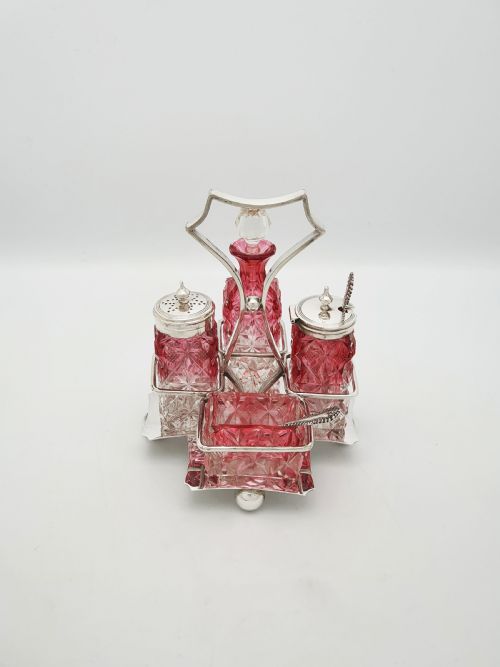
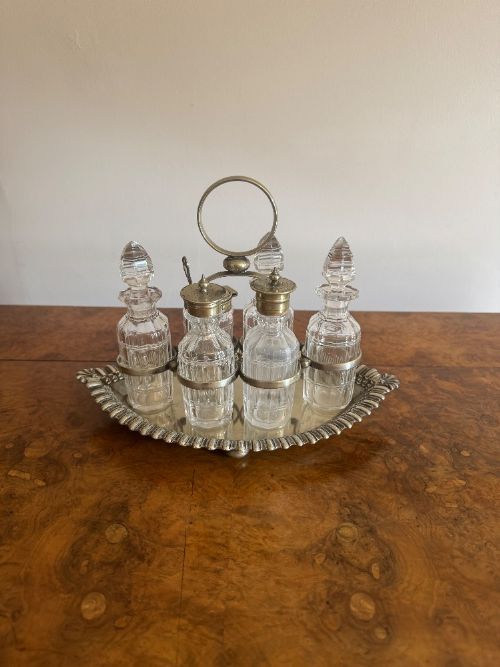


Antique Condiment Bottle
An antique condiment bottle stands ready to serve, bringing refined detail to the table with period glass and metalwork.
Antique Condiment Bottle
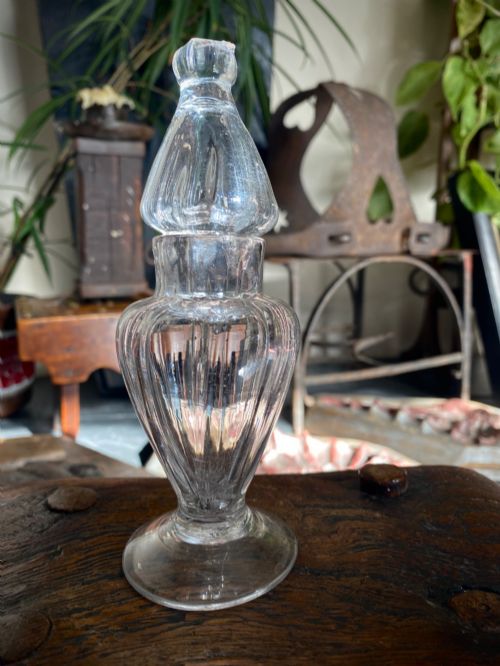
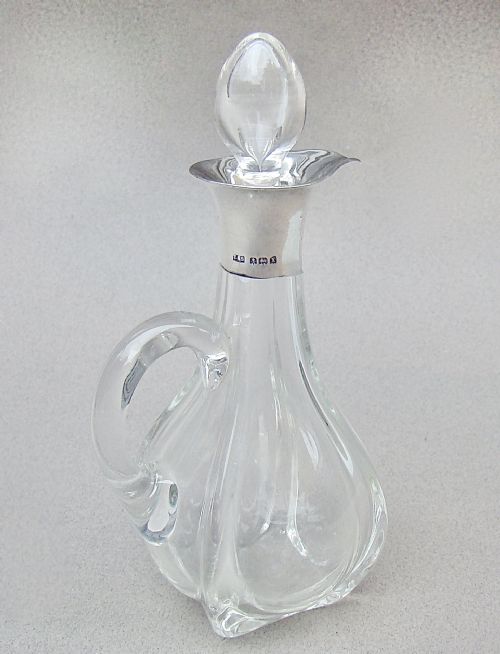
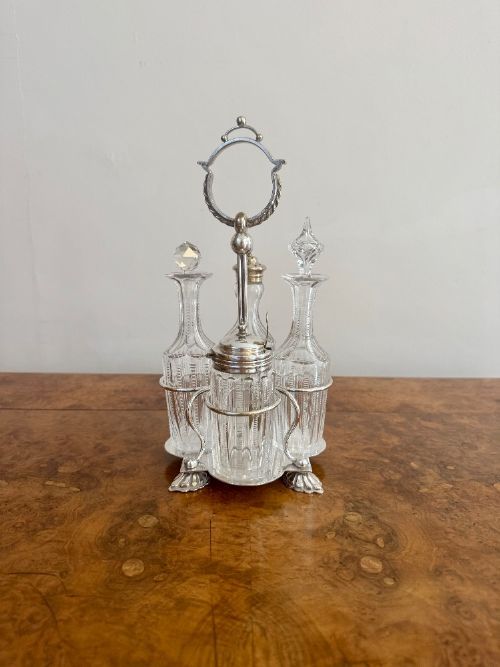
When searching for an antique condiment bottle, buyers encounter individual oil and vinegar bottles, single cruets, and multi-bottle cruet sets housed in frames. The listings on this page span the Georgian, Victorian, and Edwardian periods, alongside Art Deco examples from the early twentieth century.
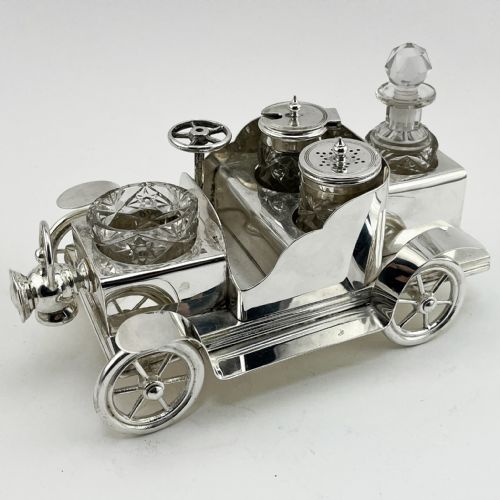
Most pieces appear within silver plated or sterling silver stands, accompanied by cut glass, crystal, or cranberry glass bottles. Forms range from simple pairs of oil and vinegar vessels to elaborate seven-bottle frames and novelty car cruet sets.
Origins stretch from the eighteenth century through to the 1920s, reflecting changing dining customs across the Georgian and Victorian eras. Buyers will regularly find Edwardian silver plated sets featuring multiple cut glass bottles ready for the dining table.
Materials and construction
These pieces combine glass-making and metalworking, pairing cut glass, crystal, lead crystal, or cranberry glass bottles with silver plate, Old Sheffield plate, or sterling silver mounts and stands. Some earlier stands utilise mahogany and treen alongside silver-mounted glass bottles.
Makers shaped the glass through heavy hand-cutting and flashing, while mounts utilised traditional silversmithing techniques including hallmarked casting and silver plating over a base metal. Stands often incorporate ornate handles and frames designed to hold multiple bottles securely.
Antique Condiment Bottle Retail Price Guide 2026
Typical asking prices for condiment bottle among the pieces listed under this phrase on Sellingantiques today, from the lower quarter to the upper quarter. They describe what is for sale here now, not the wider market.
Dining tables once welcomed an unusual Victorian silver plated vintage car cruet set.
Assessing quality in antique condiment vessels
Quality reveals itself in the crispness of the glass-cutting and the weight of the crystal or lead glass used in the bottles. Finer examples display deep, clear hand-cut facets that catch the light cleanly.
Metalwork quality shows in the thickness of the silver plating or the substantial gauge of sterling silver on mounts and stands. Elaborate cast details, secure hallmarks, and robust framing distinguish the finest Georgian, Victorian, and Edwardian sets from simpler production.
Walker & Hall·Charles Thomas Fox·Elkington & Co·Hester Bateman·Wade Wingfield Wilkins
The Antique Condiment Bottle Glossary
- Cruet set
- A fitted stand holding multiple bottles or jars for condiments, oil, vinegar, salt, and pepper at the dining table. These collections typically include several glass bottles with silver or plated mounts.
- Cranberry glass
- A rich red-pink transparent glass produced by adding gold chloride to the molten batch during the nineteenth century. It often appears flashed or layered on cut glass condiment bottles from the Edwardian era.
- Old Sheffield plate
- An early fused metal technique where a thin sheet of sterling silver is fused to a thicker copper core before shaping. This method creates items that bridge solid silver and standard silver plate.
- Lead crystal
- Glass containing a significant percentage of lead oxide, which increases brilliance, weight, and clarity. It allows for deep, sharp hand-cutting on decorative condiment bottles.
Antique Condiment Bottle: Frequently Asked Questions
What is an antique condiment bottle used for?
These bottles held liquids and seasonings such as oil, vinegar, soy, or sauces for dining table service.
They sat within fitted stands so diners could season food easily during formal meals.
How do I identify a Georgian cruet set?
Georgian sets date from the eighteenth and early nineteenth centuries, featuring classic architectural lines or delicate silver mounts.
Look for hallmarks indicating London origins from that period alongside mahogany or early silver frames.
What is the difference between silver plate and sterling silver?
Sterling silver contains a high purity of silver throughout the entire metal object, usually confirmed by official assay office hallmarks.
Silver plate consists of a thin layer of silver bonded over a base metal foundation.
How do I care for antique glass and silver?
Clean the glass bottles gently in warm soapy water, avoiding harsh abrasives that might scratch the surface.
Polish silver mounts sparingly with a soft cloth to preserve the underlying metal and any remaining plating.