

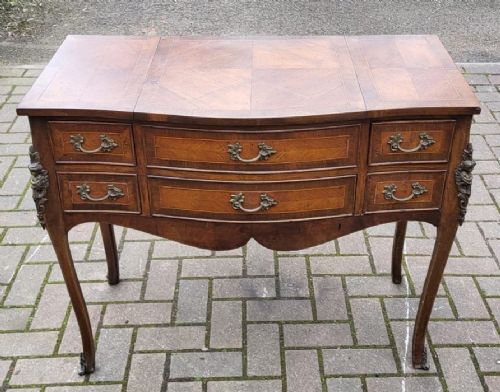


Antique Coiffeuse Table
An antique coiffeuse table is a dedicated vanity piece designed for morning toilette, combining practical surface space with integrated mirrors and compartments.
Antique Coiffeuse Table
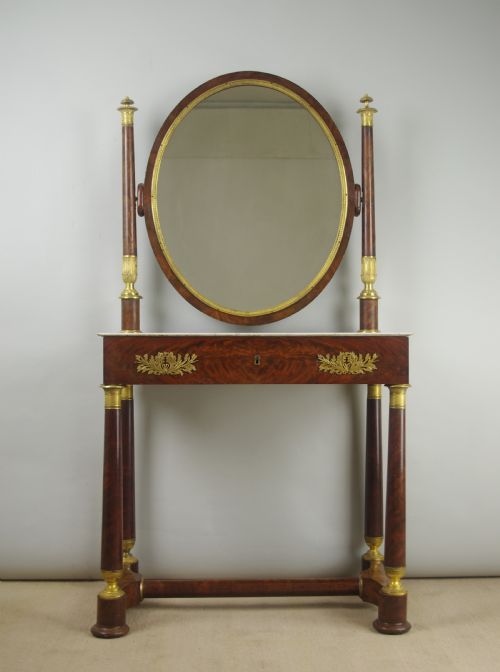
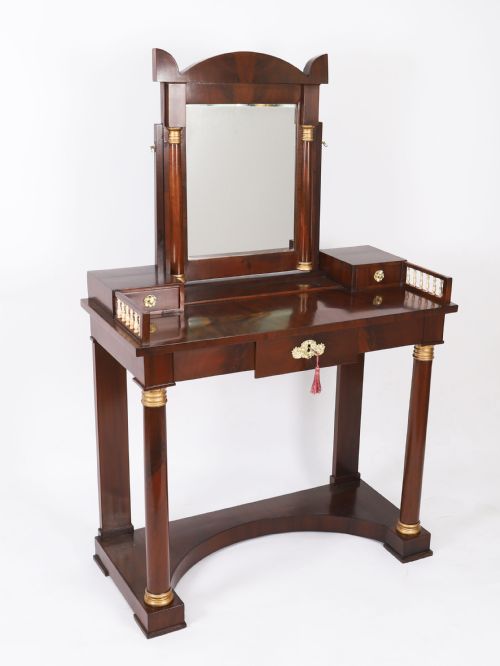
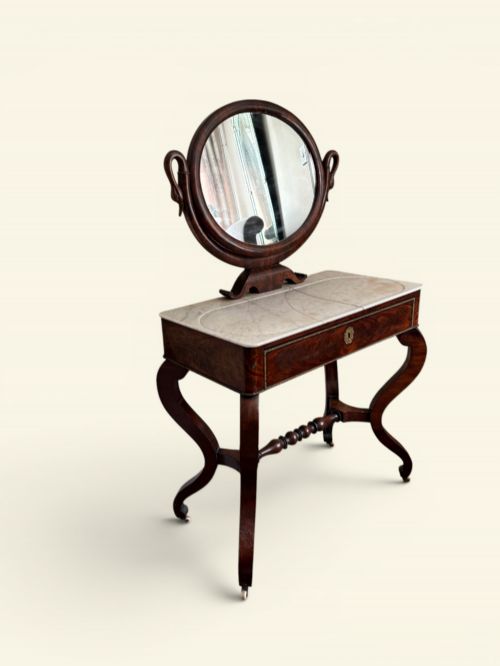
An antique coiffeuse table functions as a dressing table or side table, originating predominantly from French workshops across the eighteenth, nineteenth, and early twentieth centuries. These pieces serve as intimate furniture for grooming, often incorporating pivoting mirrors, hidden drawers, and compartmented interiors for cosmetics and personal items.
The selections available on this page lean heavily toward nineteenth-century French production, encompassing formal Empire models in dark timbers and ornate Louis-style revivals. Alongside these, one encounters streamlined Art Deco examples and lighter period interpretations in marquetry and exotic veneers.
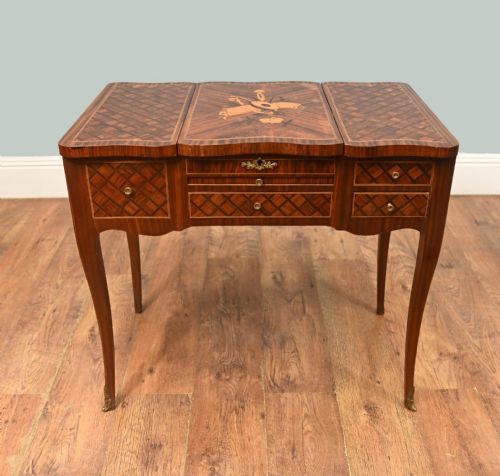
Forms vary from substantial mahogany dressing tables mounted in ormolu to delicate kingwood and rosewood crossbanded designs, with occasional marble tops or Sevres porcelain plaques. Each piece reflects the domestic habits and decorative tastes of its period, from classical French symmetry to twentieth-century modernism.
How they were made
Cabinetmakers constructed these tables using a carcase of native hardwoods like mahogany or oak, faced with decorative veneers such as kingwood, tulipwood, and rosewood. Crossbanding and marquetry inlay patterns define the surfaces, requiring precise hand-cut joinery.
Metalwork played a defining role in the ornamentation, utilising cast brass and gilt bronze ormolu mounts screwed or pegged to the timber framework. Marble tops provided durable, cool surfaces for washbasins and bottles, while inset glass mirrors completed the assembly.
Some dressing tables double as work tables, hiding sewing compartments behind polished mahogany lids for secret handiwork.
What varies in quality
Quality rests in the crispness of the bronze ormolu mounts and the precision of the timber veneers. Finer pieces feature heavily figured grain, exact marquetry alignment, and thick, fire-gilded brass details rather than stamped plated metal.
The interior construction reveals the maker's hand through dovetailed drawer boxes, solid secondary woods, and smoothly operating mirror mechanisms. Superior examples retain their original glass, marble slabs, and integrated hardware without later replacements.
Harry and Lou Epstein·Maison Pretot Paris
The Antique Coiffeuse Table Glossary
- Ormolu
- Gilded bronze mounts applied to furniture. This technique involves coating cast bronze with a mercury and gold amalgam before heating.
- Kingwood
- A dense, heavy Brazilian timber with distinctive dark violet-brown streaks. Cabinetmakers valued it for high-end eighteenth and nineteenth-century veneering.
- Marquetry
- Patterns created on furniture surfaces using thin slices of wood veneer. Artisans arrange different coloured timbers to form pictorial or geometric designs.
- Crossbanding
- A decorative border technique where veneer strips run perpendicular to the grain of the central panel. This frames the top or drawer fronts.
Antique Coiffeuse Table: Frequently Asked Questions
What is an antique coiffeuse table?
An antique coiffeuse table is a specialised French dressing table designed for grooming and cosmetics. These pieces typically include surface space, drawers, and integrated or matching mirrors.
Most examples date from the nineteenth and early twentieth centuries, spanning styles from French Empire to Art Deco. They function as both decorative furnishings and practical vanities.
How do I identify French Empire pieces?
French Empire furniture relies on classical symmetry, dark mahogany timbers, and prominent cast bronze or ormolu mounts. The lines remain straight and architectural.
These pieces often feature motifs drawn from classical antiquity, such as paw feet, columns, and leaf scrolls. The overall aesthetic is formal and imposing.
What woods are commonly used?
Makers utilised mahogany as a primary structural and visible timber, particularly in earlier nineteenth-century Empire pieces. Oak also appears as a secondary wood for drawer linings.
Exotic veneers such as kingwood, rosewood, and tulipwood frequently form the decorative surfaces on later nineteenth-century revival and marquetry tables.
How do I care for marble and glass?
Marble tops require gentle cleaning with mild, pH-neutral soap and warm water to avoid etching the stone. Harsh chemicals or acidic cleaners will damage the polished surface.
Original mirror glass should be dusted with a soft cloth and cleaned sparingly. Avoid getting moisture behind the glass edges where the silver backing can degrade.