

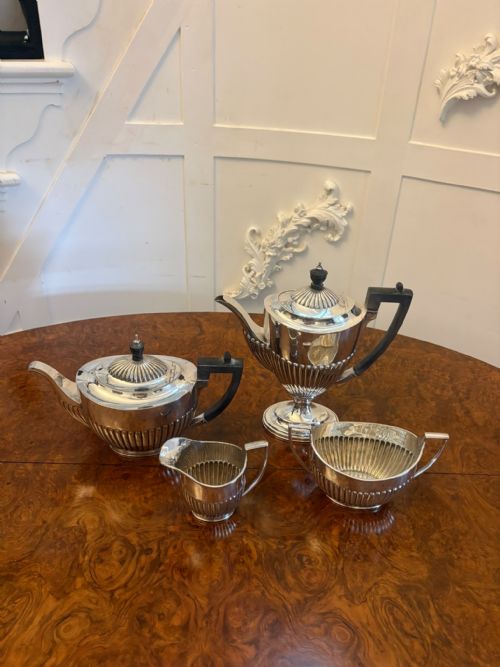
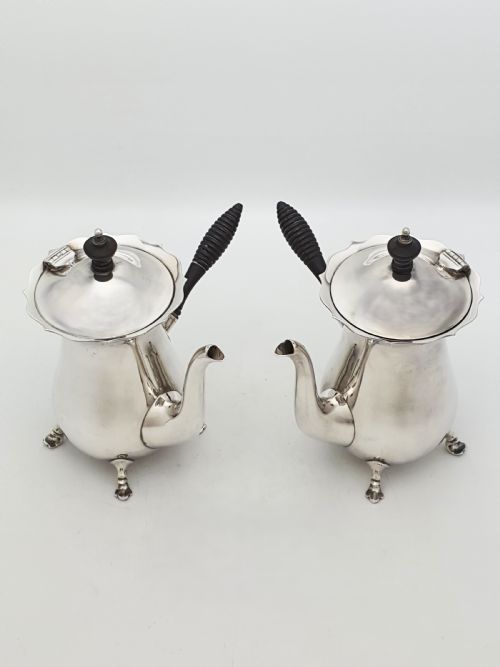


Antique Coffee Service
An antique coffee service brings the ritual of morning or after-dinner caffeine into a domestic interior with considerable style.
Antique Coffee Service
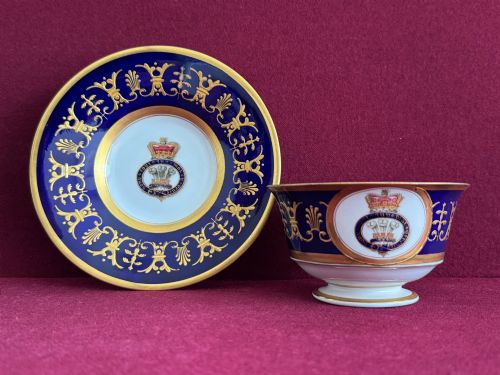
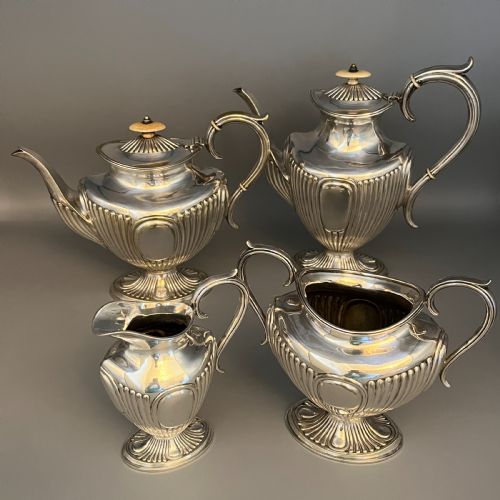
An antique coffee service comprises coordinated vessels designed for brewing and serving coffee, frequently accompanied by milk jugs, sugar basins, and matching cups or saucers. These ensembles range from compact demitasse services for intimate gatherings to large, multi-piece sterling silver and silver-plated configurations intended for formal entertaining.
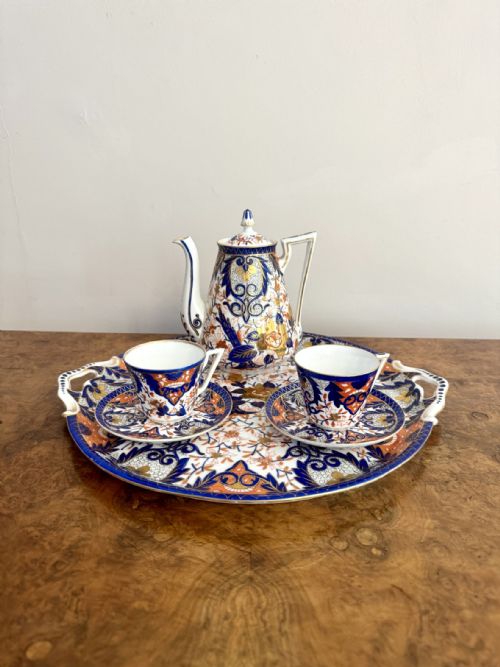
The versions most commonly met on this page span the Victorian and Edwardian eras, alongside vibrant Art Deco porcelain productions from the twentieth century. Earlier examples emerge from Georgian and Regency periods, leaning towards neoclassical forms and hand-painted porcelain.
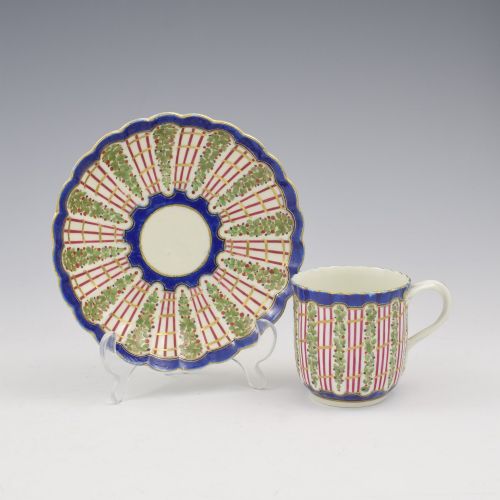
Buyers encounter everything from complete silver-plated tea and coffee sets to specialised porcelain coffee cans and side-handled pots. Each grouping reflects the social habits of its period, transitioning from heavy silver services to colourful ceramic designs.
Materials and Craftsmanship
The creation of these services relies heavily on sterling silver, silver plate, and fine porcelain, often enhanced with gilding, enamel, and wooden or ebony handles. Silversmiths utilised hammering, casting, and Sheffield plating techniques to shape substantial metal pots and trays, while potteries moulded delicate clay bodies before applying intricate hand-painted glazes.
Decoration often includes ornate grapevine detailing, neoclassical motifs, and bold geometric Art Deco patterns. Makers balanced structural utility with decorative flair, ensuring handles remained insulated with wood or bone while exterior surfaces displayed the height of contemporary aesthetic taste.
Antique Coffee Service Retail Price Guide 2026
Typical asking prices for coffee service among the pieces listed under this phrase on Sellingantiques today, from the lower quarter to the upper quarter. They describe what is for sale here now, not the wider market.
Listings feature silver plate, sterling silver, porcelain, and wood across periods spanning from the eighteenth century to the mid-twentieth century.
Assessing Quality
The hierarchy of quality rests on the weight of the metal, the crispness of the chased or cast ornamentation, and the pedigree of the maker. Substantial gauge silver and finely potted porcelain with hand-applied enamel separate utilitarian wares from superior artistic productions.
Completeness within fitted cases and the preservation of original gilding or silver plating significantly influence the standing of a service. Pieces retaining matching components, clear hallmarks, and unblemished decorative surfaces represent the pinnacle of surviving examples.
Walker and Hall·Clarice Cliff·Elkington·Harry Atkin·Barr and Barr·Doulton
The Antique Coffee Service Glossary
- Demitasse
- A small cup used for serving black coffee or espresso. These frequently accompany miniature coffee services from the twentieth century.
- Sheffield Plate
- A composite material made by fusing a sheet of silver to a copper ingot. This technique predates modern electroplating and appears on eighteenth and nineteenth-century pots.
- Silver Plate
- A base metal, such as nickel silver or Britannia metal, coated with a thin layer of silver through electrolysis. It provided a durable and lustrous alternative to solid silver.
- Porcelain
- A ceramic material made by heating raw materials, generally including kaolin, in a kiln. It forms the translucent body of many antique cups, saucers, and pots.
- Gilding
- The application of a thin layer of gold leaf or gold powder to the surface of porcelain or metal. This technique highlights rims, handles, and decorative motifs.
Antique Coffee Service: Frequently Asked Questions
How do I care for silver-plated coffee pots?
Clean silver plate gently using a soft cloth and a reputable silver polish formulated to preserve the underlying metal.
Avoid abrasive cleaners that wear away the thin silver layer over decades of maintenance.
Can I still use these antique services for daily coffee?
Metal and glazed porcelain pots can hold hot liquids, though older handles made of wood or ebony require careful hand washing.
Many collectors prefer to display delicate porcelain sets, reserving use for special occasions to protect fragile gilding.
How do I identify the date of a silver coffee service?
British sterling silver and silver-plated items often feature hallmarks indicating the assay office, maker's mark, and a specific date letter.
Porcelain services rely on factory backstamps, pattern numbers, and stylistic markers to determine their decade of origin.