


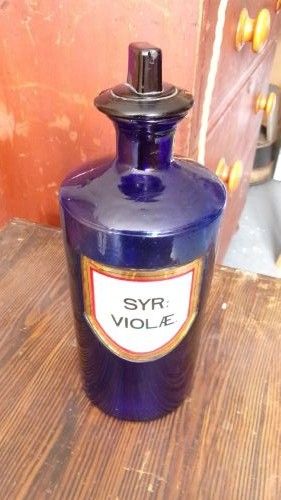

Antique Cobalt Bottle
An antique cobalt bottle brings deep blue richness to a room, offering both decorative depth and historical utility through glass, porcelain and pottery forms.
Antique Cobalt Bottle
When searching for an antique cobalt bottle, a buyer encounters a diverse group of vessels spanning domestic, apothecary and display functions from the eighteenth century to the early twentieth century.
The pieces on this page appear predominantly as glass decanters, scent bottles and ceramic vases, originating from English, European and Asian workshops.
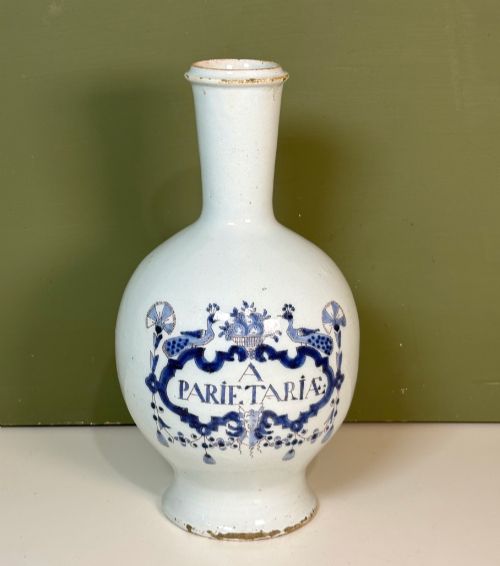
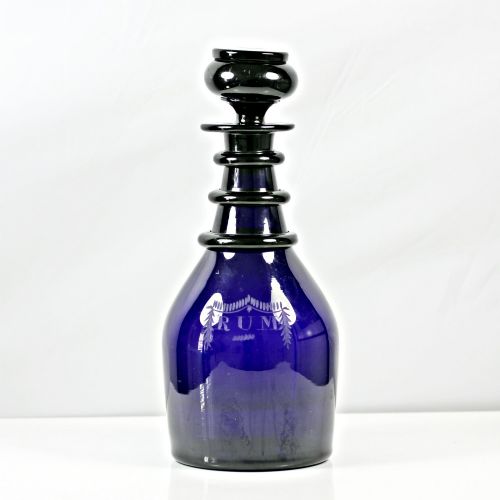
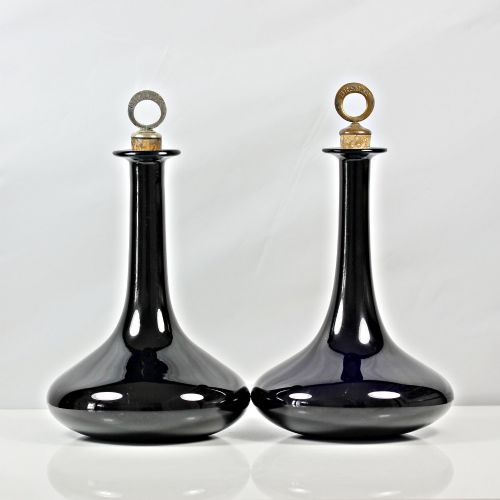
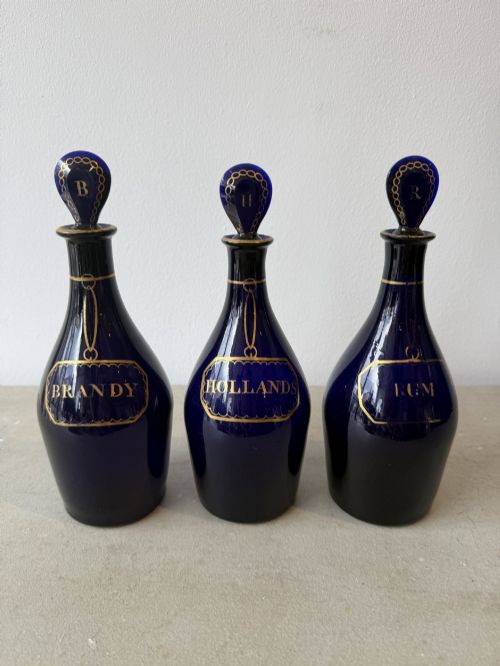
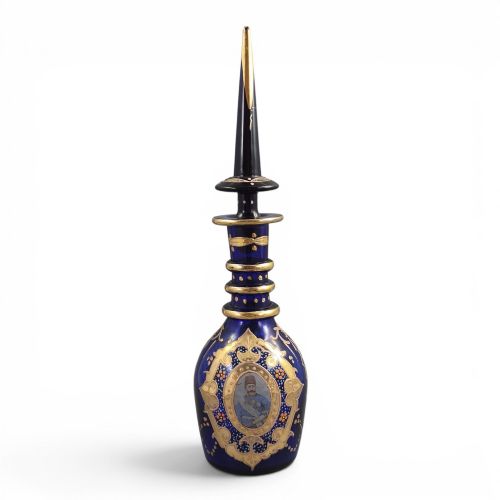
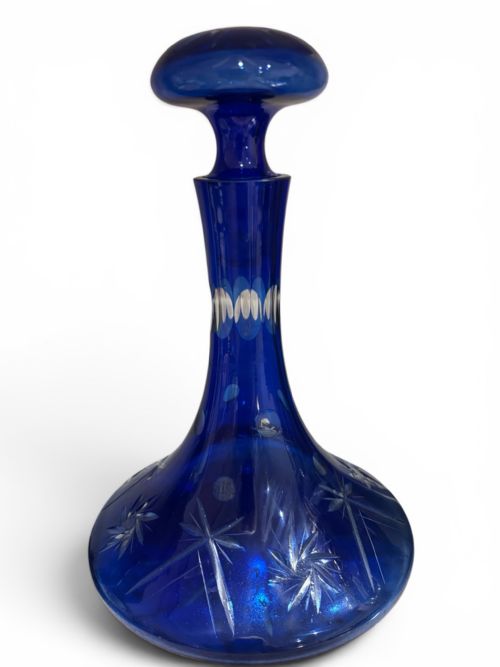
Glass examples range from deep blue Bristol glass spirit decanters with ring necks to chemists' bottles featuring lollipop stoppers, while ceramic pieces encompass Delftware and porcelain bottle vases.
How they were made
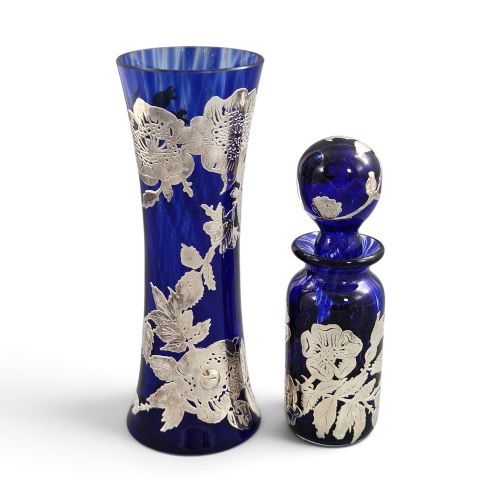
Glass bottles were typically hand-blown, utilising cobalt oxide to achieve their intense coloration, sometimes with added gold leaf, enamel painting or silver mounts.
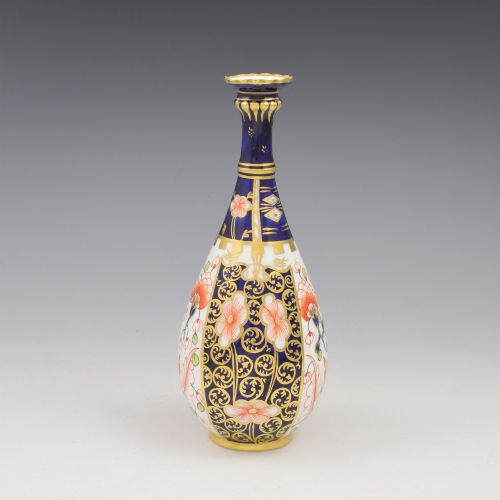
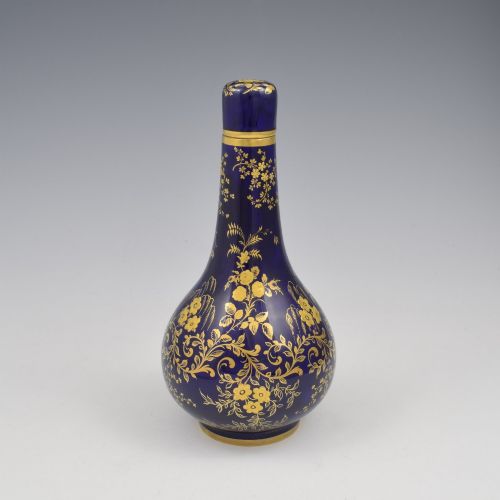
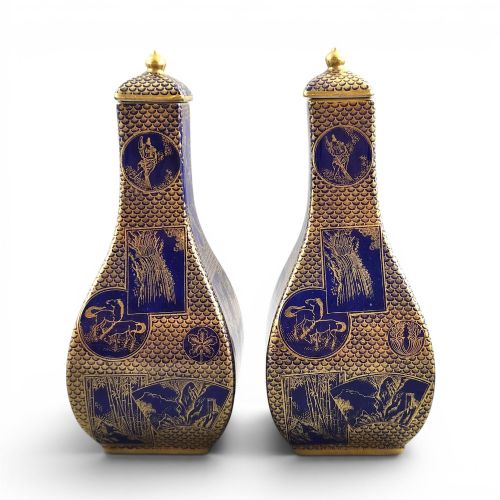
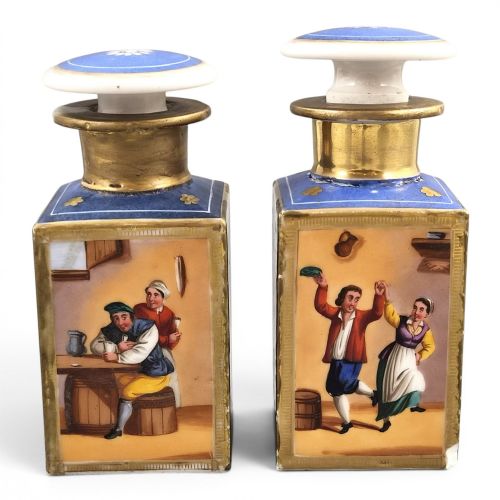
Ceramic equivalents relied on cobalt glaze or underglaze blue pigments applied to porcelain and earthenware bodies before firing, occasionally finished with gilt highlights in Sèvres or Imari styles.
Materials span cobalt glass, sterling silver, gold leaf, enamel and porcelain with underglaze blue decoration.
What varies in quality
Quality rests in the depth and uniformity of the cobalt colour, the crispness of hand-painted enamel or gilt details, and the survival of matching stoppers and original silver or metal mounts.
Pieces showing finer potting, more complex decorative scenes such as Teniers figures or Murano murrine glasswork, and better-preserved surface finishes stand apart from utilitarian chemist jars.
Royal Crown Derby·Mason's Patent Ironstone·Jacob Petit·Stevenson and Hancock·Crown Staffordshire·Flight Barr and Barr·Doulton
The Antique Cobalt Bottle Glossary
- Bristol blue
- A deep cobalt-blue glass produced in Bristol and other English centres during the Georgian and Victorian eras, commonly utilised for decanters and apothecary bottles.
- Mell decanter
- A mallet-shaped glass bottle designed for holding wine or spirits safely on a ship or dining table.
- Delftware
- Tin-glazed earthenware produced in Dutch and English potteries, often decorated in blue with oriental or European landscapes.
- Imari
- A Japanese and European ceramic style featuring a palette of underglaze blue, iron red and gilt, seen on various porcelain vases.
- Chatelaine scent bottle
- A small perfume container suspended from a belt hook, popular in the Victorian period with silver or glass overlay.
Antique Cobalt Bottle: Frequently Asked Questions
How do I identify a Bristol blue decanter?
Bristol blue decanters display a rich, deep cobalt hue and often feature characteristic triple-ring necks intended for a secure grip during pouring.
They frequently date from the Georgian and Victorian periods and may retain gilt labels or cut-glass stoppers.
Were these glass bottles used for medicine?
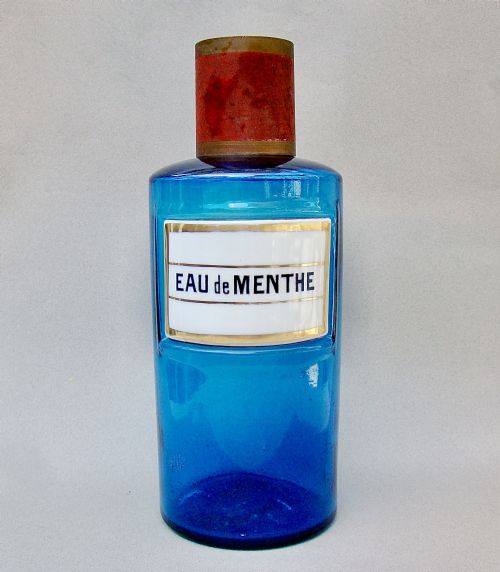
Many cobalt glass examples served as apothecary bottles and chemist jars to protect light-sensitive contents from sunlight.
Such pieces often include hand-painted white glass labels and large lollipop stoppers.
How should I clean an antique glass bottle?
Antique glass requires gentle cleaning with warm water and mild soap, avoiding harsh abrasives that could damage delicate enamel or gold leaf.
Silver mounts should be polished separately with appropriate care to prevent tarnish accumulation.
What is the difference between a decanter and a vase?
Decanters feature narrower necks designed to hold liquids with stoppers to seal the contents, while vases have open necks intended for displaying floral arrangements or standing alone.
Both forms appear frequently in cobalt glass and porcelain across the eighteenth and nineteenth centuries.