



Antique Coat Hanger Rail
These antique coat hanger rail pieces offer practical wall-mounted storage crafted from wood and metal during the Victorian, Art Deco, and earlier eras.
Antique Coat Hanger Rail
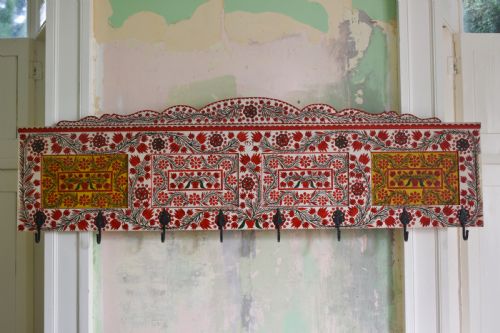
An antique coat hanger rail serves as a wall-mounted fixture designed for hanging garments, hats, and household items. The selection on this page centres on practical wooden backboards fitted with functional metal hooks.
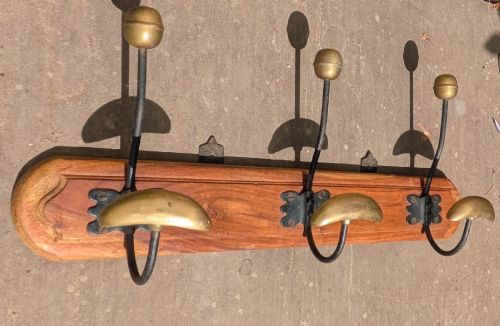
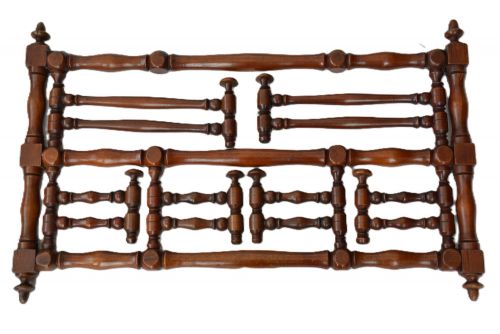
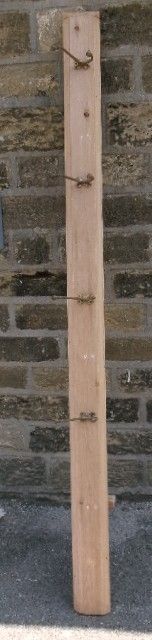
You will encounter various formats spanning the 1800s to the 1930s, including simple pine backboards and more elaborate French Art Deco wall units. These pieces range from compact domestic coat racks to longer kitchen game hook rails and double-sided hanging designs.
The styles reflect their periods of origin, drawing on Victorian practicality, Arts and Crafts simplicity, Aesthetic Movement detail, and French Country utility. Each item brings period character directly into an entryway, hallway, or kitchen space.
How they were made
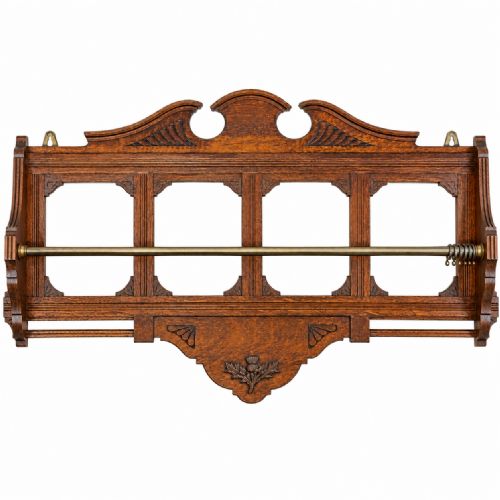
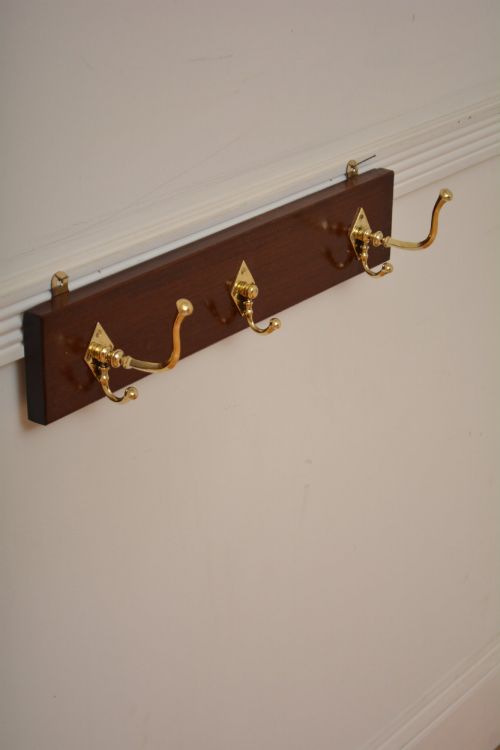
Makers constructed the backboards using native and imported timbers such as pine, mahogany, and oak, often shaping them into long planks or chunky supports. These wooden mounts provide the structural backbone for securing the hardware securely to a wall.
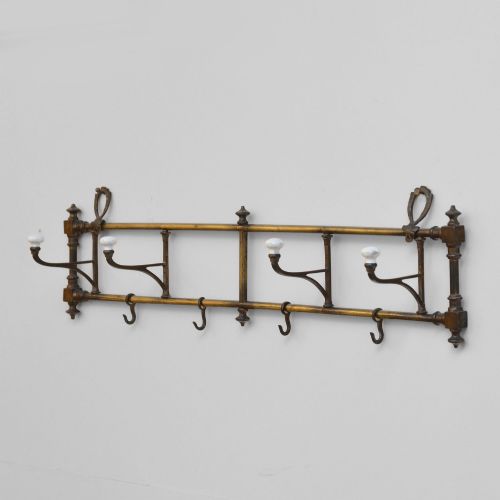
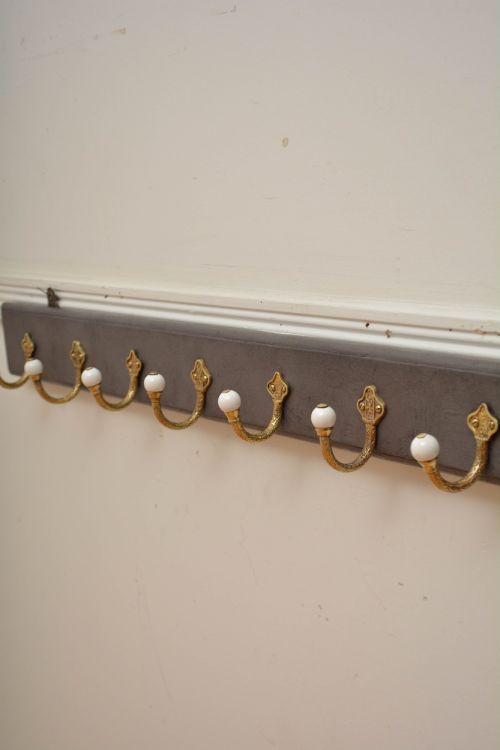
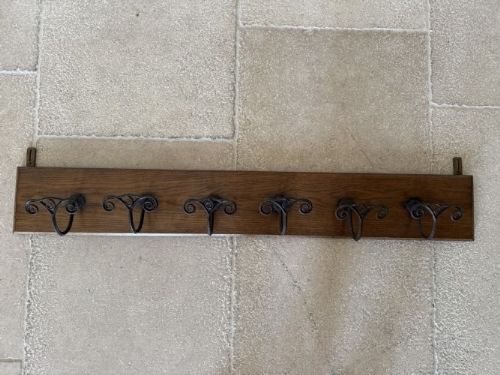
Metal components were cast or wrought from brass, cast iron, and wrought iron to form sturdy hooks and mounting plates. Many examples incorporate ceramic elements into the hook design or feature decorative mounting plates that combine durability with visual detail.
Antique Coat Hanger Rail Retail Price Guide 2026
Typical asking prices for coat hanger rail among the pieces listed under this phrase on Sellingantiques today, from the lower quarter to the upper quarter. They describe what is for sale here now, not the wider market.
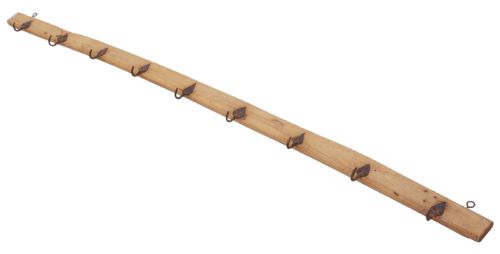
Kitchen game hook racks originally held dressed game, but today they serve admirably for hanging heavy winter coats and disgruntled umbrellas.
What varies in quality
The distinction between standard examples and finer pieces often lies in the casting and finishing of the metal hooks. Finely cast brass, detailed mounting plates, and the inclusion of original ceramic inserts elevate the overall character of a rail.
Material selection and construction thickness also differentiate the range, with dense hardwoods like mahogany and substantial golden pine providing greater structural presence than simpler utilitarian boards.
The Antique Coat Hanger Rail Glossary
- Backboard
- The horizontal strip of wood that carries the hooks and fastens to the wall. It distributes the weight of garments across the fixing points.
- Game hook
- A specialised ceiling or wall-mounted hook historically used for hanging game in a kitchen or larder. These often feature rotating or multiple hanging loops.
- Hat tree
- A term sometimes applied to wall-mounted rail fixtures that incorporate upper prongs specifically intended for resting hats alongside coats.
- Aesthetic Movement
- A late nineteenth-century design style prioritizing visual beauty and craftsmanship over strict historical revival. Pieces from this period often blend rich woods with refined metalwork.
Antique Coat Hanger Rail: Frequently Asked Questions
How do I mount an antique coat rail safely?
Most rails require sturdy fixings into wall studs or appropriate wall plugs to support the weight of heavy winter garments. Ensure the mounting screws match the depth and size of the original screw holes in the backboard.
Check that the spacing of your wall fixings aligns with the structural support points of the wooden rail to prevent bowing or pulling away from the wall under load.
What is the difference between Victorian and Art Deco coat rails?
Victorian rails typically feature heavier timber backboards paired with cast brass or iron hooks, sometimes accented with ceramic details. They lean towards traditional ornamentation and utility.
Art Deco rails from the early twentieth century often showcase sleeker lines, wrought iron construction, or French styling designed for a more streamlined aesthetic.
Can I use these rails in a modern hallway?
These functional wall fixtures integrate well into contemporary spaces by offering authentic storage while adding historical character to plain walls. Their compact depth makes them suitable for narrow corridors and entryways.
Ensure the length of the rail matches the available wall space and that the hook capacity suits your daily household storage needs.
How do I identify the period of a coat rail?
Dating relies on observing the combination of materials, hook styles, and construction techniques visible on the piece. For example, Aesthetic Movement pieces often pair mahogany with specific brass designs, while Art Deco items favor wrought iron.
Examining the screw heads, wood patina, and casting quality helps narrow down whether a rail originates from the Victorian era or the early twentieth century.