

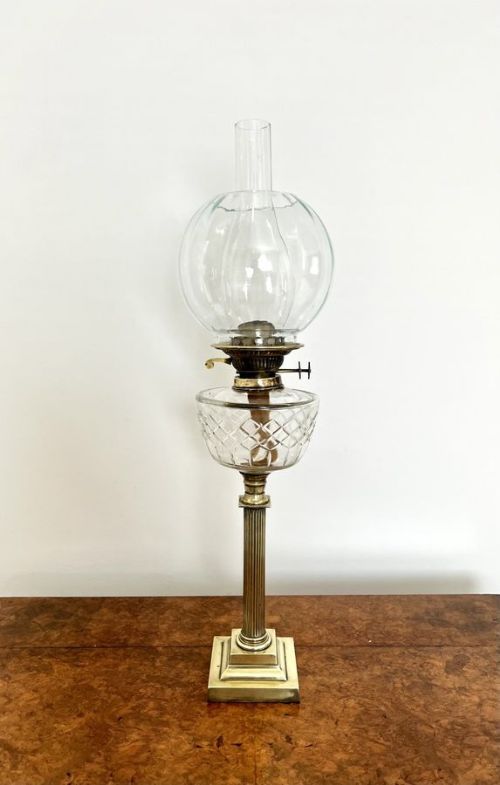


Antique Clear Glass Burner
These antique clear glass burner pieces are oil lamps designed to cast a bright interior light.
Antique Clear Glass Burner
An antique clear glass burner is fundamentally an oil lamp designed for domestic illumination before electric lighting became universal. When you search for this phrase, you find oil lamps configured from periods ranging from the eighteenth century through to the Victorian era.
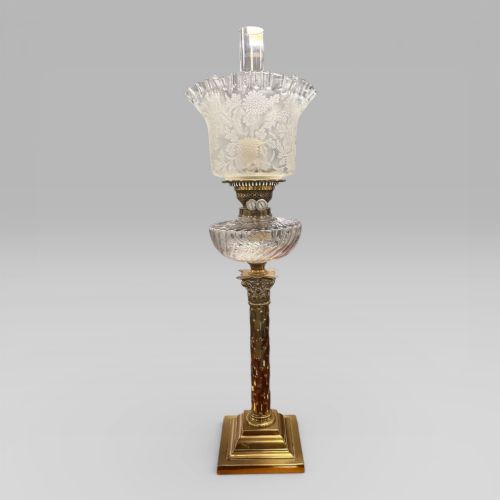
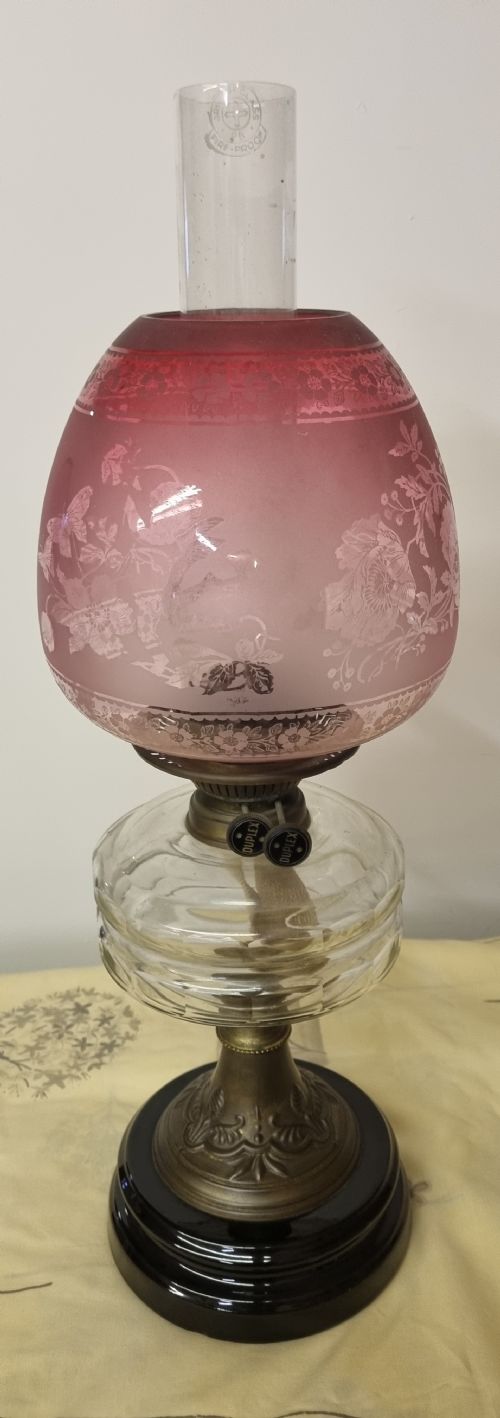
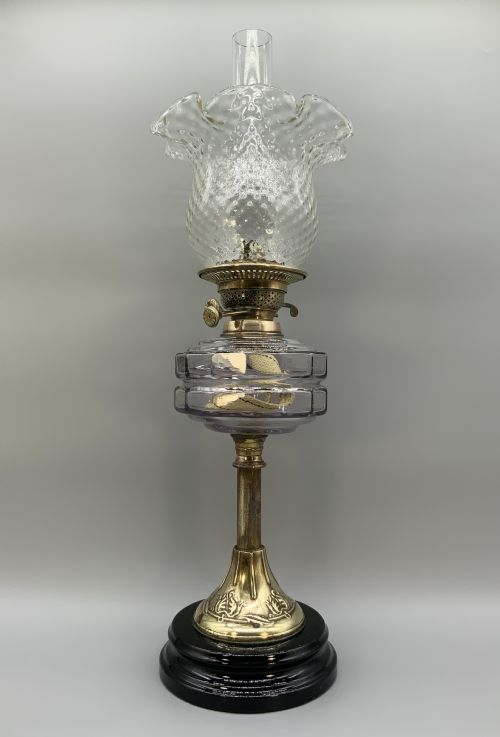
The most common examples on this page date from the Victorian period, frequently combining a transparent reservoir with a metal column or ceramic base. These vessels served as essential household items in sitting rooms and parlours across Britain.
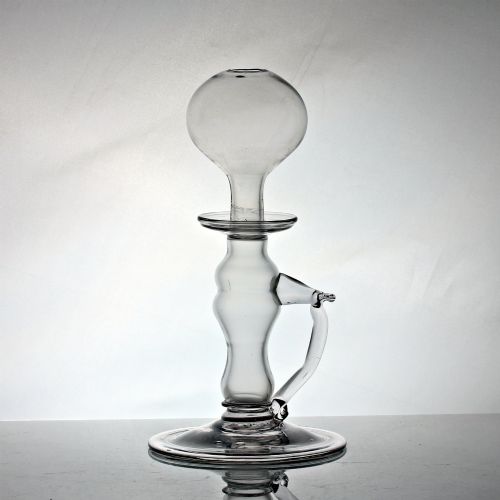
The assortment spans Georgian tall glass oil lamps with applied handles to later twin-burning hand-blown shade variants. Collectors encounter various forms, including small incised twist designs and examples featuring terrestrial globe shades.
How they were made
Makers formed these items using blown glass, cut glass, lead crystal, and frosted glass for the reservoirs and shades. Transparent elements were frequently paired with sturdy brass columns or ceramic plinths to provide structural balance.
Craftsmen utilised techniques such as hand-blowing, surface cutting, and incised twisting to shape the glass components. Metalwork elements like brass fittings and applied handles were then securely attached to complete the mounting.
Antique Clear Glass Burner Retail Price Guide 2026
Typical asking prices for clear glass burner among the pieces listed under this phrase on Sellingantiques today, from the lower quarter to the upper quarter. They describe what is for sale here now, not the wider market.
Victorian households relied on terrestrial globe shades to bring geography lessons directly into the parlour while reading by lamplight.
What varies in quality
The standard of a piece depends on the crispness of the cut glass detailing and the weight of the brass column. Superior items display clean optical clarity in the glass reservoir alongside robust, well-cast metal components.
Design complexity also separates standard utility lamps from finer examples, such as those incorporating etched tulip shades or terrestrial globes. The integration of materials, from ceramic bases to hand-blown shades, defines the refinement of the finished object.
Young s Special·Messengers·Harrods
The Antique Clear Glass Burner Glossary
- Duplex burner
- A double-wick mechanism that produced a brighter flame than single-wick predecessors. It became common on late Victorian lamps.
- Blown glass
- Molten glass shaped by inflating air through a blowpipe into a hollow form. This technique created the smooth reservoirs seen on many period lamps.
- Cut glass
- Glass decorated by grinding facets or patterns into the surface with a wheel. This process enhanced the sparkle of the clear material under lamplight.
- Lead crystal
- Glass containing lead oxide, which increases weight, clarity, and brilliance. It was utilised for high-end Victorian and Georgian table lamps.
- Terrestrial globe shade
- A spherical glass shade painted or etched with map details of the earth. These globes sat atop the burner to diffuse the light.
Antique Clear Glass Burner: Frequently Asked Questions
How do I date an antique oil lamp?
Dating relies on identifying the manufacturing techniques used on the glass and the style of the metal mountings. Georgian pieces often feature simpler blown forms, whilst Victorian examples frequently incorporate elaborate brass columns and cut glass reservoirs.
Examining the burner mechanism itself also provides clues, as patented double-wick systems and specific maker stamps generally point to the latter half of the nineteenth century.
Were clear glass burners used in every room?
These lamps provided portable illumination for living spaces, dining rooms, and bedrooms before mains electricity. Tall examples with heavy brass columns typically stood in reception rooms where a brighter, stable light was required.
Smaller variants, such as twisted glass table lamps, were easily moved between rooms as daylight faded. Their transparent reservoirs allowed users to monitor the remaining fuel level at a glance.
How should I clean a glass oil lamp?
Glass reservoirs and shades wash safely in warm soapy water once detached from any metal mounts. Care must be taken with frosted or etched sections to avoid harsh abrasives that could damage the surface texture.
Brass columns require gentle polishing with a soft cloth to preserve the aged patina without stripping the metal entirely. Submersing weighted bases in water should be avoided to prevent moisture trapping inside sealed joins.
Can I still burn oil in these lamps?
Many period lamps remain mechanically capable of burning paraffin or lamp oil if the wick mechanism functions correctly. Modern users often retain them as decorative objects or convert them carefully for electrical display.
Running historic burners requires checking the integrity of the glass reservoir and ensuring the wick moves freely. Collectors frequently choose to preserve the original components without introducing fuel.