


Antique China Display Unit
An antique china display unit brings structure and transparency to a room, housing precious porcelain safely behind glass.
Antique China Display Unit
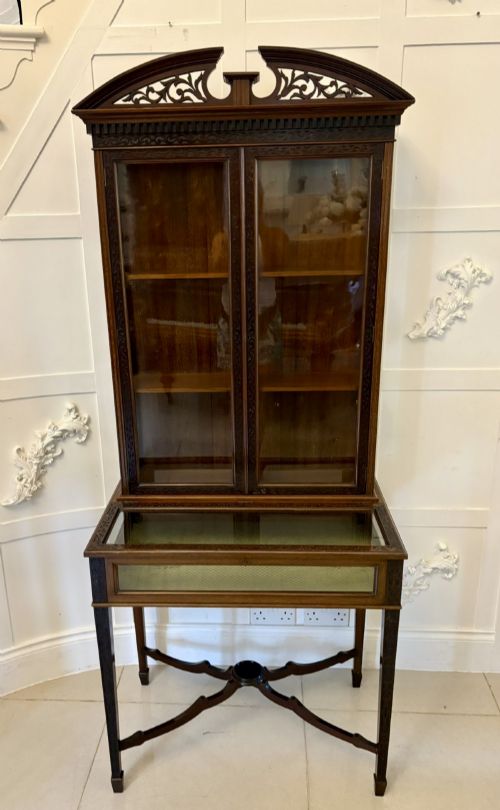
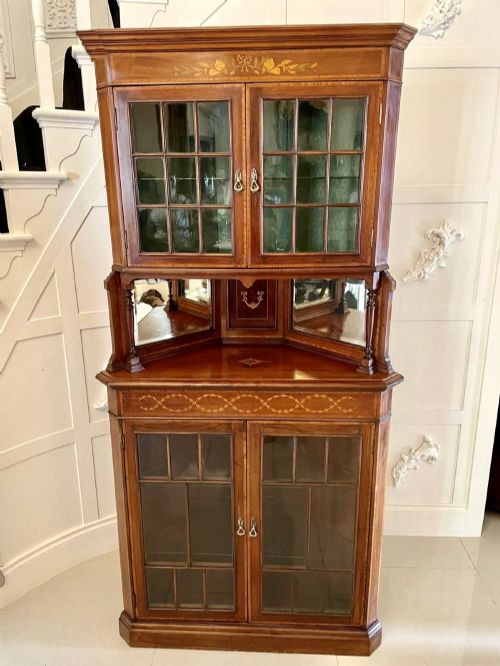
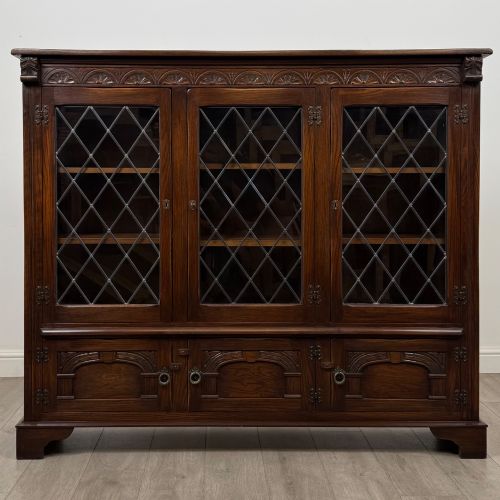
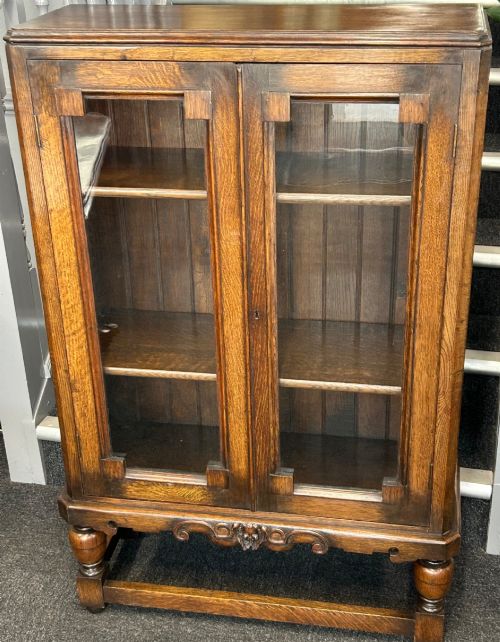
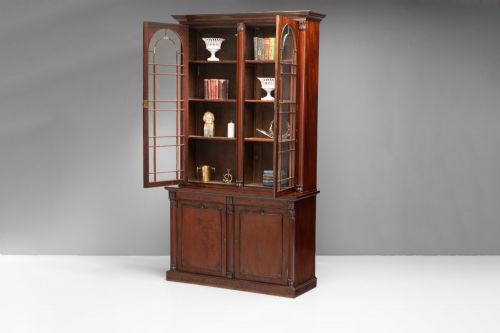
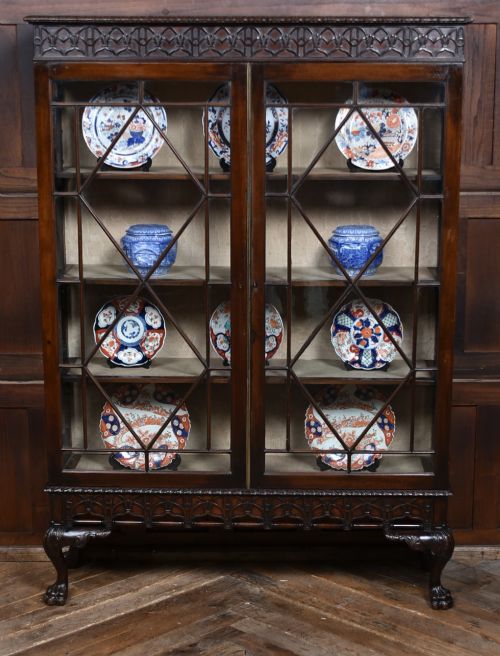
When you search for an antique china display unit, you find tall floor-standing corner cabinets, breakfront bookcases, and glazed two-part cupboards originating from eras spanning the eighteenth century through to the early twentieth century.
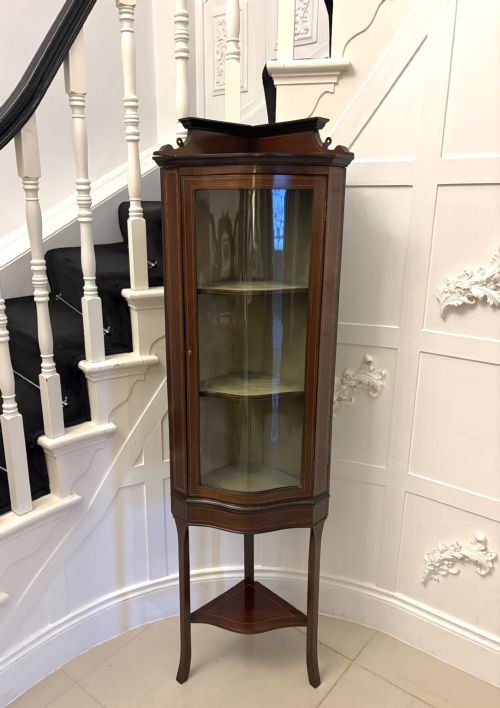
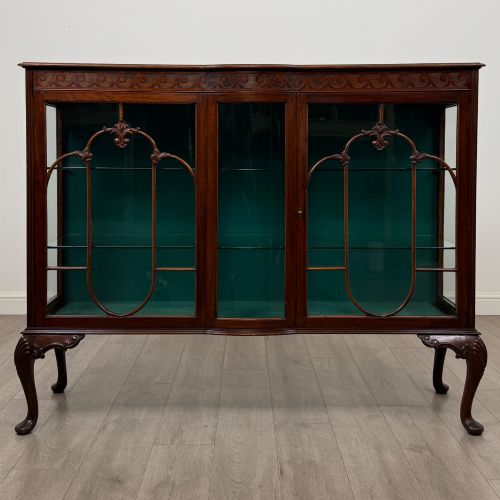
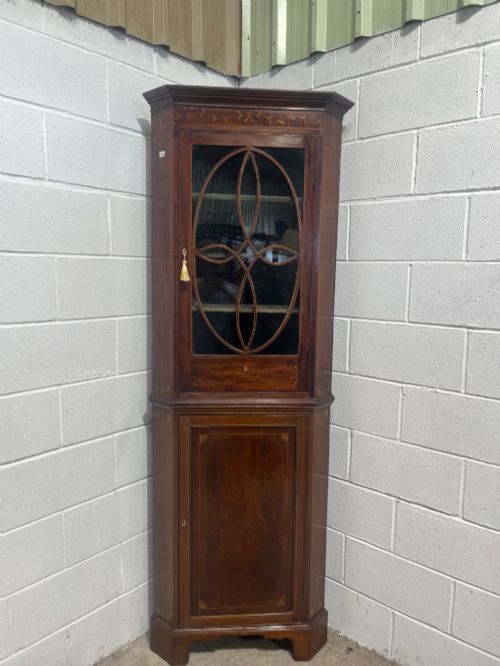
The most common version you meet on this page is the Edwardian mahogany corner display cabinet, frequently featuring boxwood inlay, cabriole legs, and glazed single or double doors.
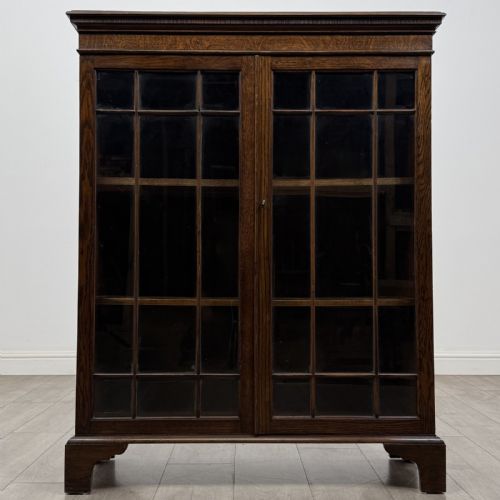
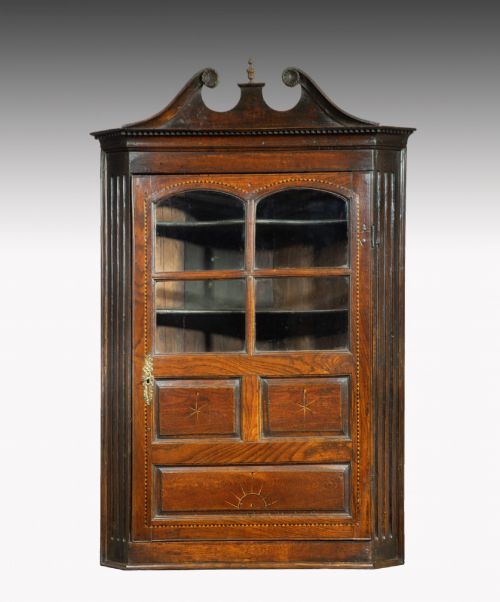
Earlier pieces from the eighteenth and nineteenth centuries tend to utilise solid oak or walnut, often constructed as corner cupboards designed to utilise awkward wall spaces in formal rooms.
Revival styles heavily influence the selection, with Chippendale, Sheraton, and Queen Anne interpretations appearing alongside simpler Edwardian and Art Deco designs.
Materials and construction
Makers built these pieces primarily from timber frames of mahogany, oak, and walnut, frequently enhancing plain surfaces with satinwood or boxwood inlay and marquetry.
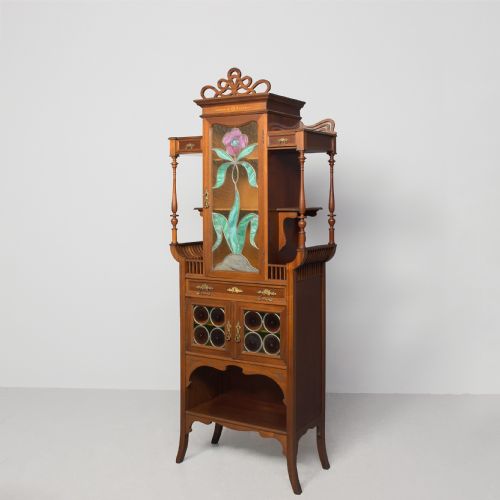
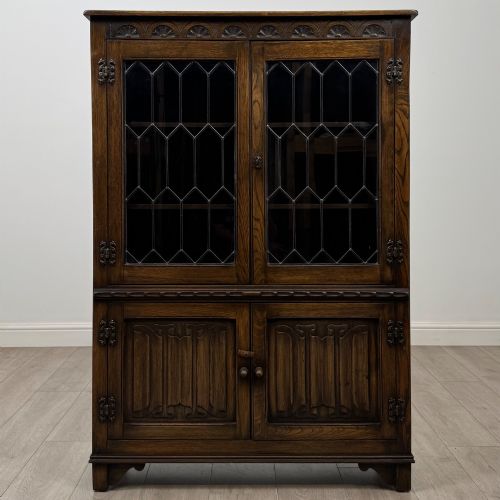
Glazing forms a central element of construction, incorporating leaded glass panels, wooden muntins, and occasionally bamboo framing or brass hardware to secure the doors and sides.
Interior storage relies on fixed or adjustable timber shelving, sometimes complemented by lower cupboard sections constructed with linenfold carving or multi-wood panelling.
Antique China Display Unit Retail Price Guide 2026
Typical asking prices for china display unit among the pieces listed under this phrase on Sellingantiques today, from the lower quarter to the upper quarter. They describe what is for sale here now, not the wider market.
Form variations range from single-door wall-hanging corner cupboards to towering two-part breakfront bookcases.
Design depth and execution
The distinction between standard and superior pieces rests on the precision of the cabinetmaker's hand, particularly in the crispness of carved mouldings and the symmetry of marquetry inlay.
Selection of timber veneers heavily dictates refinement, where burr walnut or figured mahogany exhibits richer grain patterns compared to plainer domestic hardwoods.
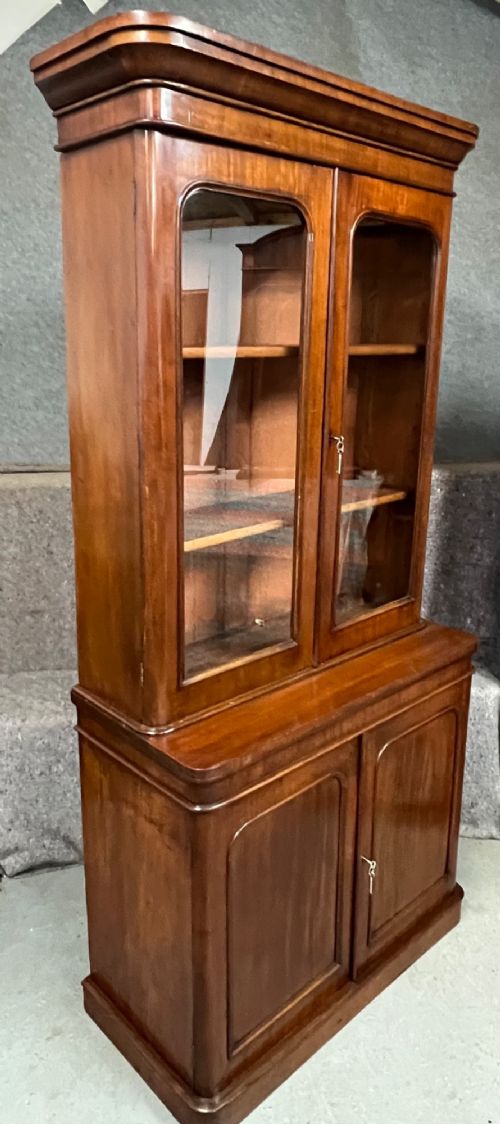
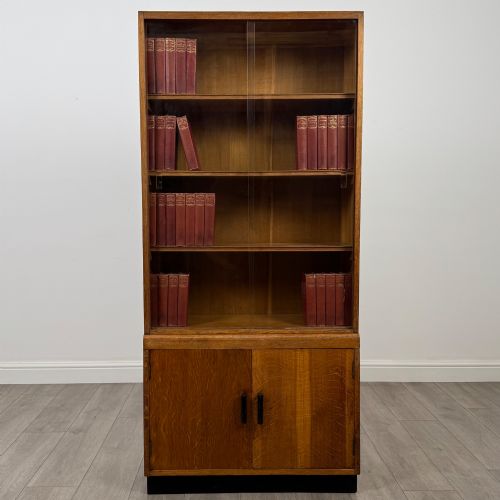
Structural complexity marks the higher tier, seen in two-part standing corner units and breakfront bookcases that require exacting joinery to align heavy glazed doors securely.
Epstein
The Antique China Display Unit Glossary
- Corner cupboard
- A storage piece built with an angled footprint to fit neatly into the ninety-degree junction of two walls. They appear in both hanging and floor-standing formats.
- Marquetry
- Decorative veneer work arranged in pictorial or geometric patterns using various tinted woods. Craftsmen cut contrasting slips of timber to assemble these intricate surface designs.
- Leaded glass
- Small panes of glass held together by narrow strips of lead, often forming geometric or floral lattice patterns across cabinet doors. This technique provides rigidity to larger glazed areas.
- Breakfront
- A large cabinet design where the central section projects forward from the flanking wings. This architectural arrangement creates depth and visual variety across the facade.
- Bijouterie cabinet
- A glazed display table or cabinet originally intended for showing small precious objects, medals, or trinkets. They typically feature shallow glass-topped display compartments.
- Cabriole leg
- A furniture leg that curves outward in a convex arc before tapering inward in a concave sweep, finishing in a pad or claw foot. The form derives from animal limbs.
Antique China Display Unit: Frequently Asked Questions
Where do I put a corner display unit?
These units suit unused room junctions, turning dead space into a focal point for ceramics and glassware.
Their angled backs allow them to anchor a corner without dominating the floor plan.
How do I clean antique glass?
Use a soft microfiber cloth and a mild vinegar solution applied directly to the cloth rather than the wood.
Keep moisture away from old timber frames and leaded joints to preserve the surrounding finish.
Are shelves adjustable in these cabinets?
Many older glazed units feature fixed wooden shelving grooved into the interior carcase walls.
Some later Edwardian and revival examples include rudimentary wooden supports that permit slight height adjustments.
How do I distinguish Edwardian from Georgian cabinets?
Edwardian pieces often display lighter satinwood or boxwood stringing, Sheraton revival motifs, and slightly brighter mahogany tones.
Georgian counterparts generally rely on heavier structural timber, simpler architectural cornices, and darker patination developed over extra decades.