





Antique Chimney Clock
An antique chimney clock sits quietly on a hearth or shelf, bringing mechanical timekeeping and rich cabinet timbers into a room.
Antique Chimney Clock
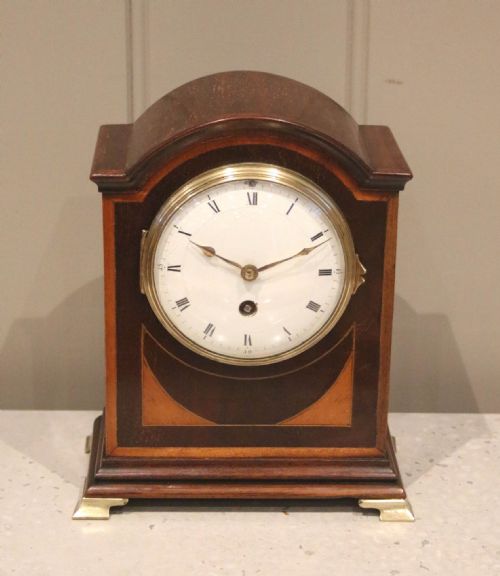
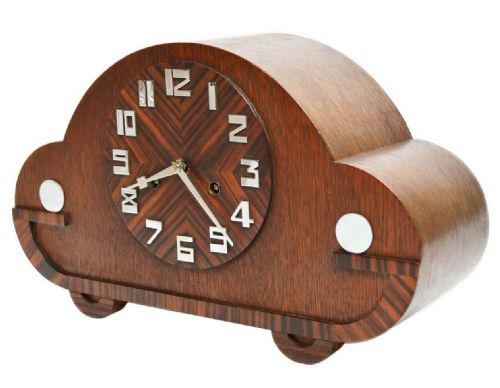
An antique chimney clock generally takes the form of a mantel clock, table clock, or bracket clock designed for domestic interiors. These timepieces appear across various periods, most notably through Victorian and Edwardian decades, alongside Art Deco examples from the early twentieth century.
The pieces listed on this page encompass bracket clocks, fusee movements, and architectural cases in styles ranging from Victorian Classical Revival to Belle Epoque and Arts and Crafts. Walnut, mahogany, and brass predominate, often accompanied by enamel dials and glass panels.
Buyers encounter everything from small fusee table clocks to large musical boardroom clocks. The selection balances traditional nineteenth-century craftsmanship with cleaner lines from later decorative movements.
How they were made
Cabinetmakers constructed the wooden housings using timbers such as mahogany, walnut, and oak, frequently adding satinwood inlay or hand carvings. Dial faces combined brass bezels with white enamel chapters.
Internal mechanisms relied on precise metalwork, particularly fusee movements designed to maintain even tension as the mainspring uncoiled. Ormolu mounts and chrome accents completed the decorative scheme depending on the period.
Musical bracket clocks once filled grand boardrooms with chiming tunes to keep busy Victorians strictly on schedule.
What varies in quality
The refinement of the cabinetwork separates standard production timepieces from superior examples. Hand-carved oak details, precise satinwood inlay, and faux tortoiseshell finishes demonstrate higher craftsmanship than plain veneered boxes.
Movement complexity dictates overall standing within the range. Simple eight-day movements contrast with triple fusee bracket clocks and musical mechanisms housed in large boardroom cases.
Bravingtons Ltd of London·Payne & Co. London
The Antique Chimney Clock Glossary
- Fusee
- A conical pulley connected to the mainspring by a chain or cord, designed to equalise the power output of the spring as it winds down.
- Bracket clock
- A portable domestic clock originally designed to sit on a wall bracket or table.
- Ormolu
- Gilt bronze applied to furniture and clock cases for decorative effect.
- Enamel dial
- A metal clock face covered with fused powdered glass to create a smooth, durable white surface for painted numerals.
Antique Chimney Clock: Frequently Asked Questions
Where should I place a chimney clock?
These clocks find their traditional home on a mantelpiece, shelf, or sideboard where their mechanical movement can be easily wound and enjoyed.
Ensure the surface is flat and stable to keep the pendulum swinging evenly and the timekeeping accurate.
How do I wind an antique clock?
Use the appropriate key to wind the spring barrels or fusee chains gently until you feel resistance, taking care not to overwind the mechanism.
Most traditional movements require winding once a week or every eight days.
What is a fusee movement?
A fusee is a conical drum inside the clock that regulates the pull of the mainspring to ensure consistent force drives the gears.
This technical refinement is usually found in better quality nineteenth-century English bracket and table clocks.
How do I identify an Art Deco clock?
Art Deco pieces from the 1920s and 1930s typically feature geometric forms, chrome accents, and streamlined styling that broke away from Victorian ornamentation.
These clocks often utilise contrasting materials and clean architectural silhouettes.