
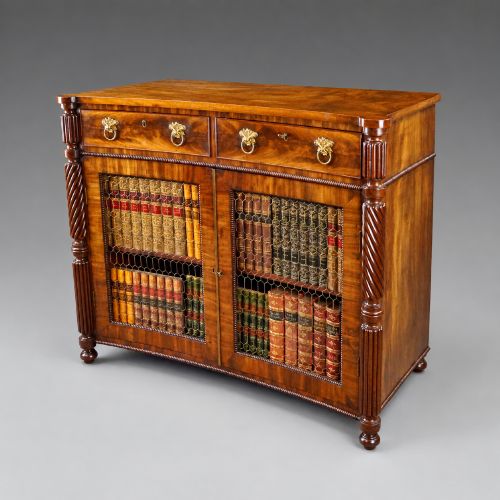
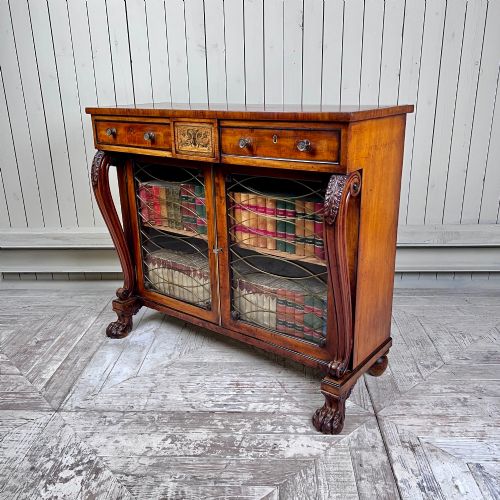
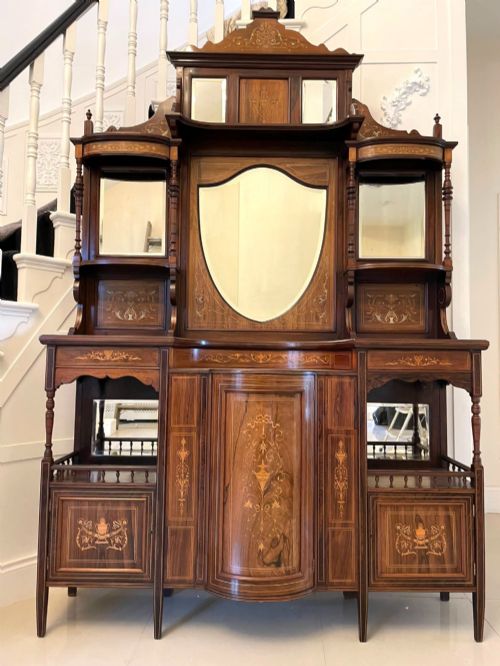
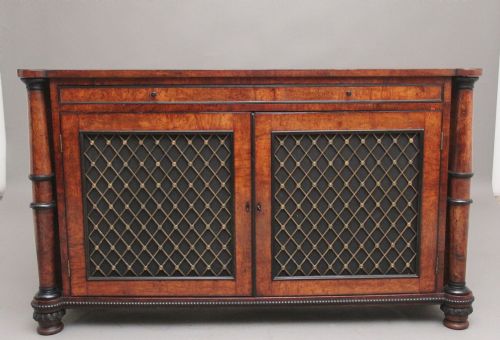
Antique Chiffonier Side Cabinet
An antique chiffonier side cabinet brings practical low storage and display surface to a room, drawing on Regency and Victorian forms.
Antique Chiffonier Side Cabinet
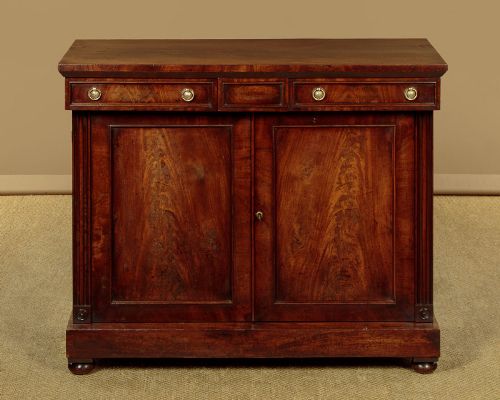
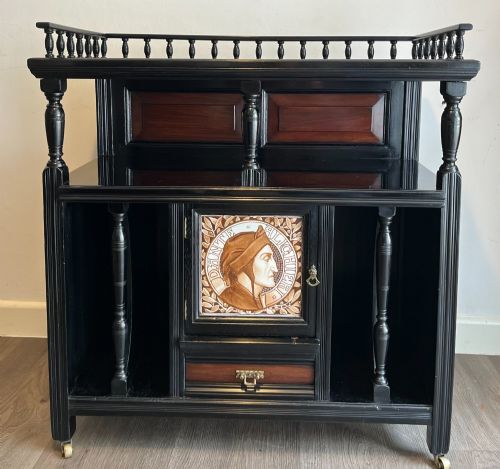
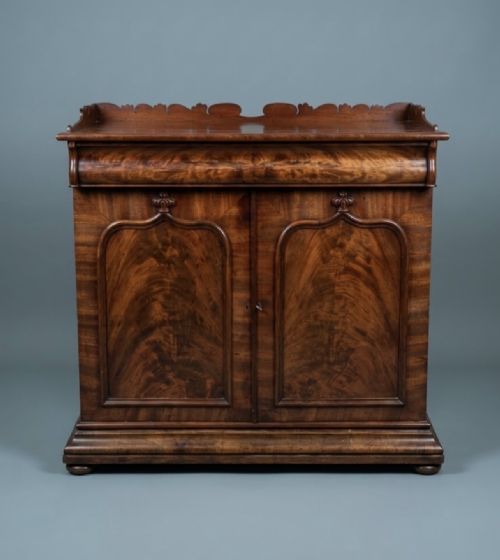
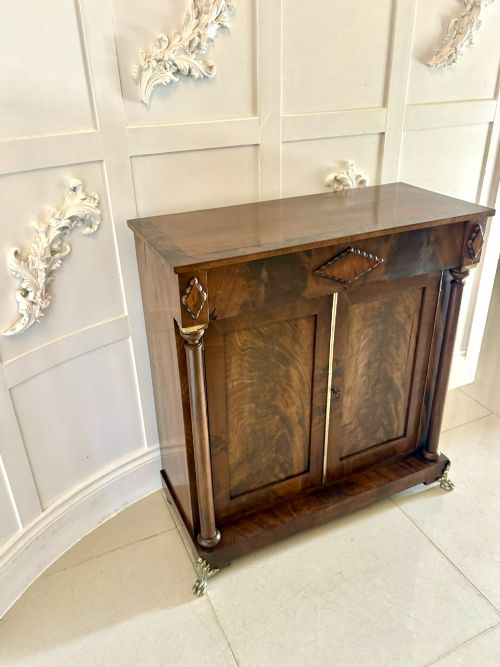
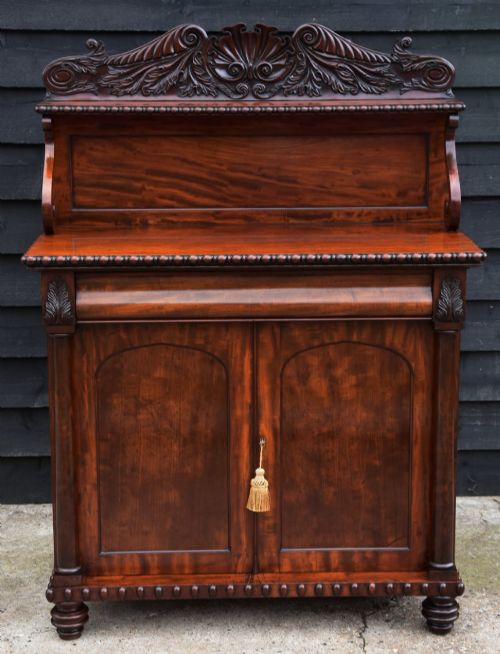
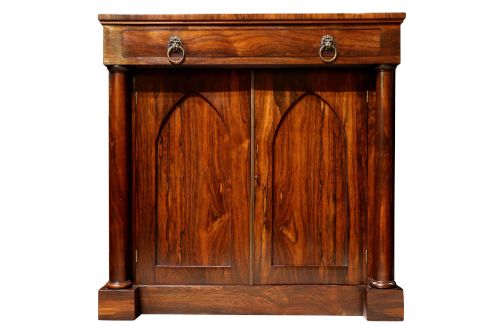
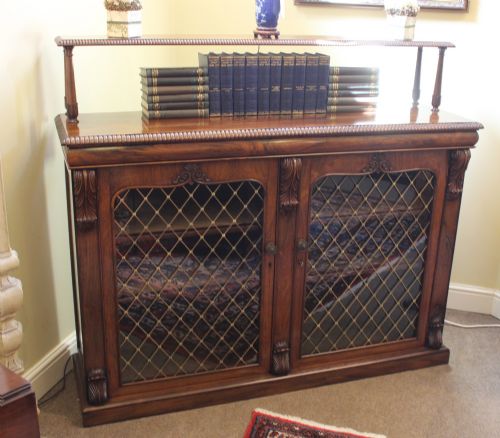
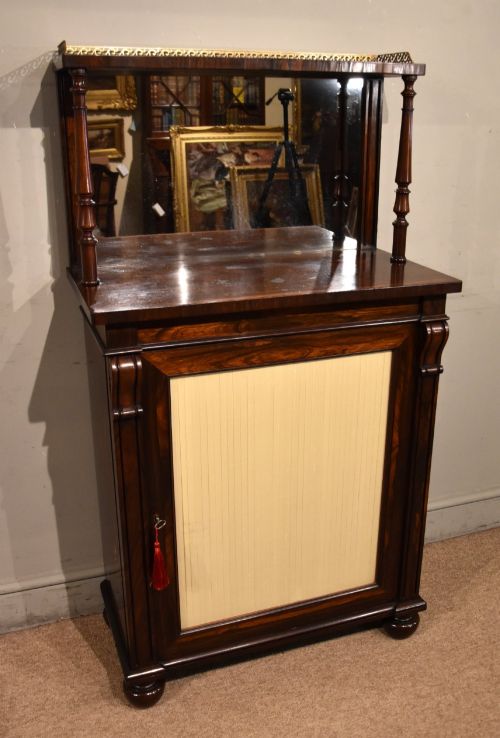
When searching for an antique chiffonier side cabinet, buyers encounter low-standing timber pieces designed primarily for the nineteenth-century parlour, dining room or drawing room. The typical form combines a shelved or gallery superstructure above a low enclosed cupboard base, serving to store books, linens or glassware while displaying ornaments on the top surface. Most examples found on this page date from the Regency, William IV and Victorian eras, rendered in rich native and exotic hardwoods.
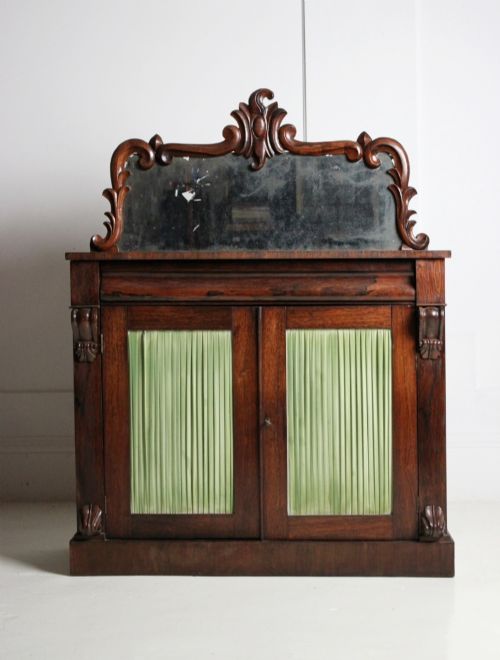
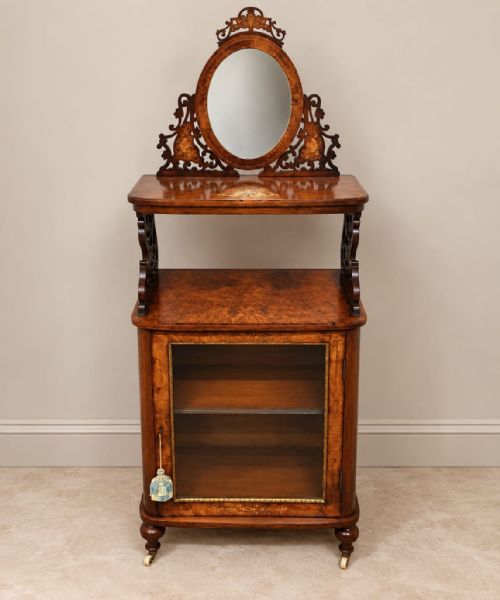
The typology bridges the gap between a sideboard and a low bookcase, often evolving from simple cupboards with raised shelves into elaborate pieces featuring mirrored backs, brass grilles and marble tops. Early nineteenth-century Regency and William IV iterations favour architectural dignity in mahogany and rosewood, whereas later Victorian examples introduce figured walnut, burr veneers and applied carved ornament. Buyers will also discover occasional provincial variations in oak or pine, alongside pieces bearing sophisticated marquetry and inlay.
Materials and Construction
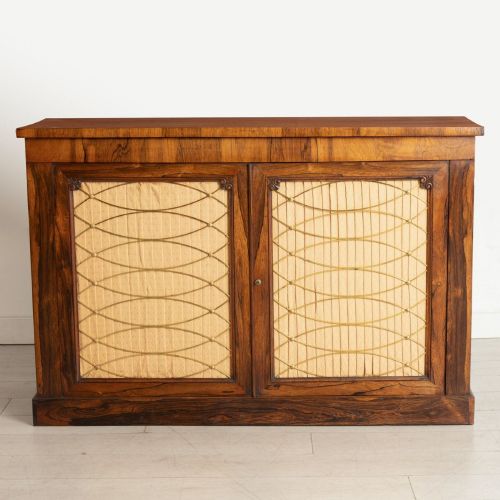
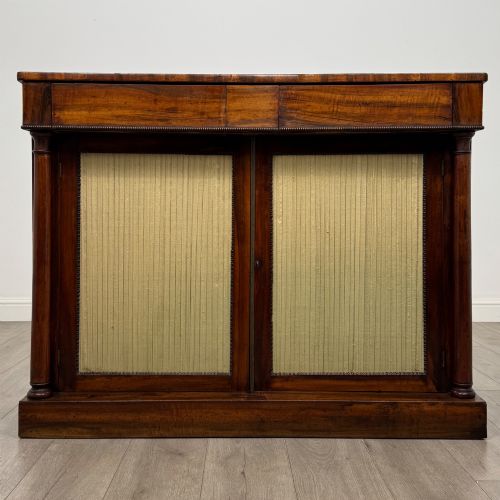
Cabinetmakers relied on dense, stable timbers like mahogany, rosewood and pollard oak, often applied as fine veneers over sturdy secondary woods to create striking grain patterns on the principal surfaces. Decorative enrichment was achieved through contrasting stringing in satinwood or ebony, cast brass grilles, gilt metal mounts, and intricate marquetry panels depicting floral or geometric motifs.
Structural joinery prioritized longevity, employing dovetail construction for drawers and tongue-and-groove methods for backboards and interior shelving. Many pieces integrated specialised functional elements such as secretaire drawers fitted with pigeonholes, marble inset tops for serving, or glazed doors backed with pleated fabric to protect contents from dust.
Some Regency chiffoniers feature clever secret compartments hidden behind false book spines or within the plinth mouldings.
Evaluating Craftsmanship
The distinction between standard utility items and superior examples lies in the selection of timber veneers, the precision of the marquetry, and the integration of secondary decorative details such as fine brass inlay or hand-carved mouldings. Master workshops exercised rigorous control over grain symmetry across door panels and drawer fronts, ensuring that figured mahogany or burr walnut matched harmoniously.
Hardware and interior fittings further demarcate grade. Superior chiffoniers feature original fire-gilded bronze mounts, working brass locks with matching keys, and finely dovetailed drawer linings that reveal deliberate attention to hidden structural areas.
Gillows·Liberty & Co.
The Antique Chiffonier Side Cabinet Glossary
- Chiffonier
- A low cupboard or sideboard, often topped with a shelf superstructure, designed for domestic storage and display during the nineteenth century. This form evolved from simpler writing and serving tables into a distinct staple of period interior furnishing.
- Rosewood
- A heavy, durable exotic timber prized for its dark purple-brown hue and dramatic black grain patterning. Cabinetmakers utilised it extensively during the Regency and Victorian periods for high-status drawing-room furniture.
- Ormolu
- Gilded bronze mounted onto furniture as a decorative trim, adding metallic brilliance to timber surfaces. The technique involved applying a mercury-gold amalgam to cast bronze before heating.
- Marquetry
- The art of forming decorative patterns on furniture by fitting together thin slices of various coloured woods, ivory or shell. Skilled artisans assembled these pictorial veneers onto a paper backing before gluing them to the carcase.
- Secretaire
- A writing drawer or compartment dropping forward on hinges to reveal a fitted interior of small drawers and pigeonholes. This hybrid feature allowed a low cabinet to double as a compact desk.
Antique Chiffonier Side Cabinet: Frequently Asked Questions
What is an antique chiffonier side cabinet?
An antique chiffonier side cabinet is a low storage unit featuring a cupboard base, frequently surmounted by a shelf tier or gallery back. Developed during the early nineteenth century, it served as a versatile piece for holding dining accessories or books while displaying decorative objects.
These pieces bridge the gap between sideboards and low bookcases, adapting easily to modern living rooms and hallways as practical surface space.
How were these cabinets used originally?
In nineteenth-century homes, these cabinets occupied drawing rooms and dining parlours to house serving items, writing materials, or small libraries. The upper shelves displayed porcelain, mantel clocks, and decorative bronzes.
Some variants incorporated a pull-out writing drawer, allowing the furniture to function as a compact bureau when guests visited.
How do I tell Regency from Victorian pieces?
Regency and William IV pieces generally display architectural restraint, clean lines, and architectural veneers like rosewood or flame mahogany, often accented with brass inlay or grilles. Victorian examples tend to be heavier in proportion, utilising burr walnut, richer carving, and frequently incorporating mirror backs.
Examining the internal construction methods, timber choice, and secondary woods helps clarify the manufacturing decade.
How do I live with one today?
An antique chiffonier side cabinet works well in modern interiors as a hallway console, a media base, or a dining room serving station. Its low profile prevents it from dominating a room while offering concealed storage for clutter.
Maintaining the timber involves keeping it away from direct heat sources and treating the polished hardwood surface with traditional wax polish.