





Antique Chess Box
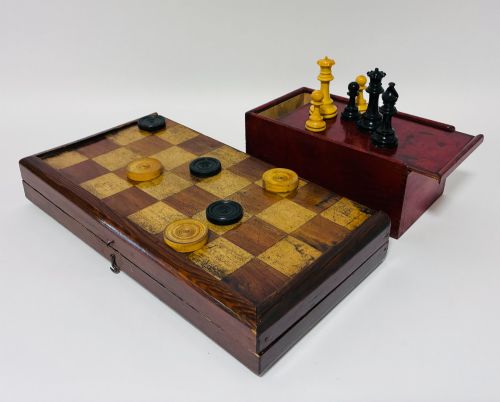
An antique chess box secures your pieces and folds out for play, combining fine timber work with portable utility for the nineteenth-century parlour or traveller.
Antique Chess Box
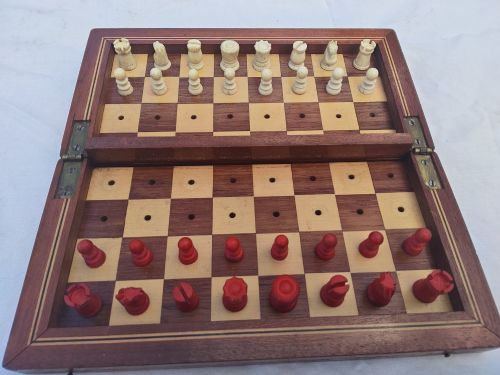
An antique chess box represents a specialised vessel designed to store carved men and folding or rigid boards, emerging frequently across the Victorian and Edwardian eras. You will encounter folding travelling boxes alongside fitted wooden caskets that double as backgammon boards or house comprehensive games compendiums.
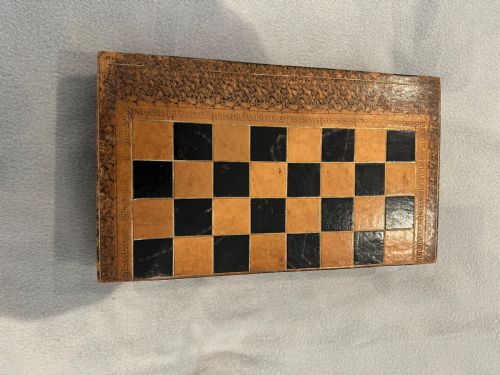
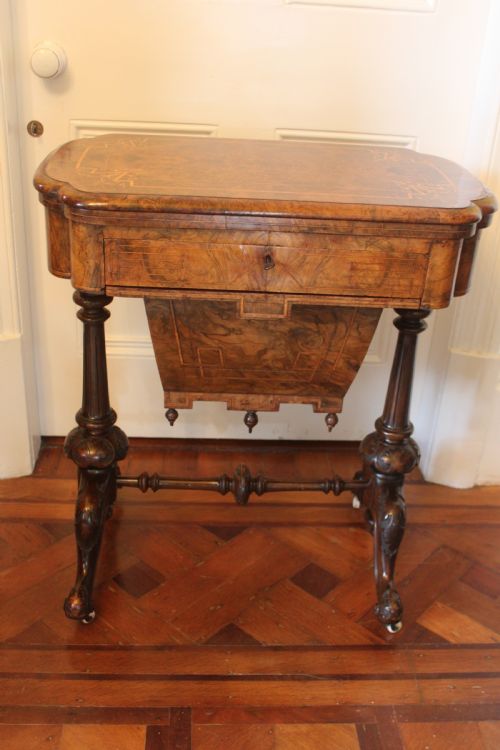
The selections span simple nineteenth-century wooden cases in mahogany and rosewood up to elaborate burr walnut sewing tables and large games compendiums from the turn of the twentieth century. Many incorporate leather, brass, and mother-of-pearl to separate playing surfaces from internal storage compartments.
Makers such as Jaques, F. H. Ayres, and the British Chess Company populate these listings alongside travelling Whittington and Calvert pattern sets housed in matching boxes. These pieces reflect a period when parlour gaming formed a central pillar of domestic leisure.
Materials and construction
Craftsmen utilised dense hardwoods including mahogany, rosewood, walnut, and boxwood, often selecting burr veneers for the exterior surfaces of larger compendiums and tables. Ebony and boxwood provided the contrasting dark and light tones for internal inlay and matching playing pieces.
Joinery methods relied on precision dovetailing and secure hinge placement to endure repeated folding and daily handling of heavy weighted pieces. Internal velvet or fabric linings protected carved bone and wooden sets from friction during transit.
Antique Chess Box Retail Price Guide 2026
Typical asking prices for chess box among the pieces listed under this phrase on Sellingantiques today, from the lower quarter to the upper quarter. They describe what is for sale here now, not the wider market.
Judging quality and craftsmanship
Superior examples distinguish themselves through the crispness of the timber inlay, the depth of the grain in burr walnut or rosewood surfaces, and the integrity of original brass hardware. Finer boxes retain matching internal compartments and original locking mechanisms that operate smoothly.
The distinction between standard items and the top of the range lies in maker attribution, such as signed Jaques or Ayres pieces, and the complexity of multi-game interiors. Secondary pieces often show simpler boxwood and mahogany construction without specialised maker marks.
Jaques·F. H. Ayres·British Chess Company
The Antique Chess Box Glossary
- Compendium
- A multi-game box housing equipment for chess, backgammon, whist, and other pastimes within a single fitted case. These containers often feature multiple removable trays.
- Staunton pattern
- The standard design of chess piece established in the mid-nineteenth century featuring realistic architectural forms with weighted bases. This style became the tournament standard.
- Burr walnut
- Timber taken from the growths of walnut trees, yielding intricate, swirling grain patterns highly prized for Victorian table tops and box lids. It provides a rich decorative texture.
- Whittington pattern
- A specific nineteenth-century style of chessmen often carved from bone or boxwood. These sets display distinct proportions and detailing associated with particular period makers.
Antique Chess Box: Frequently Asked Questions
How do I identify a Victorian chess box?
Victorian chess boxes typically employ dense timbers like mahogany, rosewood, and burr walnut, frequently ornamented with brass hinges and inlaid wood details. Makers from this era often incorporated fitted velvet interiors to secure the pieces safely.
Examining the joinery, hardware style, and internal layout helps separate nineteenth-century productions from later Edwardian or twentieth-century reproductions.
Were these boxes used for travel?
Many smaller nineteenth-century boxes were explicitly designed as travelling sets, featuring pegged pieces or compact folding boards to allow play on coaches, trains, or ships. These portable variants prioritized secure locking mechanisms and durable leather or wooden outer cases.
Larger compendiums and games tables remained stationary in the drawing room, serving as permanent fixtures for family entertainment.
How do I care for an antique wooden box?
Maintain antique wooden games boxes by keeping them away from direct sunlight and rapid temperature fluctuations, which can cause timber to warp and veneers to lift. Dust gently with a dry cloth and occasionally apply a neutral microcrystalline wax to nourish the grain.
Avoid liquid cleaners and excessive moisture, particularly around brass mounts, hinges, and delicate internal paper or fabric linings.