

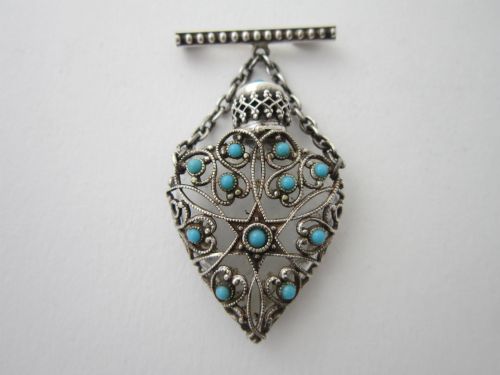


Antique Chatelaine Bottle
An antique chatelaine bottle is a portable vessel designed to hang from a waist clip, holding scent close at hand.
Antique Chatelaine Bottle
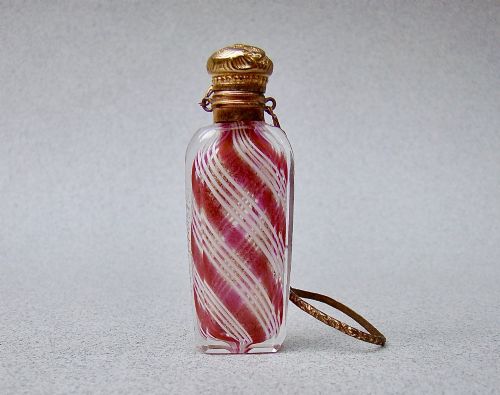
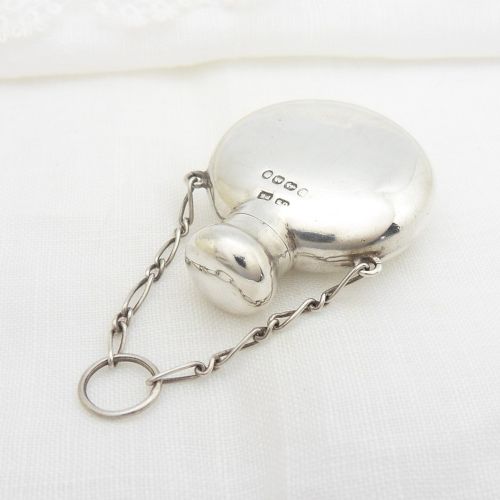
An antique chatelaine bottle is a small vessel designed to suspend from a lady's waist belt via a hook or chain, keeping perfume accessible throughout the day. The examples gathered here span the nineteenth century and the early twentieth century, taking the form of scent bottles and miniature perfume containers. Buyers searching this phrase meet portable containers shaped as cylinders, small vials, or novelty items.
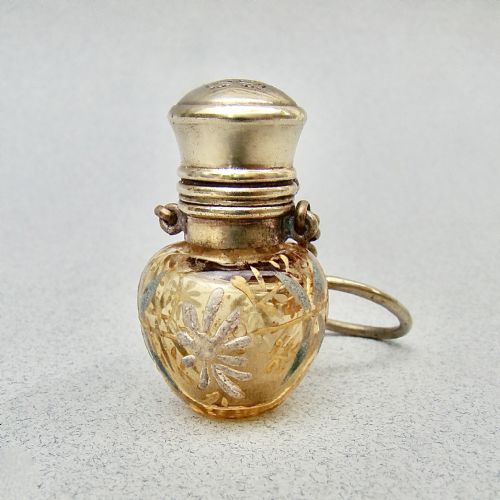
The nineteenth-century pieces on this page lean heavily towards Victorian English sterling silver mounts and French nineteenth-century glass work. Makers utilised coloured glass bodies, including cranberry, opaline, ruby red, blue, and satin finishes, often encased in intricate metalwork. Continental silver and Dutch silver examples appear alongside English designs, showing diverse European origins.
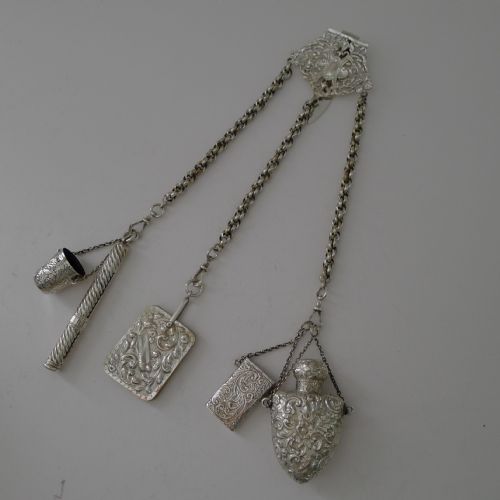
Formations range from simple glass phials with hinged silver caps to elaborate creations fitted with turquoise cabochons, enamel details, or outer silver gilt cages. Novelty items such as miniature violins also feature among the selection, alongside pieces paired with vinaigrettes and suspension chains. These wearable accessories combine practical function with decorative metalwork and glass craft.
What varies in quality
Quality rests upon the crispness of the metal chasing and the complexity of the glass body. Superior pieces exhibit deeply detailed repoussé work on the silver mounts, secure hinges, and unblemished glass layering.
The integration of decorative stones such as turquoise or the inclusion of hand-applied enamel distinguishes finer ornamental chatelaine bottles from standard utility containers.
Antique Chatelaine Bottle Retail Price Guide 2026
Typical asking prices for chatelaine bottle among the pieces listed under this phrase on Sellingantiques today, from the lower quarter to the upper quarter. They describe what is for sale here now, not the wider market.
Listings feature nineteenth-century pieces using sterling silver, opaline glass, enamel, and turquoise.
S Morden and Co·Moser Glass
The Antique Chatelaine Bottle Glossary
- Chatelaine
- A decorative belt hook or clasp from which suspended keys, scissors, and scent bottles hung. It served as a practical chatelaine accessory for domestic management in past centuries.
- Opaline glass
- A type of semi-opaque glass with a delicate pastel tone, popular in nineteenth-century decorative objects. It provides a smooth surface for painted or gilt decoration.
- Vinaigrette
- A small ornamental box or bottle containing a sponge soaked in aromatic vinegar. These items often doubled as scent containers on chatelaine chains.
- Repoussé
- A metalworking technique where the smith hammers the metal from the reverse side to form a raised design in relief. This method defines the ornamented silver mounts on many Victorian bottles.
- Ormulu
- A metallic alloy resembling gold, applied to bronze or other base metals for decorative trim. It brings a bright metallic finish to nineteenth-century French pieces.
Antique Chatelaine Bottle: Frequently Asked Questions
What is an antique chatelaine bottle?
An antique chatelaine bottle is a small, portable perfume container designed to hang from a waist fitting called a chatelaine. These vessels allowed women to carry liquid scent easily.
The category encompasses glass phials, porcelain flasks, and metal vials secured with hinged caps or screw lids.
How did women wear chatelaine bottles?
Owners suspended these bottles from a belt hook or decorative waist clip using short chains or suspension loops. This allowed the bottle to hang safely at the side.
The arrangement kept personal fragrance within instant reach during social calls and daily outings.
How do I date an antique scent bottle?
Dating relies on hallmarks stamped on the silver mounts, stylistic cues, and manufacturing techniques. Victorian pieces often carry clear assay office marks and date letters.
French pieces from the nineteenth century display characteristic glass colours and metal finishes typical of that period.
What materials were used for these bottles?
Glass formed the primary body, featuring colours such as cranberry, ruby red, blue, and opaline white. Overlay techniques added further depth to the glass surfaces.
Mounts and chains utilised sterling silver, continental silver, gilded metal, ormolu, and occasionally enamel or turquoise stones.