

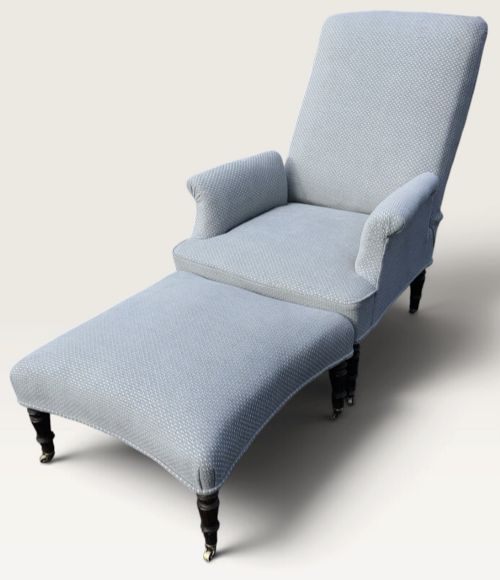
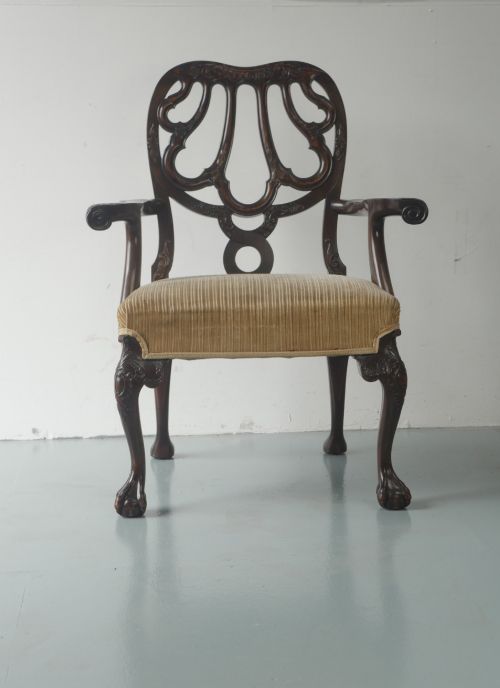
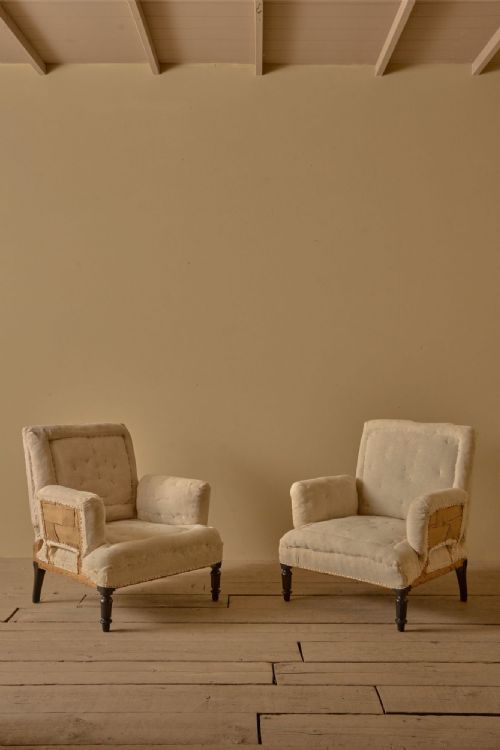
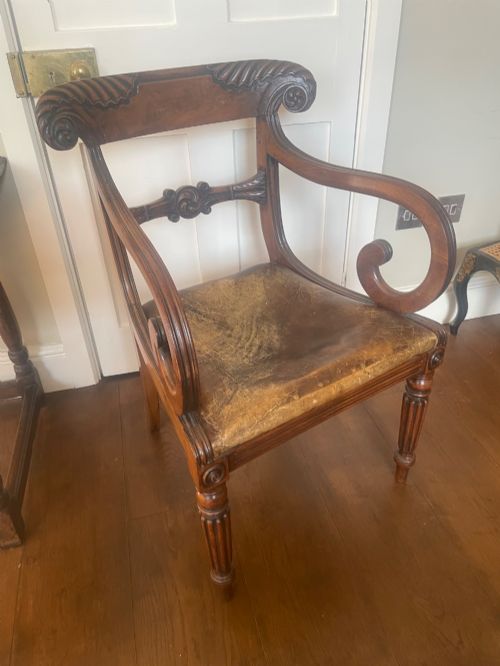
Antique Chairs with Arms
These antique chairs with arms offer solid timber frames and period upholstery, built for daily sitting and drawing the eye in any room.
Antique Chairs with Arms
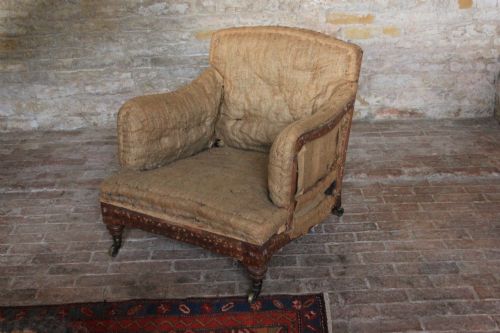
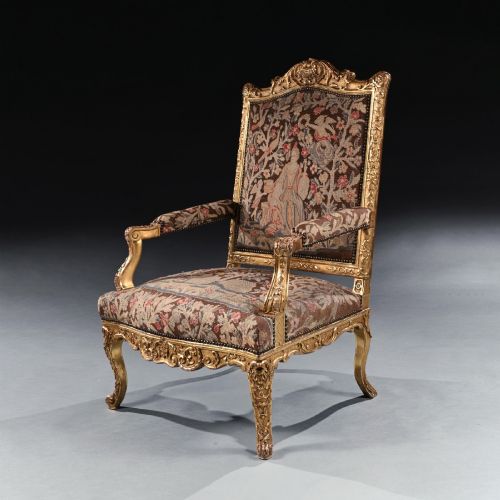
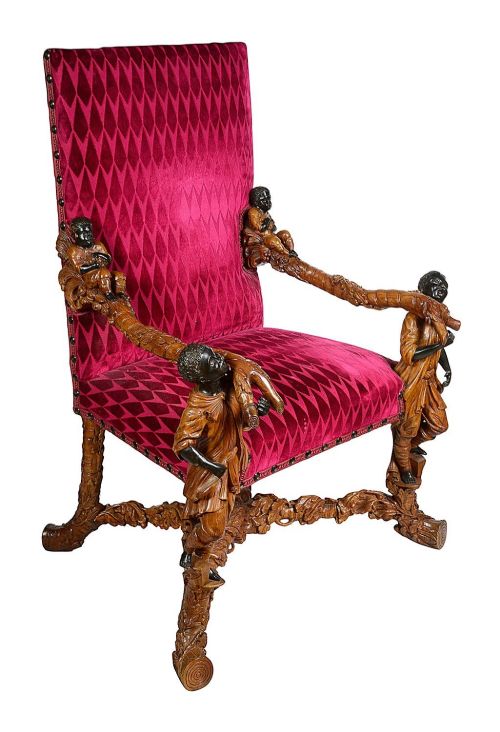
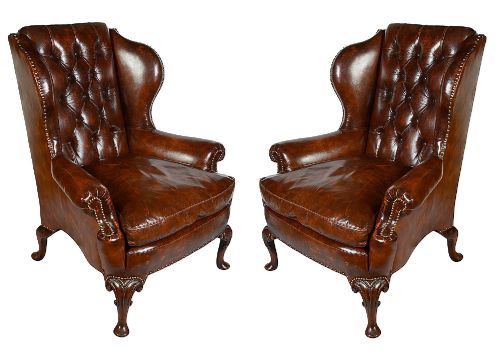
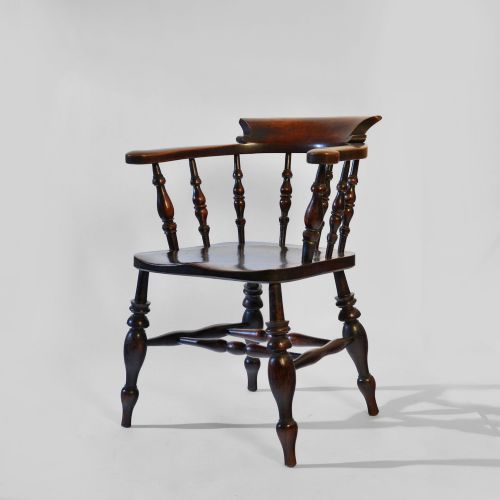
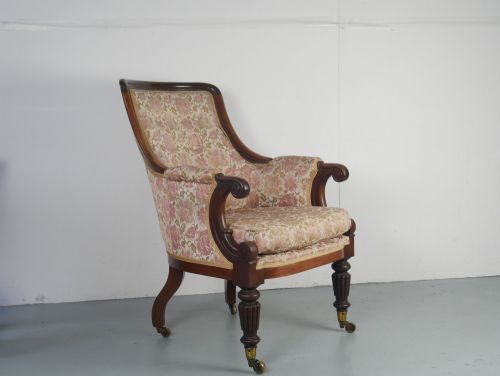
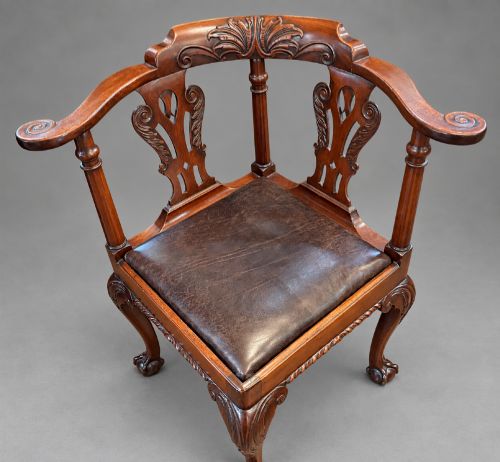
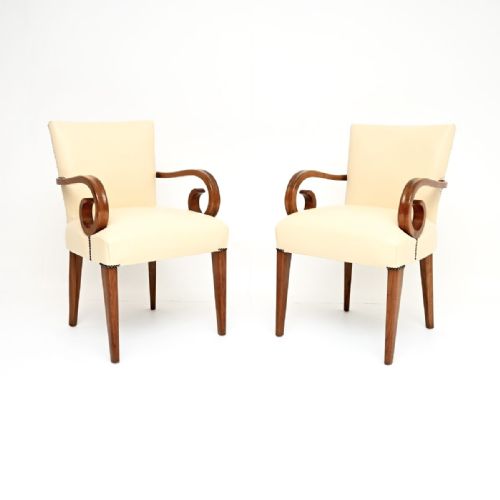
When buyers search for antique chairs with arms, they encounter a diverse array of seating forms spanning several centuries, primarily originating from British, European, and colonial workshops. These pieces range from formal dining carvers and library armchairs to low bedroom seats, country Windsors, and deep club chairs designed for relaxed lounging.
The selection on this page leans heavily toward nineteenth-century examples in mahogany, oak, and walnut, alongside distinct regional styles such as Regency scroll arms, Victorian button backs, and Edwardian leather designs. Buyers frequently find both formal parlour seating and robust country house variants that show the practical domestic uses of their respective eras.
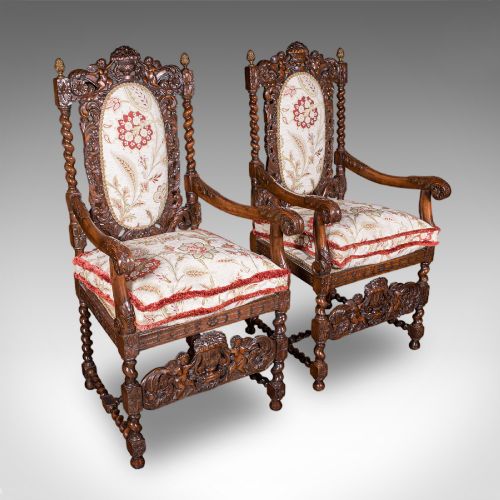
Makers and designers of various standings contributed to this inventory, producing everything from simple vernacular rush-seat chairs to elaborately carved Gothic library seating and tailored upholstered armchairs. Each piece retains the specific structural characteristics of its period, whether that means tapered legs, barley twist uprights, or generous roll-over arms.
Materials and Construction Techniques
Cabinetmakers and joiners relied predominantly on dense hardwoods like mahogany, oak, walnut, and yew, often selecting timber for both its structural strength and grain figure. Frames were joined using traditional mortise and tenon joints, dowels, and corner blocks, ensuring longevity under regular weight bearing.
Upholstered variants utilised natural stuffing materials such as horsehair, wool, and feathers held in place by webbed foundations and tied coil springs in later nineteenth-century examples. These components were secured beneath durable textiles including leather, needlework, velvet, printed cotton, and rush.
Surface finishes involved hand-applied beeswax, shellac polishes, and varnishes that deepened the natural colour of the wood over decades of handling and cleaning.
Antique Chairs with Arms Retail Price Guide 2026
Typical asking prices for chairs with arms among the pieces listed under this phrase on Sellingantiques today, from the lower quarter to the upper quarter. They describe what is for sale here now, not the wider market.
Materials recorded across the inventory include mahogany, oak, walnut, yew, teak, brass, velvet, leather, rush, and needlework.
Evaluating Quality and Craftsmanship
The hierarchy of quality in these seated pieces rests on the integrity of the timber frame, the crispness of any hand-carved ornamentation, and the preservation of original structural components. Superior examples display thoughtful proportions, balanced joinery that requires no modern metal reinforcement, and timber selected for consistent grain and rich natural patination.
Upholstered forms achieve higher status when the internal webbing, stuffing, and foundational build remain intact or have been restored using traditional methods that maintain the original profile and comfort of the seat. Pieces retaining period coverings, such as hand-dyed leather, crewel work, or stamped ticking, demonstrate an authentic survival of domestic textiles.
Morris and Co·Howard and Son S
The Antique Chairs with Arms Glossary
- Carver
- An armchair designed to match a set of single dining chairs, typically positioned at the head of a table.
- Bergère
- An enclosed armchair with an upholstered back and sides, frequently featuring cane panels within a exposed wood frame.
- Windsor
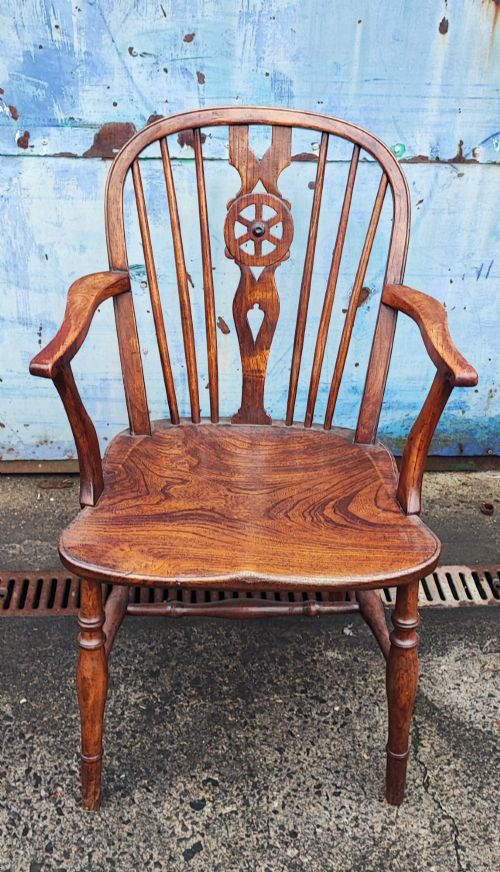
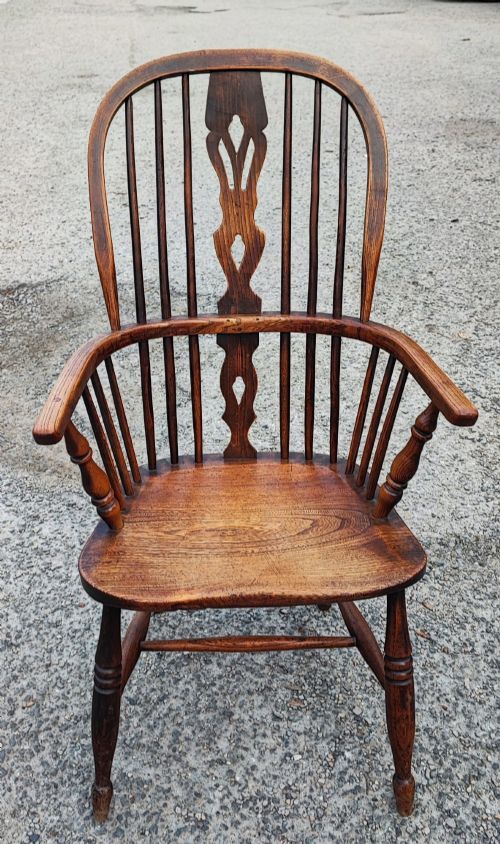
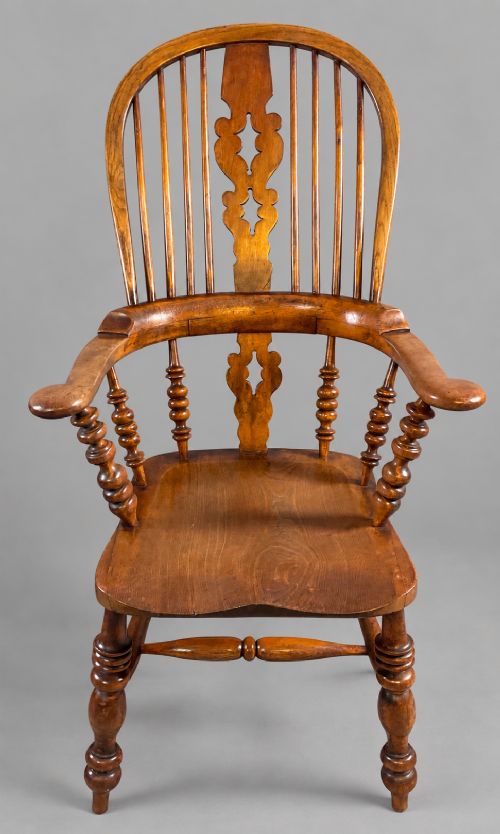
- A traditional wooden chair constructed with a solid shaped seat into which the legs and back spindles are wedged directly.
- Elbow Chair
- A traditional British term for an open armchair, offering low side supports for the arms.
- Scroll Arm
- An armrest curved outward and downward in a spiral volute, common in Regency and Victorian seating.
Antique Chairs with Arms: Frequently Asked Questions
How do I identify a Regency armchair?
Regency armchairs typically feature classical revival details such as sabre legs, reeded framing, and scroll armrests influenced by Greek and Roman design.
Cabinetmakers of this period often worked in dark mahogany, producing streamlined silhouettes that departed from the heavier carving of earlier centuries.
Were Windsor chairs used indoors?
Windsor chairs served as versatile everyday seating in kitchens, libraries, and country houses due to their robust pegged construction and shaped wooden seats.
Their comfortable braced backs and sturdy yew or elm frames made them suitable for continuous daily use across generations.
What is a club chair?
A club chair is a deep, low-slung upholstered armchair designed for comfort and traditionally finished in heavy leather or soft fabric.
Introduced in the late nineteenth and early Edwardian periods, these seats provided a substantial lounging option for libraries and smoking rooms.