
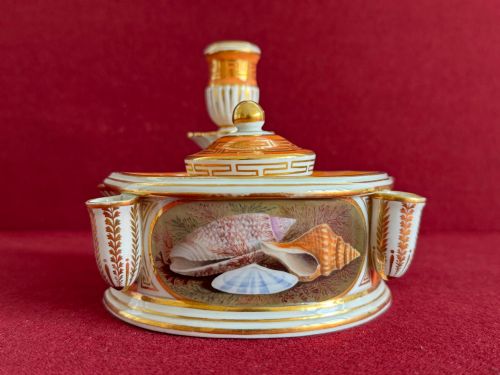
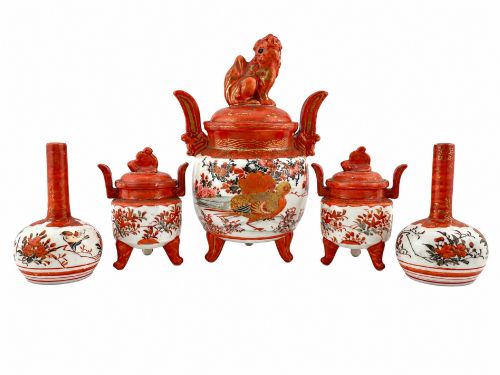
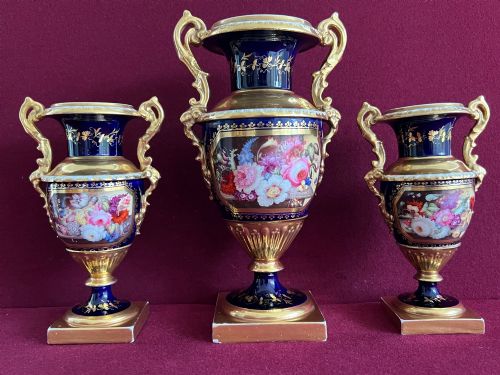
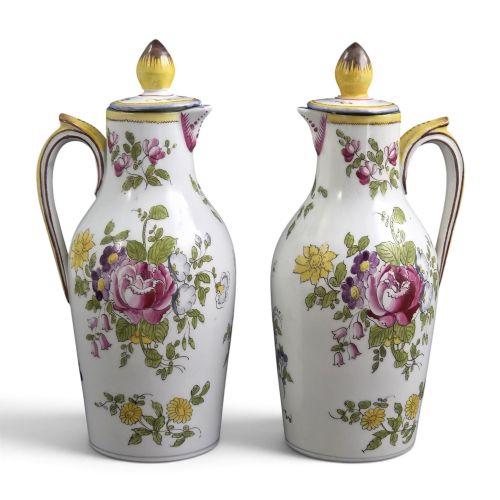
Antique Ceramic Set
When you search for an antique ceramic set, you encounter matching groups of porcelain, earthenware and ironstone spanning the eighteenth century to nineteen hundred.
Antique Ceramic Set
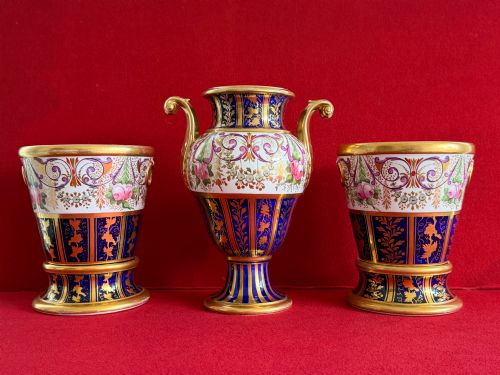
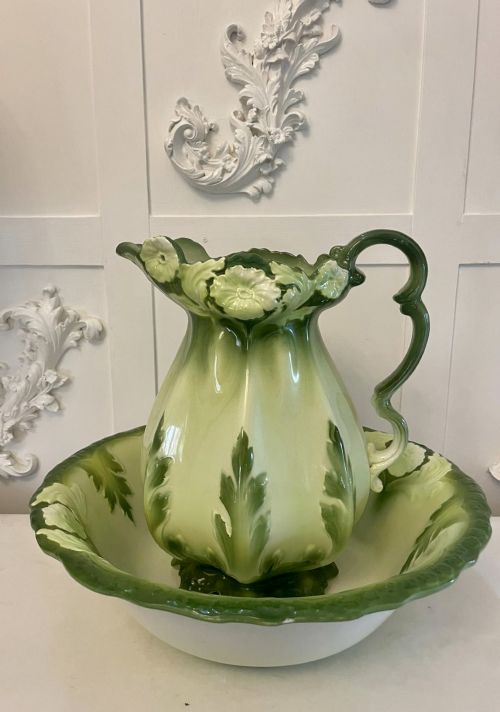
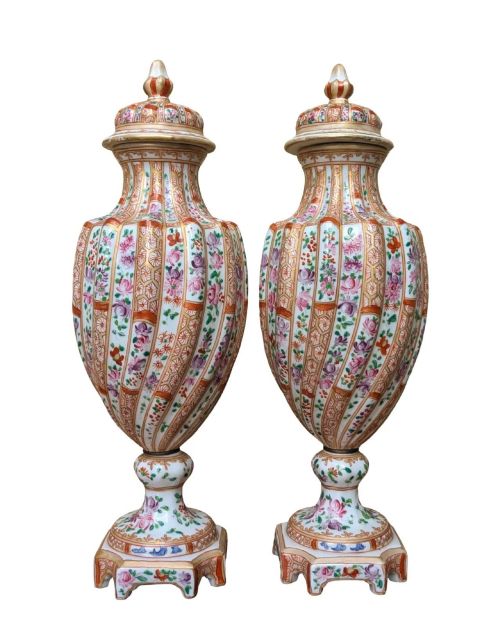
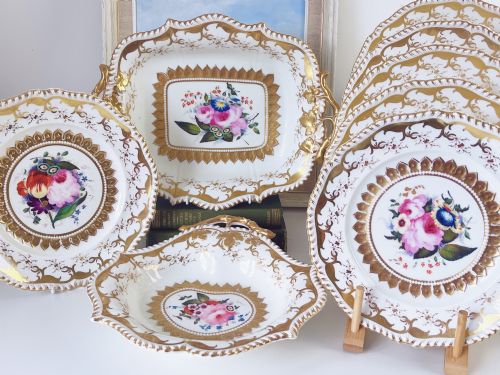
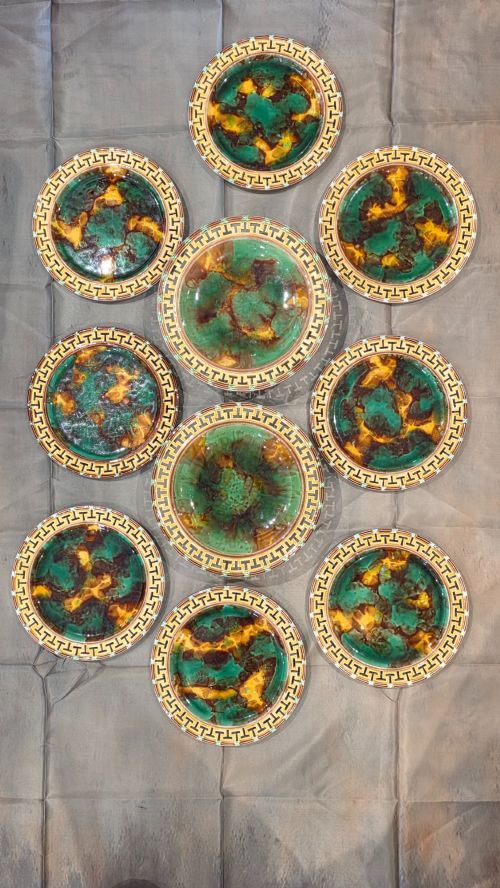
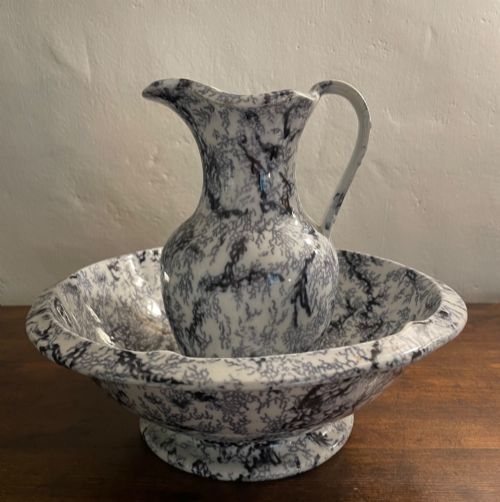
An antique ceramic set brings together matched or complementary vessels designed for dining, display, or washroom use, spanning periods from the eighteenth century through the Victorian era and nineteen hundred. A buyer searching for an antique ceramic set most commonly meets multi-piece dessert services, tea sets, wash sets comprising jugs and bowls, and garnitures of vases.
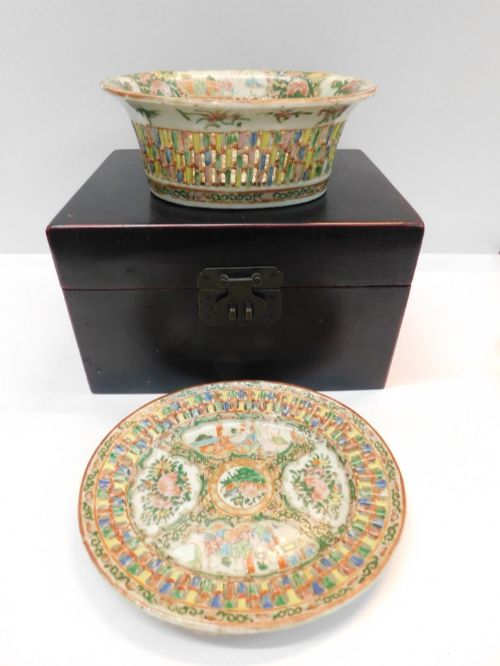
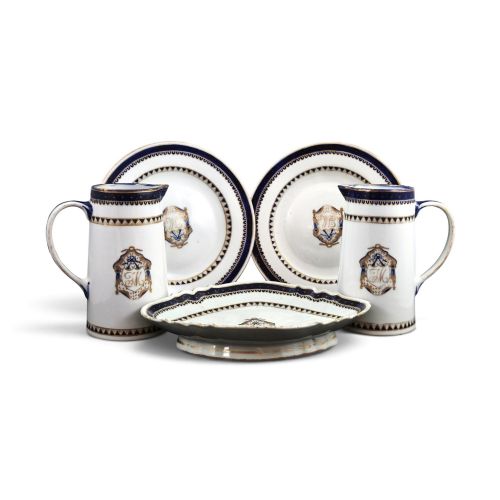
The materials range from soft-paste porcelain and bone china to earthenware, ironstone, and faience, reflecting diverse European and Asian traditions including Chinese export, Japanese Satsuma, and English factories such as Spode and Minton. Forms include matching plates, comports, teacups, saucers, and large footbaths, structured for practical service or formal garniture display.
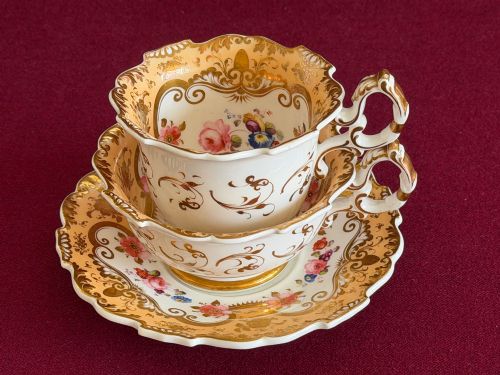
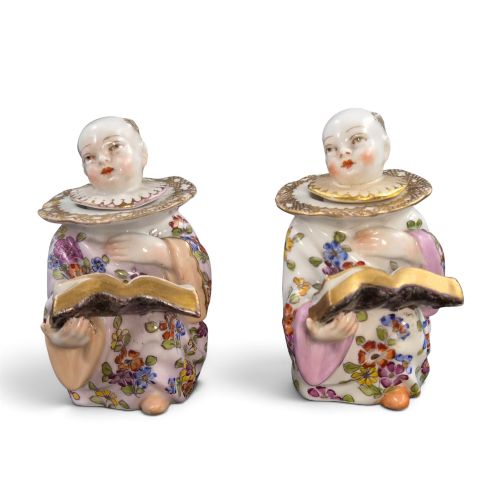
Makers recorded in these groupings span famous English potteries, continental manufactories, and Japanese workshops, operating across Georgian, Regency, Victorian, and Art Nouveau styles. The groupings survive as partial services, trios, or complete multi-piece suites, retaining hand-painted flowers, transfer-printed patterns, and gilt accents.
How they were made
Potters shaped ceramic sets using clay bodies composed of kaolin, petuntse, or earthenware mixtures, formed by throwing on a wheel or pressing into moulds. Items were then fired to biscuit stage before receiving glazes, enamel colours, or cobalt blue underglaze decoration.
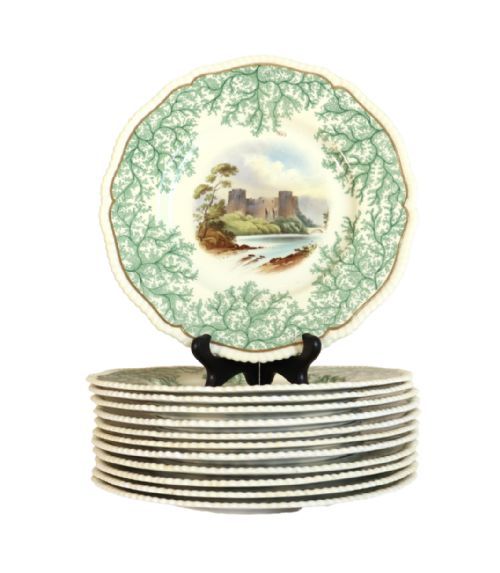
Decoration relied on hand-painting, transfer printing, and gilding with gold leaf, often fixed through subsequent kiln firings. Ironstone and heavy earthenware bodies provided durability for functional vessels like wash sets and dinner services, while fine porcelain suited delicate cabinet trios and dessert services.
Listings for this phrase include nineteenth-century earthenware, Victorian porcelain, and eighteenth-century Chinese export porcelain.
What varies in quality
Quality in these sets depends on the crispness of the moulding, the precision of hand-painted details, and the preservation of overglaze gilding and enamel colours. Superior sets exhibit refined ceramic bodies, sophisticated transfer patterns, and cohesive matching across every component piece.
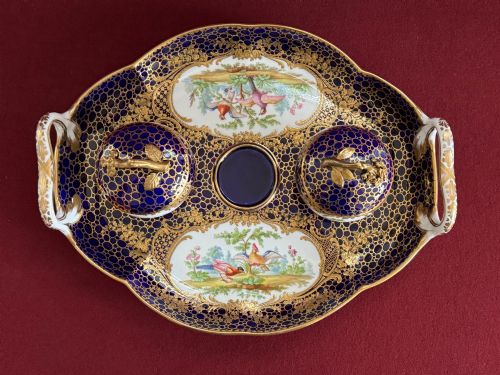
The distinction between standard utilitarian wares and top-tier pieces rests on artistic execution, maker attribution, and the complexity of decorative schemes such as extensive hand-painted floral panels or intricate reticulated basketwork.
Spode·Edme Samson·Minton·Flight And Barr·Thomas Steel·Veuve Perrin·Grainger Lee And Co·Ford Family·H And R Daniel·Wedgwood·Staffs·Royal Crown Derby·Newhall·Coalport·John Rose·Meissen·Masons Ironestone·Fourmaintraux Courquin·Davenport·Chamberlains Worcester·Royal Vienna
The Antique Ceramic Set Glossary
- Garniture
- A set of matching vases or ornamental vessels designed to be displayed together on a mantelpiece or cabinet. They typically comprise three or five pieces of graduated heights.
- Dessert Service
- A matched collection of plates, comports, and serving dishes intended for the final course of a formal meal. These often feature hand-painted botanical or landscape scenes.
- Ironstone
- A heavy, durable type of earthenware patented in the nineteenth century to imitate Chinese porcelain. It resists chipping while accommodating colourful transfer prints and enamels.
- Trio
- A matched ceramic grouping consisting of a teacup, a coffee cup or saucer, and a matching dessert plate. They were popular in Regency and Victorian parlours.
Antique Ceramic Set: Frequently Asked Questions
What is an antique ceramic set?
An antique ceramic set is a coordinated group of vessels made from porcelain, earthenware, or ironstone, designed for dining, display, or washing.
These groupings include dessert services, tea sets, wash jugs with basins, and vase garnitures created across Georgian, Victorian, and Art Nouveau periods.
How were tea and dessert sets used?
Tea sets and dessert services functioned during formal domestic gatherings, displaying the host's social standing through coordinated tableware.
Dessert services were brought out for the final sweet course of a meal, while tea sets served guests in the parlour.
How do I care for antique ceramic sets?
Living with these ceramic sets involves gentle handling and washing by hand in warm water without harsh detergents.
Avoid using dishwashers and protect gilt edges and delicate enamel or hand-painted surfaces from abrasive materials.
How can I tell the period of a ceramic set?
Dating relies on identifying paste types, glaze characteristics, factory marks, and stylistic indicators such as Regency shapes or Victorian transfer prints.
Comparing pattern numbers and decorative techniques against known factory production eras helps narrow down the manufacturing date.