





Antique Ceramic Drainer
An antique ceramic drainer is a fitted insert designed to sit inside a serving platter, and these perforated dishes let juices drain away from meat.
Antique Ceramic Drainer
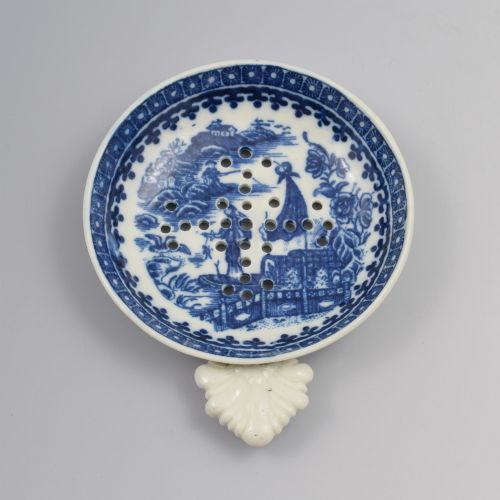
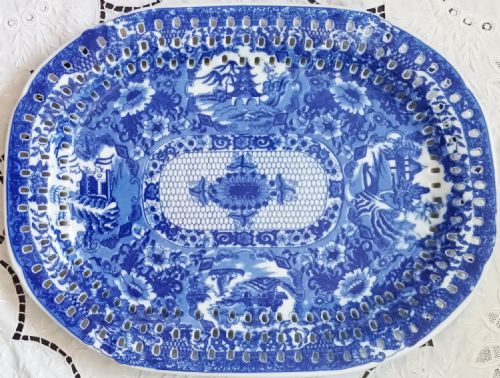
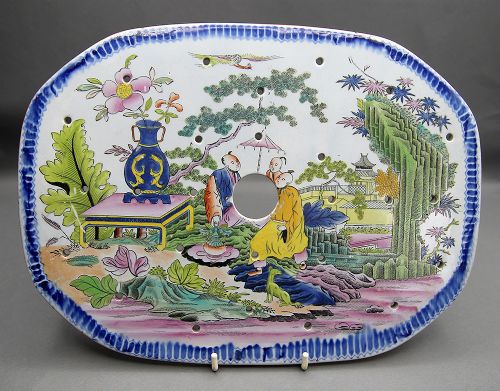
When you search for an antique ceramic drainer, you are looking at utilitarian tableware designed to lift roasted meats above their fats during service. The pieces on this page span the eighteenth and nineteenth centuries, taking forms such as meat drainers, platter drainers, egg drainers, and strawberry stands. They appear in styles ranging from Georgian blue and white transferware and Regency ironstone to Chinese export porcelain and Chinoiserie.
Most examples you will encounter here are nineteenth-century ironstone or earthenware meat drainers featuring pierced patterns or net designs. These heavier ceramic versions accompanied large serving platters on dining tables, whilst earlier eighteenth-century examples lean towards porcelain, such as soft-paste porcelain pieces from Caughley or Worcester. Forms vary from massive meat platters with matching strainers to smaller specialised vessels.
The origins of these items are primarily English country and Georgian production centres, alongside distinct export wares created for Western markets. Makers such as Mason's, Minton, and Davenport produced robust ironstone variations decorated with transfer-printed patterns like the Mogul or Blue Pheasants. Each piece demonstrates how domestic dining requirements shaped functional ceramics across successive decades.
How they were made
Potters produced these items using ceramic bodies such as earthenware, ironstone, pearlware, and soft-paste porcelain, shaping the clay to fit specific platter contours. The characteristic drainage holes and pierced motifs were meticulously cut or punched into the wet clay before firing. This required precise control to ensure the piece retained its structural integrity during high-temperature kiln processes.
Decoration relied heavily on underglaze blue and white transfer printing, capturing intricate Chinoiserie scenes, net patterns, and pictorial motifs like the Fisherman pattern. Some exceptional pieces received hand-applied details or gold leaf accents over the glaze. Clear or tinted glazes were then applied to seal the ceramic body and provide a glossy finish suitable for culinary use.
Antique Ceramic Drainer Retail Price Guide 2026
Typical asking prices for ceramic drainer among the pieces listed under this phrase on Sellingantiques today, from the lower quarter to the upper quarter. They describe what is for sale here now, not the wider market.
The listings here encompass 18th-century, 19th-century, Regency, and Georgian periods, utilising materials from earthenware and ironstone to soft-paste porcelain.
What varies in quality
The choice of body material also establishes distinction, moving from utilitarian earthenware and heavy ironstone to refined soft-paste porcelain. Maker attribution plays a role, with established works like Minton, Mason's, Davenport, and Caughley demonstrating superior potting skill and glaze formulation. The presence of heraldic details, such as coat of arms, elevates the prestige of an individual serving dish.
Caughley Porcelain·Mason’s Ironstone·Minton·Davenport·Worcester
The Antique Ceramic Drainer Glossary
- Ironstone
- A dense, durable type of earthenware patented in the nineteenth century. It offered a robust alternative to porcelain for heavy-use serving vessels.
- Transfer printing
- A decoration technique where an engraved metal plate transfers a design onto paper, which is then stamped onto the ceramic body. This allowed for intricate blue and white patterns to be replicated efficiently.
- Soft-paste porcelain
- A ceramic composition made from white clay and glass frit, fired at lower temperatures than true hard-paste porcelain. Eighteenth-century English factories frequently utilised this material.
- Chinoiserie
- A European artistic style reflecting Chinese motifs and imaginary landscapes. It was widely applied to English ceramics during the Georgian period.
- Pearlware
- A refined earthenware developed in the late eighteenth century featuring a subtle bluish glaze that pooled in recesses. It was designed to mimic the appearance of Chinese export porcelain.
Antique Ceramic Drainer: Frequently Asked Questions
What was the purpose of an antique ceramic drainer?
These ceramic inserts sat inside large serving platters to elevate roasted meats above juices and melted fats during dining service. They kept meat from sitting in liquid before carving.
Over time, dining fashions shifted away from massive communal meat platters, rendering these fitted strainers obsolete for everyday meals. Today, they function primarily as decorative ceramic wall plates or cabinet display pieces.
How do I date an antique ceramic drainer?
Dating relies on identifying the ceramic body, glaze characteristics, and any maker marks stamped or printed on the reverse. Ironstone generally points to the nineteenth century, whilst soft-paste porcelain often indicates eighteenth-century manufacture.
Stylistic clues like Georgian blue and white transfer patterns or Regency ironstone designs help narrow the production window. Comparing the piece to documented factory patterns provides further chronological certainty.
Can I use an antique ceramic drainer for food?
While these pieces were originally created for culinary service, older ceramics can absorb oils or contain historic glazes. Modern food safety standards advise caution with antique wares.
Most collectors prefer to exhibit these items rather than subject them to modern dishwashers or acidic foods. Gentle hand washing is recommended if they are used for display or light service.
How do I display a ceramic drainer?
Because these pieces feature pierced patterns and intricate blue and white transfers, they make striking vertical wall displays using specialised plate hangers. They also sit well flat inside shallow cabinets or on plate stands.
Pairing a drainer with its matching platter creates a complete visual presentation, though many survive independently. Good lighting helps highlight the pierced work and surface decoration.