




Antique Ceramic Cow
An antique ceramic cow brings centuries of domestic pastoral charm to a room, ranging from functional creamers to decorative spill vases.
Antique Ceramic Cow
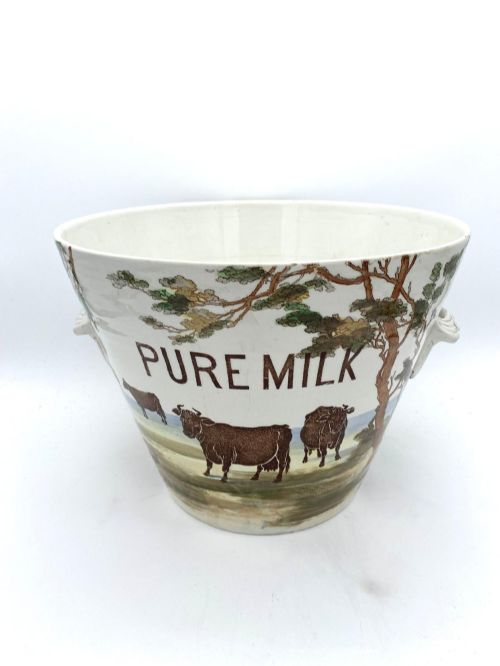
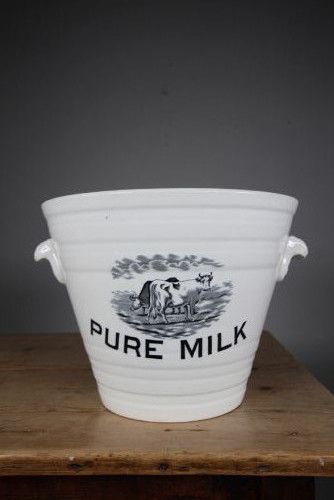
When you search for an antique ceramic cow, you encounter a diverse selection of figures, vessels, and tiles spanning the Georgian, Regency, and Victorian eras. These items capture rural livestock through various regional traditions, including Staffordshire models, Welsh pottery, and Dutch Delftware.
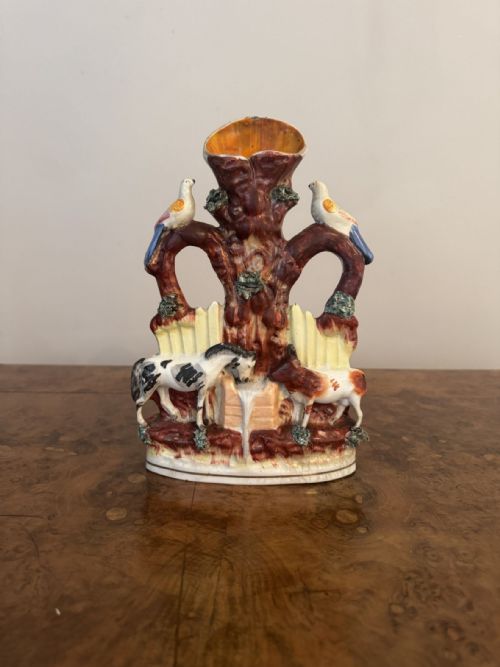
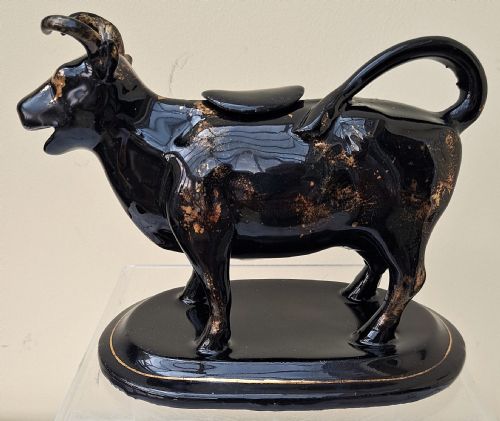
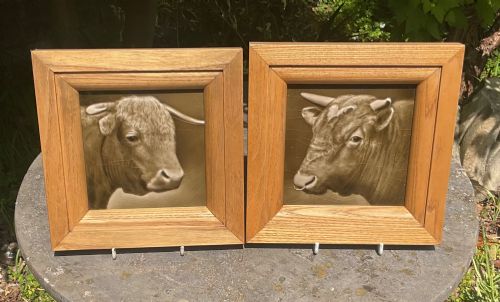
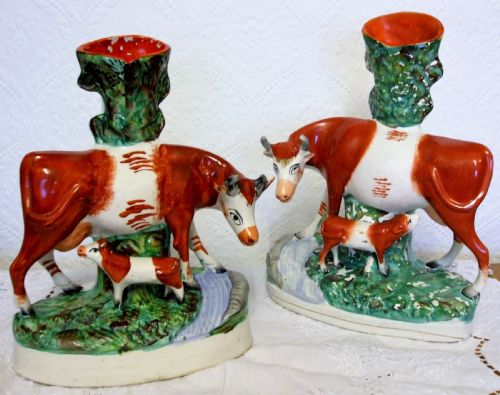
The most common forms on this page include cow creamers with removable lids, spill vases featuring a cow and calf, and decorative tiles. Makers utilised earthenware, pearlware, and porcelain to shape these animals, often pairing them with figures of milkmaids or calves.
Origins stretch across English potteries in Staffordshire and Yorkshire, alongside Welsh kilns and continental Dutch workshops. Pieces date from around 1800 through to the Edwardian period, reflecting shifting domestic tastes in dairy-themed ornaments.
How they were made
Potters shaped these figures using earthenware, pearlware, ironstone, and porcelain, often applying a clear or coloured glaze to seal the body. Earthenware and pearlware formed the basis for the earlier Staffordshire and Welsh creamer models.
Surface decoration relied on hand-painted enamel colours and cobalt blue underglaze, supplemented by gilt highlights on finer Regency and Victorian examples. Some pieces, such as the Jackfield and ironstone items, employed specialised dark glazes or robust heavy-body ceramic techniques.
Moulds dictated the primary stance of the cow and calf, while spill holders and flatback figures required hollow casting to ensure stability on mantelpieces.
Antique Ceramic Cow Retail Price Guide 2026
Typical asking prices for ceramic cow among the pieces listed under this phrase on Sellingantiques today, from the lower quarter to the upper quarter. They describe what is for sale here now, not the wider market.
Some cows wear floral garlands while others stand stoically beside diminutive calves.
What varies in quality
The standard of modelling defines the finer examples, where anatomical proportions and facial expressions display careful hand-finishing rather than crude factory mass-production. Superior pieces retain crisp details in the moulding of the hide, horns, and associated milkmaids.
Glaze application and enamel preservation mark the upper tier of the range, with clean cobalt or vibrant polychrome decoration remaining bright and intact. The presence of original lids on cow creamers significantly elevates the integrity of the piece.
Sherwin and Cotton·Minton·Royal Worcester·Harry Stinton
The Antique Ceramic Cow Glossary
- Cow creamer
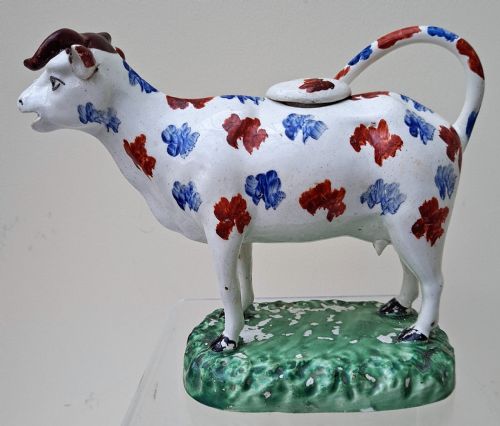
- A hollow ceramic vessel modelled as a cow with an opening on the back for milk and a mouth serving as the pouring spout. These functional tablewares date prominently to the Georgian and Victorian eras.
- Spill vase
- A hollow cylindrical holder attached to a figure, designed to store wooden spills used for lighting fires or candles. They often accompany pastoral cow and calf groups.
- Pearlware
- A refined earthenware developed by Josiah Wedgwood in the late eighteenth century, featuring a faint bluish tinge in the glaze designed to mimic Chinese porcelain. It frequently forms the body of early nineteenth-century creamers.
- Jackfield
- A type of glossy dark-glazed earthenware originating from Shropshire, known for a deep black metallic lustre finish. Victorian potteries adopted this style for distinctive animal creamers.
- Flatback
- A Staffordshire figure moulding style where the reverse is left unglazed and flat so the piece sits flush against a wall or mantelpiece. This method became widespread during the Victorian period.
Antique Ceramic Cow: Frequently Asked Questions
How were cow creamers used?
These ceramic vessels served a practical purpose on the tea table, holding cream that was poured directly from the animal's mouth. Guests lifted the lid on the cow's back to refill the body.
Over time, many of these utilitarian items transitioned into pure display pieces, appreciated more for their whimsical domestic form than their original function.
What is a spill vase?
A spill vase combines a decorative figurine with an attached hollow tube designed to hold thin wooden spills. These spills were lit from the hearth fire and carried across the room to ignite candles or lamps.
In pastoral designs, the tube often rises behind a cow and calf, blending utility with nineteenth-century decorative aesthetics.
How do I date a Staffordshire cow?
Dating relies on stylistic shifts in the ceramic body, glaze type, and construction methods used by the pottery. Early nineteenth-century examples often utilise pearlware bodies with subtle blue-tinted glazes, whereas mid to late Victorian pieces frequently feature flat backs and brighter polychrome enamels.
Base treatment and weight also offer clues, as earlier pieces tend to show greater potting irregularity compared to later mass-produced Victorian wares.
Are all these pieces from England?
While the majority originate from English factories in Staffordshire and Yorkshire, the selection includes pieces from Welsh potteries and Dutch Delftware traditions. Each regional centre applied distinct glazing and painting techniques to the ceramic body.
Examining the blue and white tin-glaze of Dutch pieces separates them clearly from the earthenware and pearlware traditions of the British Isles.