



Antique Ceramic Boy
An antique ceramic boy brings domestic charm to a room, appearing in porcelain, earthenware and bisque across European and Chinese traditions.
Antique Ceramic Boy
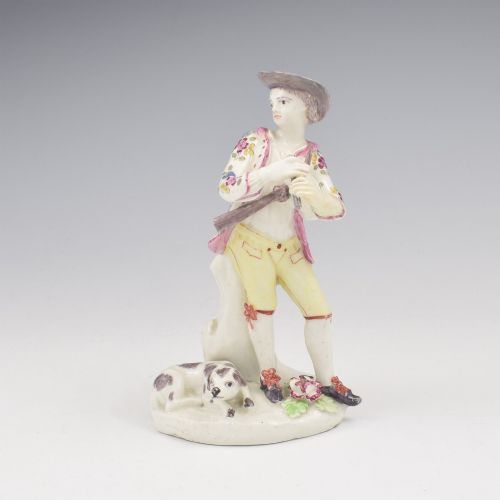
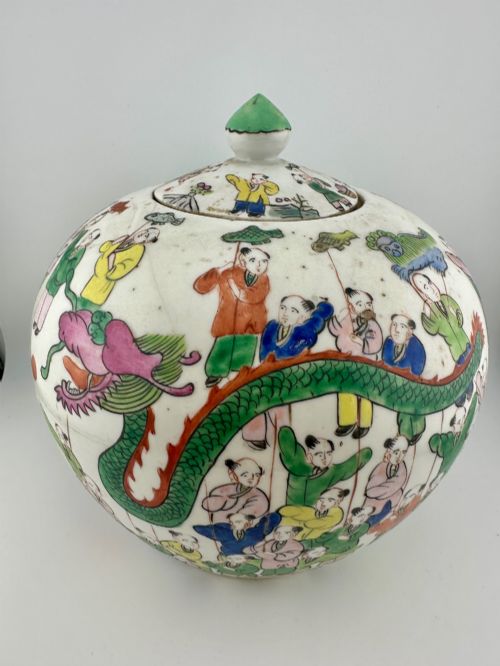
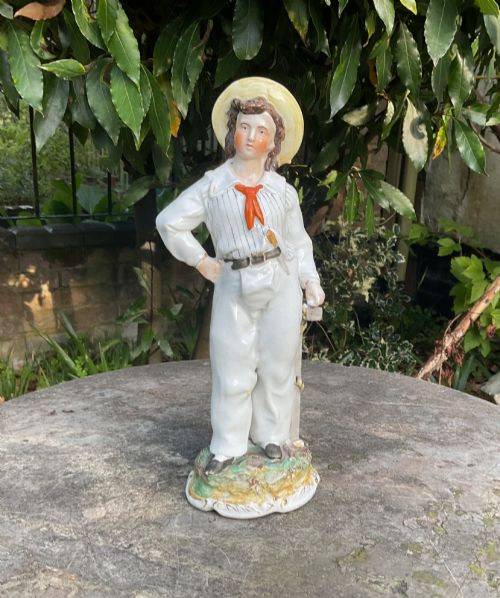
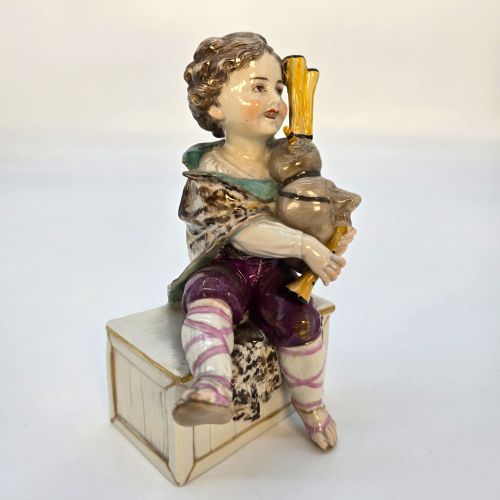
An antique ceramic boy takes many forms across this selection, appearing most frequently as detailed continental porcelain figurines, English figures, and Chinese decorative vessels. Makers rendered youths as singers, harvesters, skaters, and drummers, often pairing them with animals or companions in narrative groups.
The objects range from small posy holders and figural inkwells to large display figures and lidded jars depicting traditional motifs. European factories from Meissen to Staffordshire produced figures spanning the eighteenth, nineteenth, and early twentieth centuries.
Chinese workshops contributed another distinct group of pieces, utilising famille rose and earthenware to depict laughing youths and festival scenes. These variations show how different cultures adapted the subject to local ceramic techniques and domestic uses.
Materials and Working Methods
Potters shaped these figures using hard-paste and soft-paste porcelain, earthenware, and unglazed bisque porcelain, applying coloured glazes, enamel, and gold leaf for surface decoration. Artisans painted details by hand in pastel hues or vibrant polychrome palettes, capturing facial expressions and costume textures.
Many European and English works utilised press-moulding or slip-casting techniques in specialised factories, followed by careful hand-finishing before firing in kilns. Chinese pieces involved throwing or moulding clay bodies before applying intricate hand-painted blue and white or famille rose designs.
Antique Ceramic Boy Retail Price Guide 2026
Typical asking prices for ceramic boy among the pieces listed under this phrase on Sellingantiques today, from the lower quarter to the upper quarter. They describe what is for sale here now, not the wider market.
Several figures push wheelbarrows or hold melons, capturing cheerful domestic labour in miniature ceramic form.
Distinctions in Quality
Quality rests upon the crispness of the moulding and the sensitivity of the hand-painting on faces, hands, and garments. Finer examples show careful separation of colours and delicate brushwork rather than flat, heavy application.
The reputation of the producing factory or workshop guides valuation, with established European manufactories and marked Chinese periods demonstrating superior paste preparation and kiln control. Weight, stability, and the preservation of delicate limbs or accessories distinguish masterworks from commercial output.
Edmé Samson·Volkstedt Rudolstadt Factory·Royal Worcester·Krister KPM Waldenburg·Meissen·C. G. Schierholz·Niderviller·Bow Porcelain·Volkstedt Triebner Ens Eckert·Ernst Bohne Söhne·Sitzendorf·Helena Wolfsohn·Joseph Holdcroft·Royal Berlin·Royal Dux
The Antique Ceramic Boy Glossary
- Bisque Porcelain
- Unpainted and unglazed porcelain fired to a matte, porous finish that resembles marble and highlights sculptural detail. It gained popularity for portrait busts and intimate figural groups.
- Famille Rose
- A palette of opaque enamel colours introduced in Chinese ceramics during the Qing dynasty, dominated by pink or rose tones. Artisans utilised these enamels for intricate depictions of figures and floral motifs.
- Parian Ware
- A fine-grained British porcelain developed to imitate carved marble, frequently used for nineteenth-century figures. It fires to a smooth, creamy texture.
- Soft-paste Porcelain
- An artificial composition of clay, glass, and frit fired at lower temperatures than hard-paste porcelain. It often exhibits a warm, creamy body and distinctive glaze pooling.
- Wucai
- A Chinese porcelain decoration style combining underglaze blue with overglaze enamels in contrasting colours. The term translates to five colours.
Antique Ceramic Boy: Frequently Asked Questions
How were ceramic boy figures used?
Many of these pieces served purely decorative roles on mantels, sideboards, and drawing-room tables. Others combined ornament with utility, functioning as inkwells, posy holders, incense burners, or footbath jugs.
Craftsmen designed functional vessels to integrate figurative sculpture with everyday domestic tasks. This blend of artistry and purpose characterises much nineteenth-century production.
How do I identify eighteenth-century pieces?
Early figures from factories like Bow or Meissen typically feature softer paste bodies, hand-painted pastel palettes, and early anchor or crossed swords marks. Forms tend to be lighter and more intimately scaled.
Examination of the base often reveals unglazed footing areas and kiln scars unique to period firing methods. Style and costume details also provide clues to the decade of manufacture.
What is the difference between bisque and porcelain?
Porcelain is fired with a vitreous glaze that seals the body and creates a shiny, reflective surface. Bisque remains unglazed, presenting a matte, stone-like texture.
Bisque highlights the sculptural skill of the modeller because no glaze softens the fine edges of the clay. Glazed porcelain protects the body better against dust and handling over time.
How should I clean antique ceramic figures?
Dust these pieces gently with a soft, dry brush to prevent accumulation in crevices and delicate painted areas. Avoid using harsh chemical cleaners, abrasives, or soaking.
If washing is necessary, use lukewarm water with mild soap and dry immediately with a lint-free cloth. Painted surfaces and gold leaf require particular caution to prevent rubbing.