





Antique Cathedral Artwork
Antique cathedral artwork brings centuries of sacred architecture and townscapes into domestic spaces through original watercolours, oils and etchings.
Antique Cathedral Artwork
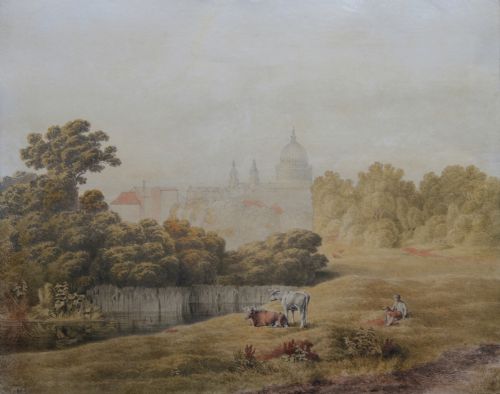
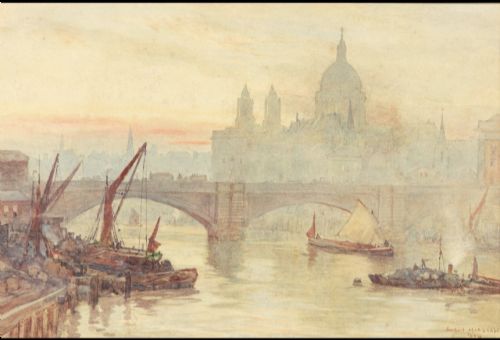
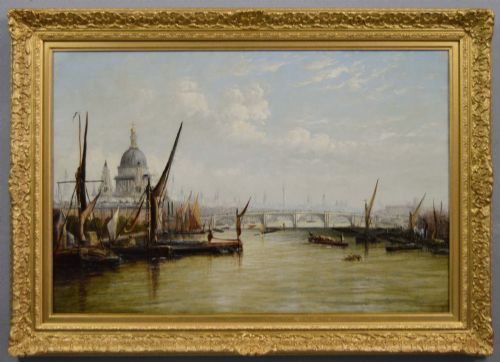
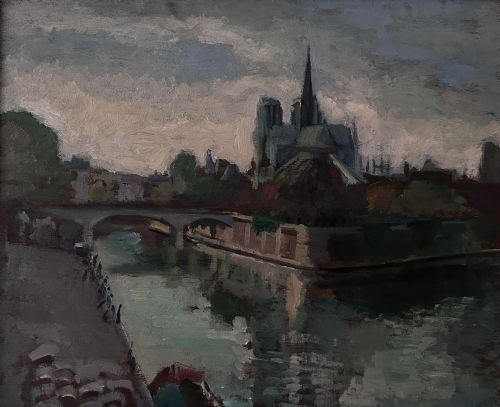
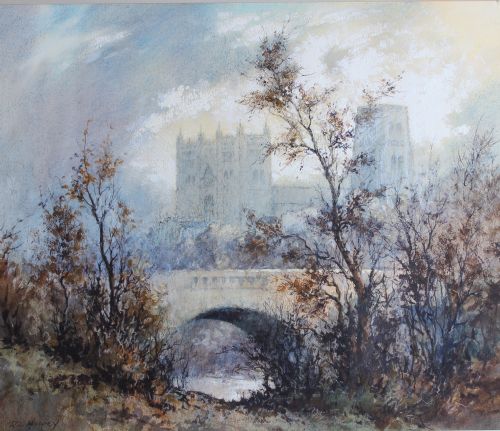
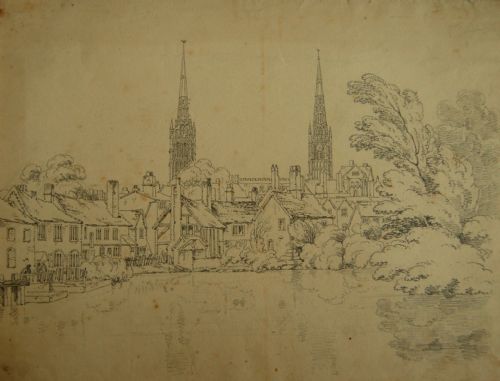
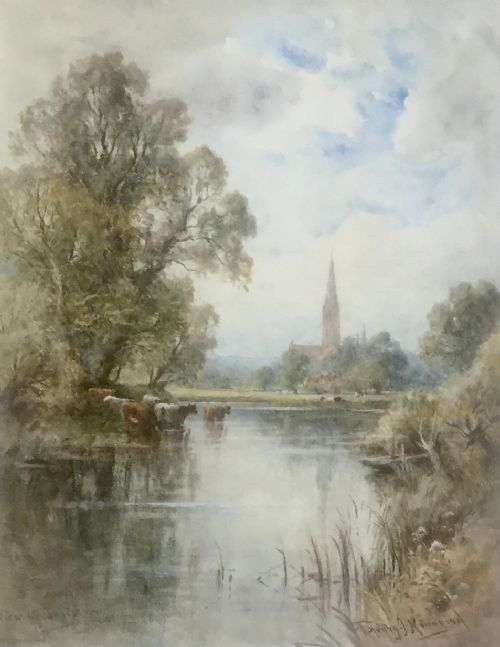
Antique cathedral artwork captures grand ecclesiastical buildings, urban river scenes and monastic foundations through the eyes of period painters and printmakers. These works record historic views of iconic sites such as St Pauls, Durham, Lincoln and Norwich cathedrals alongside continental European subjects.
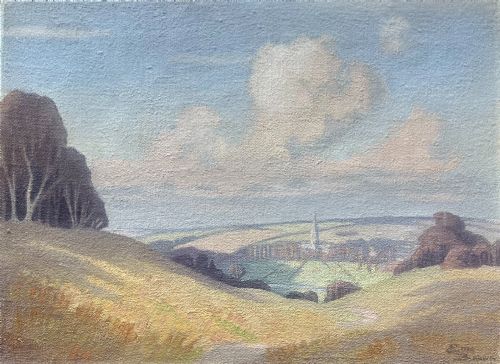
The watercolours, oil paintings and drypoint etchings found here span from the early nineteenth century through the Edwardian era and into the early twentieth century. Many pieces ground the great spires and stone facades in their contemporary settings, showing bustling rivers, processions or quiet closes.
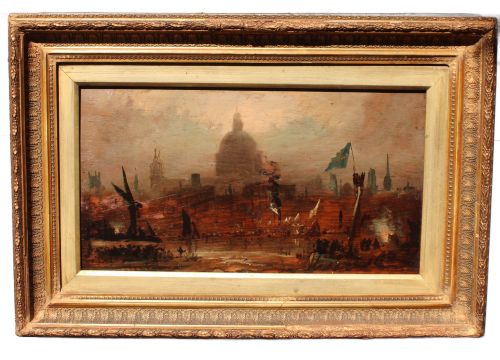
Buyers meet works ranging from detailed architectural drawings intended for study to atmospheric townscape oils that place medieval masonry alongside the everyday life of the Thames or French waterways.
Materials and Technique
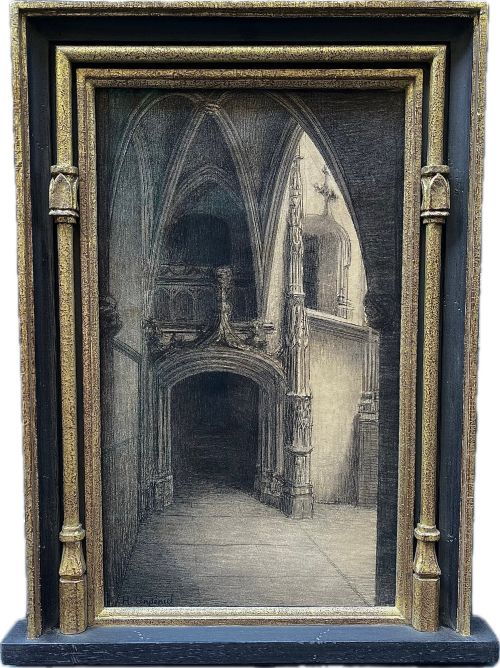
Watercolour on paper and oil paint on canvas or board dominate the mediums, frequently accompanied by ink, chalk and charcoal in preparatory or architectural drawings. Artists utilised these materials to render intricate stonework, leaded glass and changing atmospheric light across facades.
Framed works typically utilise period wood mouldings, sometimes finished with gesso and gold leaf to complement the tone of the picture. Etchings and prints rely on precise line work on paper, capturing fine architectural details through inked plates.
Antique Cathedral Artwork Retail Price Guide 2026
Typical asking prices for cathedral artwork among the pieces listed under this phrase on Sellingantiques today, from the lower quarter to the upper quarter. They describe what is for sale here now, not the wider market.
Listings feature works spanning the 1800s, Victorian era, 1900, Edwardian period, and the 1920s to 1950s.
Evaluating Quality
Quality rests upon the artist's command of perspective when rendering complex Gothic vaulting, flying buttresses and towering spires. The finest works balance architectural accuracy with atmospheric depth, rather than relying on stiff or mechanical line work.
The handling of light and medium distinguishes superior pieces, whether through translucent washes in watercolours or confident brushwork in oils. Condition of the paper and canvas, along with the appropriateness of the framing, also influences the integrity of the piece.
Herbert Menzies Marshall·Francis Moltino·Robert Leslie Howey·Fred Lawson·Francis Dodd·Edgar J Maybery·Henry John Kinnaird·William Sidney Cooper·Henry Edridge
The Antique Cathedral Artwork Glossary
- Watercolour
- A painting method where fine pigments are suspended in a water-based, translucent solution applied to paper. It allows artists to build delicate layers of light and shadow.
- Drypoint etching
- A printmaking process where an artist scratches a design directly onto a metal plate with a sharp needle. This technique creates a characteristic velvety line due to the burr raised in the metal.
- Gothic Revival
- An architectural and artistic movement reviving medieval forms from the mid-eighteenth century onwards. It heavily influences the pointed arches and ornate stonework seen in these subjects.
- Gesso
- A plaster-like mixture applied to wood frames or panels as a base for paint or gilding. It provides a smooth surface for decorative finishes.
Antique Cathedral Artwork: Frequently Asked Questions
What periods do these artworks come from?
The pieces span from the early nineteenth century through the Victorian period, the Edwardian era, and into the early decades of the twentieth century.
Most items reflect the stylistic shifts of the nineteenth and early twentieth centuries, including Gothic Revival and Post-Impressionist approaches.
How should I hang antique watercolours?
Works on paper require protection from direct sunlight to prevent the watercolour pigments and paper supports from fading over time.
Keeping them away from damp walls and fluctuating temperatures helps preserve the integrity of both the paper and the period frames.
Are these works original pieces?
The selection includes unique hand-painted watercolours and oil paintings alongside original period drypoint etchings and signed prints.
Each listing specifies the exact medium, distinguishing one-off painted studies from printed works.
How do I identify different print types?
Etchings and drypoints show a distinct platemark indented into the paper where the printing press applied pressure.
Watercolours and oils reveal brush texture and pigment depth under close inspection, separating them from flat mechanical reproductions.