
Antique Castored Dining Table
An antique castored dining table brings versatile timber and mobility to the dining room through pedestal and drop-leaf forms.
Antique Castored Dining Table
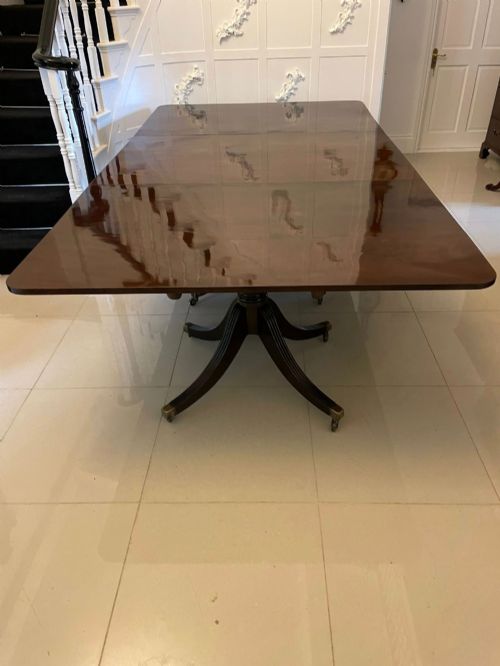
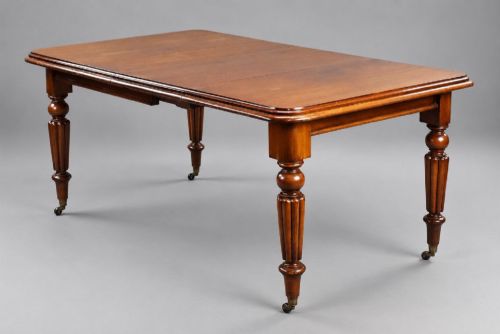
When searching for an antique castored dining table, buyers encounter large dining furniture designed for flexible seating arrangements and movement across the floor. These pieces primarily date from the Georgian, Regency, and Victorian periods, extending through later revivals.
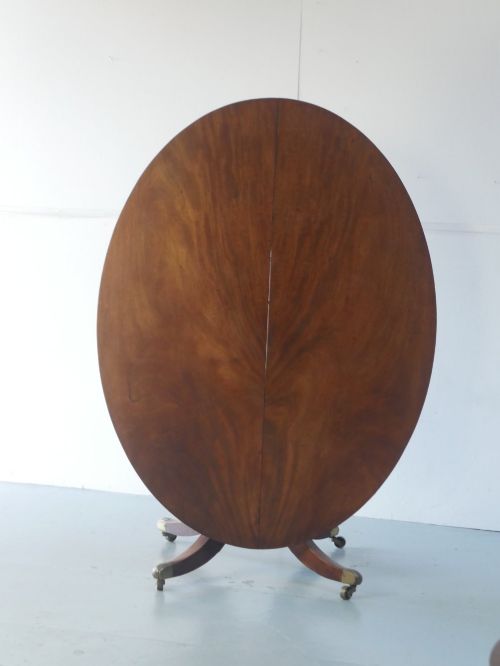
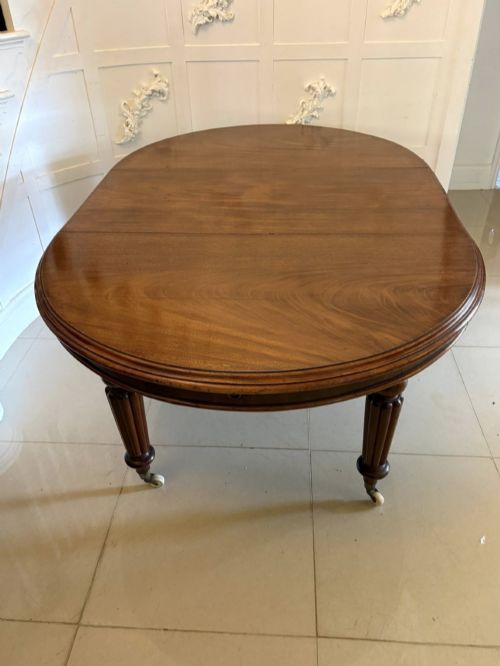
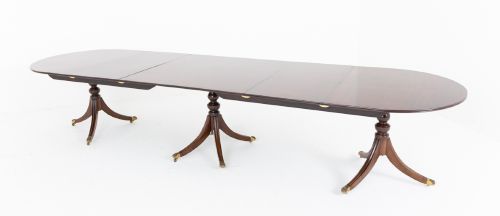
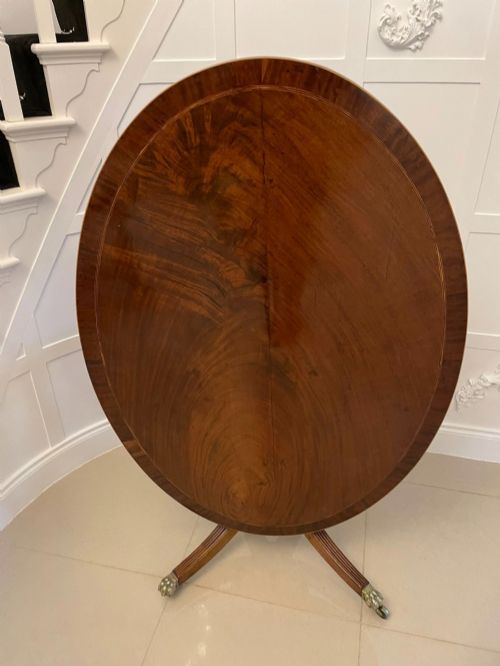
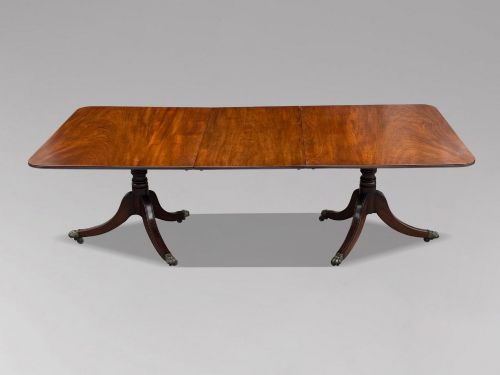
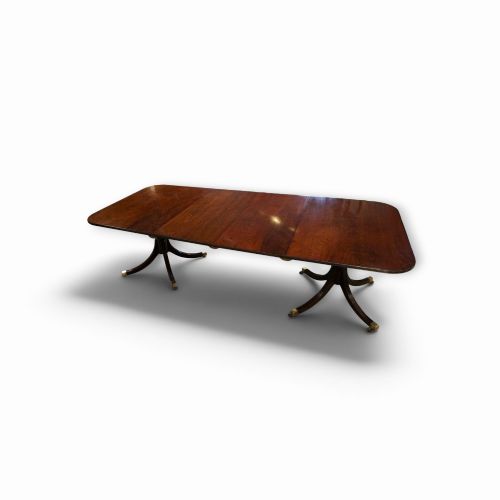
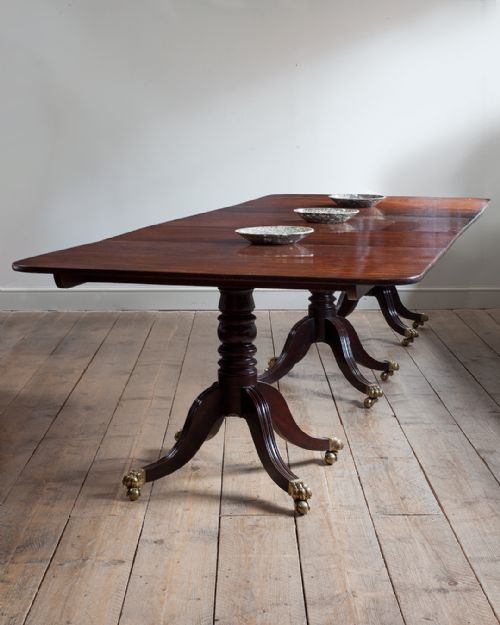
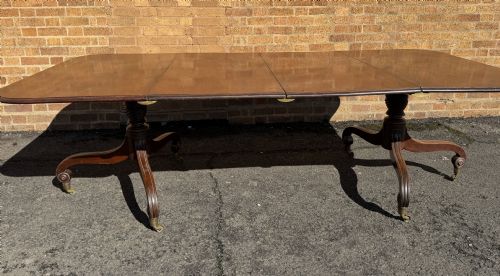
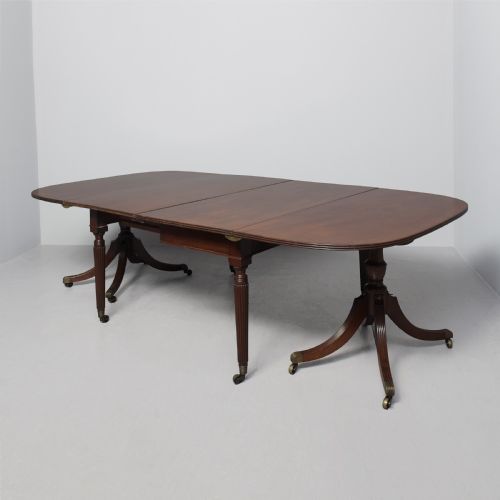
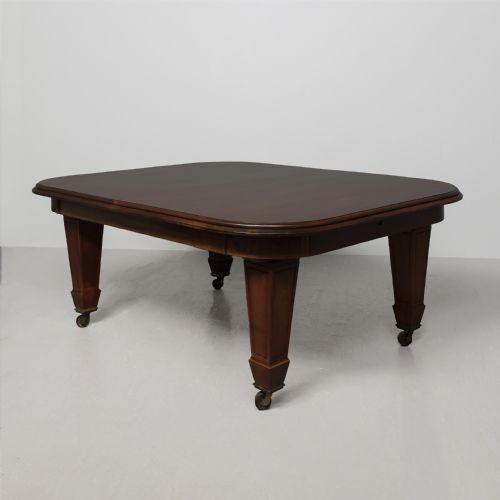
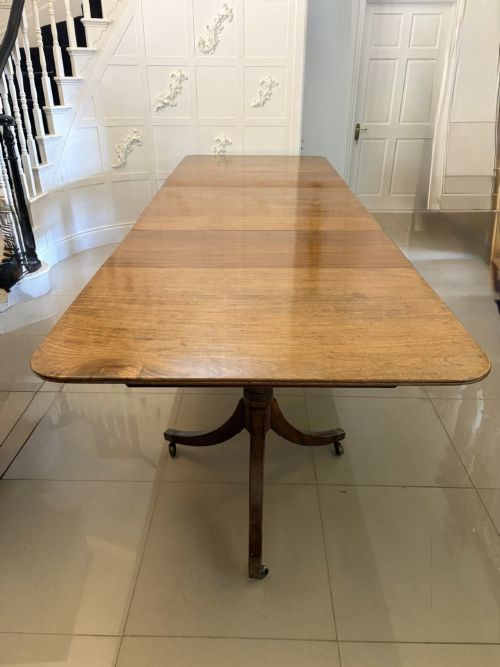
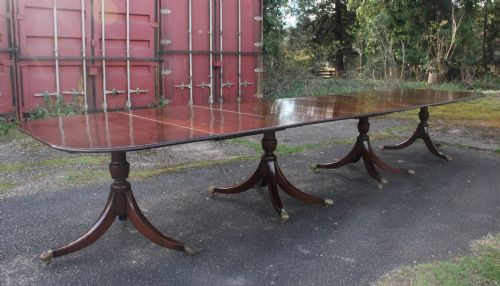
The selections on this page heavily feature mahogany as the principal timber, alongside walnut, oak, and pine. Forms range from twin and triple pedestal extending tables to drop-leaf Pembroke tables and tilt-top breakfast tables fitted with castors.
Many examples incorporate removable leaves or winding mechanisms to adjust the table length for different gatherings. Smaller drop-leaf and breakfast versions provide practical options for domestic spaces requiring adaptable furniture.
How they were made
Cabinet makers constructed these tables predominantly using solid and figured mahogany, accented occasionally with boxwood inlay, satinwood, and walnut. Timber selection focused on rich grain patterns, particularly for prominent table tops and pedestals.
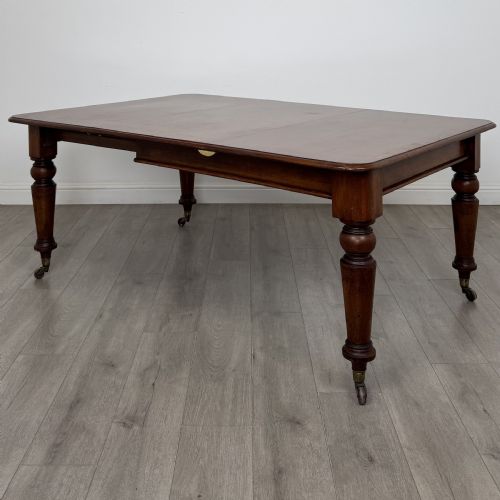
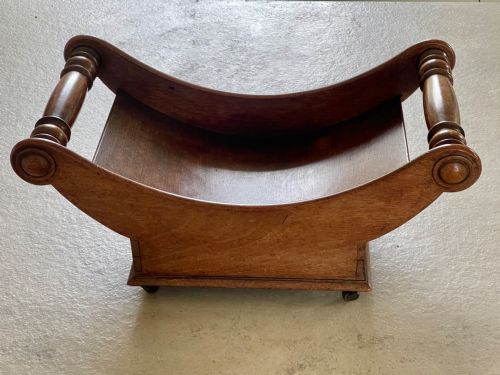
Mechanical ingenuity defined the extending formats, utilising wind-out systems, pull-out pillars, and drop-leaf hinges to alter the table size. Castors made of brass and ceramic were secured to the feet to permit smooth movement of heavy timber frames.
Listings span the Georgian, Regency, and Victorian eras, showcasing timber varieties from mahogany and walnut to oak, pine, and satinwood.
What varies in quality
The distinction between standard examples and superior work lies in the choice of timber figure, such as highly figured mahogany, and the precision of cabinet joinery. Expert execution shows in stable pedestal bases and seamless integration of additional leaves.
Original hardware, including brass castors and winding mechanisms, elevates the integrity of a piece. Finer tables balance substantial seating capacity with proportionate scale and restrained inlay work.
Gillows of Lancaster·Thomas Butler of London·Whytock & Reid
The Antique Castored Dining Table Glossary
- Castor
- A small wheel fitted to the foot of a piece of furniture to allow easy rolling. These are frequently fashioned from brass or ceramic.
- Pedestal
- A central column supporting a table top, often dividing into multiple pillars on larger extending dining tables. They typically branch into splayed legs.
- Pembroke table
- A small rectangular table with hinged flaps on either side that drop down. These often feature single drawers and castors.
- Tilt-top
- A table top hinged to the central column so it can be tilted vertically when not in use. This mechanism saved domestic space in period rooms.
- Wind-out
- A mechanical extending system operated by a crank handle that separates the table top to insert leaves. This mechanism became common during the Victorian period.
Antique Castored Dining Table: Frequently Asked Questions
How do I extend an antique dining table?
Many tables utilise a mechanical wind-out handle that separates the pedestal sections apart. Additional loose leaves are then dropped into the central gap to expand the surface.
Other formats rely on pull-out pillar actions or drop-leaf flaps supported by folding wooden gates. Each method allows the table to accommodate varying numbers of diners.
Why do these tables have castors?
Castors were fitted to heavy timber dining tables to permit easy relocation across carpeted or wooden floors. Because these large furniture pieces needed to move for cleaning or room reconfiguration, small wheels reduced friction.
Materials like brass and ceramic were chosen for durability and strength under substantial weight. Their presence remains a practical feature of period dining furniture.
What is a pedestal dining table?
A pedestal dining table rests on one or more central columns rather than traditional corner legs. Twin and triple pillar formats distribute weight evenly across splayed wooden feet.
This construction method provides greater legroom for seated guests around the perimeter. It also allows extra pillars to be added underneath longer extending table tops.
How do I care for a mahogany table top?
Polished mahogany surfaces require regular dusting with a soft cloth and occasional treatment with suitable wax polish. Avoiding direct sunlight prevents uneven fading of the timber grain over time.
Using mats under hot dishes and liquids protects the polish from heat rings and moisture marks. Gentle maintenance preserves the natural lustre of the wood.