




Antique Castle Scene
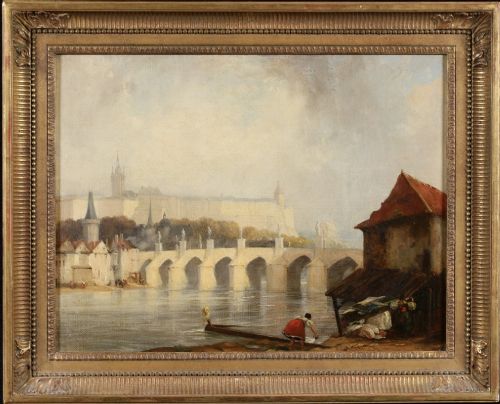
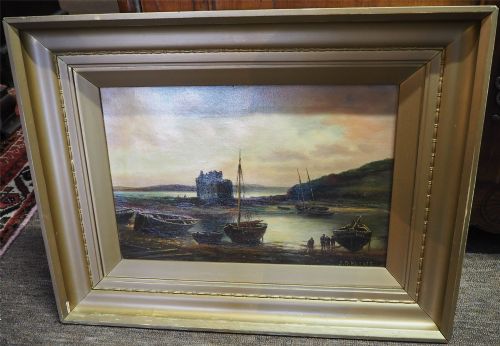
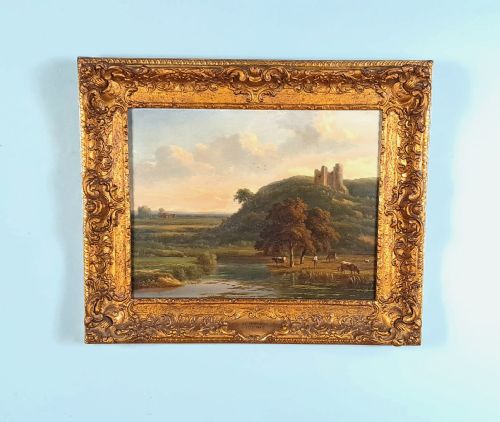
These pieces capture an antique castle scene in paint, glass, and giltwood, bringing centuries of romantic architecture into domestic spaces.
Antique Castle Scene
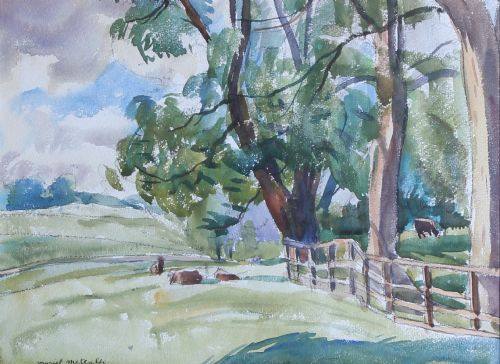
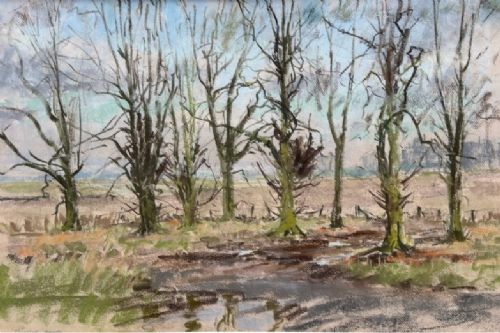
An antique castle scene depicts historic fortresses, ruined strongholds, and royal residences set within British and European landscapes. These works primarily take the form of framed oil paintings and watercolours on paper, alongside occasional stained glass windows featuring hand-painted architectural vistas.
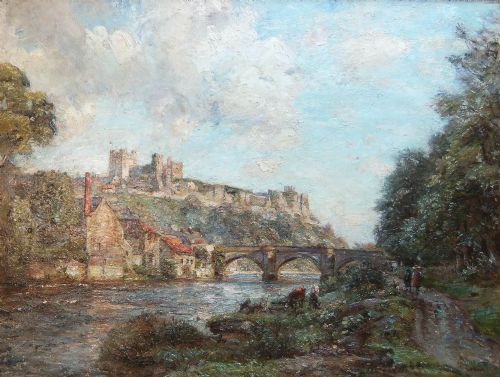
The selections span from the eighteenth century through the Edwardian period, with Victorian examples appearing most frequently. Painters often placed these medieval and Gothic structures beside rivers, coastal fishing villages, and pastoral pastures populated by cattle or fisherfolk.
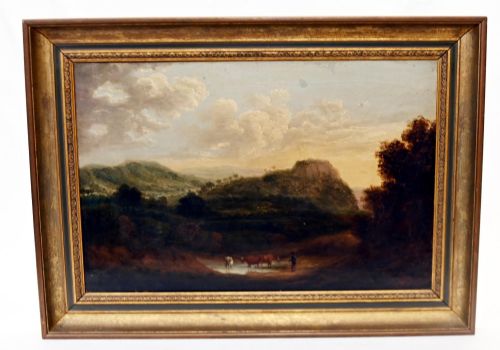
Works on this page range from intimate topographical watercolours to massive country house canvases framed in giltwood and gesso. Each piece reflects contemporary nineteenth-century and early twentieth-century fascination with historical ruins and picturesque scenery.
Materials and methods
Artists built these compositions using oil on canvas and oil on board, or applied watercolour pigments onto paper support. Painters layered rich tones to render atmospheric skies, murky river waters, and the rugged stonework of ancient fortifications.
Many works incorporate heavy wooden frames embellished with gesso and gilt finishes, designed to project light outwards from the picture plane. Leaded glass windows utilise hand-painted techniques directly on glass panels to integrate structural light with scenic views.
Antique Castle Scene Retail Price Guide 2026
Typical asking prices for castle scene among the pieces listed under this phrase on Sellingantiques today, from the lower quarter to the upper quarter. They describe what is for sale here now, not the wider market.
Period styles span from Georgian and Regency through Victorian and Edwardian to British Impressionism and Romanticism.
Distinguishing quality across works
Superior execution shows in the confident handling of perspective, architectural precision, and the subtle interplay of natural light across stone and water. Master hands balance the grand scale of a fortress with meticulous details in surrounding foliage, figures, and craft.
The integrity of the original giltwood frame and the stability of the canvas or paper support contribute significantly to the standing of a piece. Finer works maintain vibrant watercolour pigments and stable oil layers without heavy intervention from later restoration.
Alfred Young Nutt·Herbert Royle·T C Hofland·David Cox Jnr·George Gregory·George Morland·Claude Thomas Stanfield Moore·William Edward Webb·Frank Wasley·Rowland Henry Hill·Carleton Grant·Fred Lawson·George Graham
The Antique Castle Scene Glossary
- Giltwood
- Wood carved and coated with a thin layer of gold leaf or metallic gilt powder. This finish reflects interior candlelight and daylight to highlight the surrounding artwork.
- Gesso
- A plaster-like mixture applied to wooden frames as a base for moulding and gilding. It allows craftsmen to carve intricate relief patterns around the perimeter of a canvas.
- Topographical
- Representing specific real-world locations and buildings with factual accuracy. Artists of these scenes often documented actual British and European landmarks.
- Pastoral
- Depicting country life, agriculture, and rural landscapes in an idealized manner. These settings frequently incorporate livestock, rivers, and distant ruins to evoke tranquility.
Antique Castle Scene: Frequently Asked Questions
What periods do these castle paintings come from?
The pieces originate primarily from the nineteenth century, including the Victorian era, alongside examples from the eighteenth century and the early twentieth century up to the 1930s.
Artists during these decades drew heavily upon Romanticism and British landscape traditions to portray historic fortifications.
Where do the castle locations usually come from?
Many depict recognizable British landmarks such as Windsor Castle, Hastings Castle, and Richmond in Yorkshire, while others show continental sites like Prague.
Topographical accuracy varied according to whether the artist intended a precise record or a romanticized pastoral composition.
How should I display a heavy giltwood frame?
Large giltwood frames require secure wall fixings anchored directly into structural studs or masonry to support their substantial weight safely.
Position them away from direct sunlight and damp conditions to preserve the integrity of both the carved wood and the painted surface.
Are watercolours and oil paintings cared for differently?
Watercolour paintings on paper require UV-protective glass and stable humidity control to prevent the pigments and paper support from fading or degrading.
Oil paintings on canvas are more robust but benefit from gentle dusting and avoidance of extreme temperature fluctuations that cause cracking.