


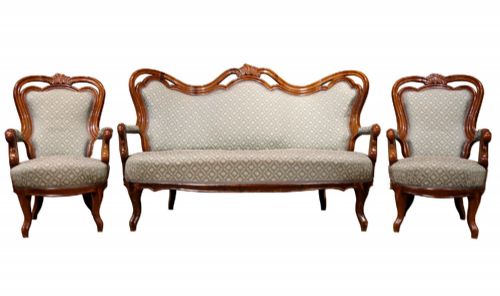


Antique Carved Walnut Suite
An antique carved walnut suite brings substantial warmth and grand proportion to a principal room, matching seating or bedroom furniture made to coordinate.
Antique Carved Walnut Suite
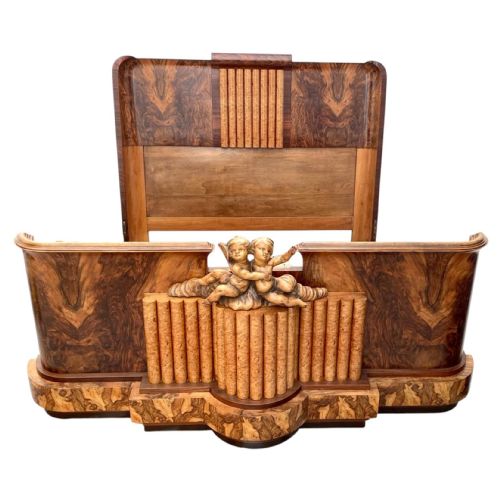
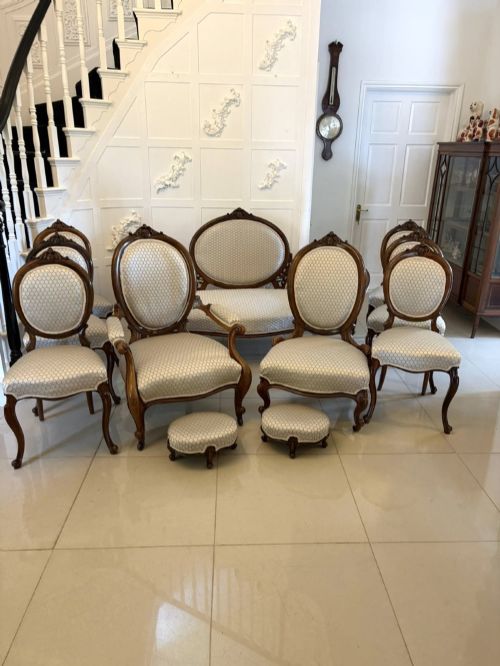
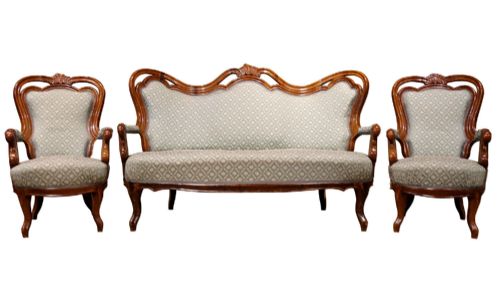
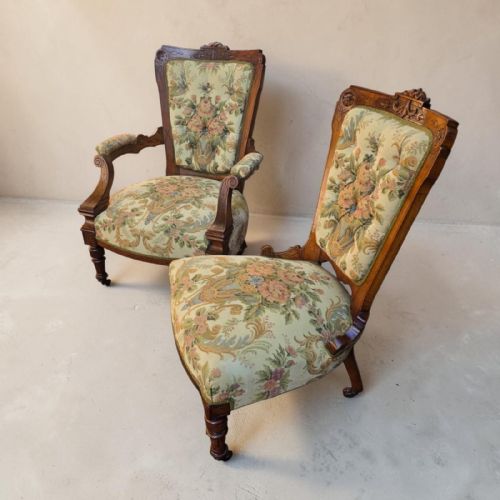
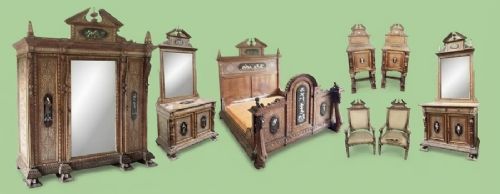
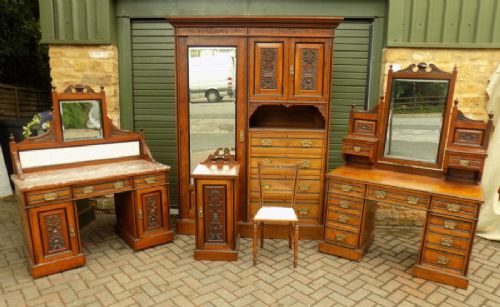
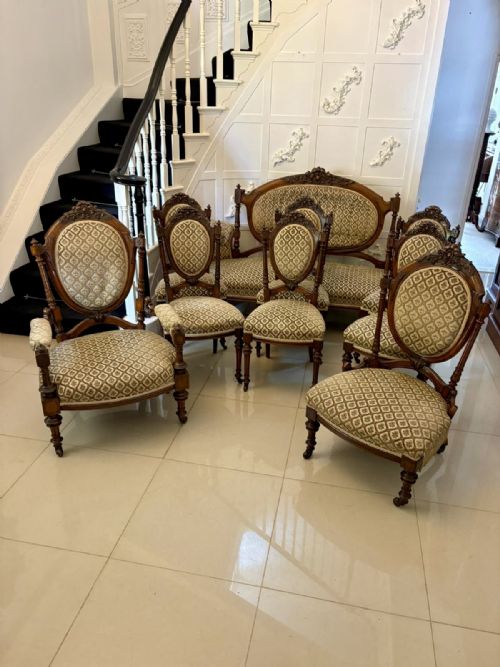
An antique carved walnut suite comprises coordinated furniture groupings designed for salons, drawing rooms, dining spaces and bedrooms. The pieces you encounter most frequently on this page span the Victorian era through the early twentieth century, taking the form of multi-piece salon sets, bedroom groupings and dining suites.
The configurations vary widely according to their original domestic function. Salon suites range from compact three-piece arrangements featuring a settee and two armchairs up to expansive eleven-piece settings complete with footstools, while bedroom suites combine large bed frames with matching bedside cabinets and wardrobes.
Materials and construction
Makers utilised solid walnut and decorative burr walnut veneers over secondary timbers, exploiting the rich grain and deep natural colour of the wood. Carved ornamentation relies on the dense nature of walnut to hold crisp relief work, from scrolling foliage to lion paw feet.
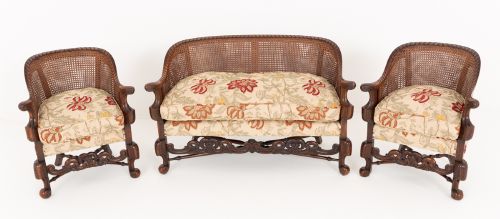
Upholstery forms an integral part of these suites, incorporating textiles such as velvet, damask, fabric and cane panels. Structural support often includes brass elements and detailed marquetry inlay to enhance the primary walnut surfaces.
Antique Carved Walnut Suite Retail Price Guide 2026
Typical asking prices for carved walnut suite among the pieces listed under this phrase on Sellingantiques today, from the lower quarter to the upper quarter. They describe what is for sale here now, not the wider market.
Evaluating craftsmanship and design
The distinction between standard production and exhibition quality work lies in the depth of the carving and the selection of timber. Suites designated as exhibition quality display master-carved details and highly figured burr walnut veneers matched across multiple items.
Stylistic cohesion across a suite determines its visual success, with revival designs ranging from restrained Queen Anne and Carolean styles to exuberant French Rococo and Louis XV forms. The precision of the joinery and the integrity of the original upholstery methods further separate everyday sets from remarkable survivals.
Waring & Gillows·Hille London
The Antique Carved Walnut Suite Glossary
- Burr walnut
- A veneer taken from the knotted growth of a walnut tree, prized for its swirling, highly figured grain patterns. It frequently covers the primary surfaces of grand Victorian and Edwardian cabinet furniture.
- Bergere
- An enclosed upholstered armchair with wooden framing and cane or upholstered sides. This French seating form appears within various revival suites.
- Salon suite
- A coordinated set of reception room furniture typically comprising a settee, armchairs and side chairs. These groupings were designed to furnish formal entertaining spaces.
- Marquetry
- Decorative patterns formed by the insertion of pieces of contrasting wood veneer into a master panel. It creates pictorial or geometric designs on bedroom and dining furniture.
- Damask
- A reversible figured fabric traditionally woven on a jacquard loom with patterns in satin and sateen. It frequently survives as the upholstery material on Victorian seating suites.
Antique Carved Walnut Suite: Frequently Asked Questions
What pieces come in a salon suite?
A salon suite typically includes a small sofa or settee accompanied by matching armchairs and side chairs. Larger settings may also incorporate footstools and drawing room chairs designed in the same aesthetic.
These groupings were intended to furnish formal entertaining spaces with visual harmony. Each chair and sofa shares identical carved details, timber selections and upholstery styles.
How do I identify a bedroom suite?
Bedroom suites group large bed frames, such as king size or bombe styles, with matching bedside cabinets. They often include companion wardrobes and dressing chests finished in burr walnut or marquetry.
This coordinated approach ensures every major item of furniture in the chamber shares a unified period style, from French Rococo revival to early twentieth-century designs.
What is the difference between styles?
Styles range from the restrained lines of Queen Anne revival furniture to the ornate curves of French Louis XV and Rococo revival pieces. Carolean and Empire revival variants introduce distinct architectural motifs and heavier carved proportions.
Recognising these aesthetic differences helps determine the specific decade of manufacture. Each revival movement reinterprets historical decorative arts through the craftsmanship of its own era.
How should I care for walnut furniture?
Walnut furniture requires placement away from direct sunlight and heat sources to prevent the wood and decorative veneers from drying out. Regular dusting with a soft, dry cloth preserves the natural finish without damaging the surface.
Upholstered components benefit from professional cleaning suited to delicate textiles like velvet, damask or cane panels. Maintaining stable room humidity protects both the timber frame and the internal upholstery stuffing.