


Antique Carved Hutch
An antique carved hutch brings honest timber and centuries of regional joinery into a modern interior.
Antique Carved Hutch
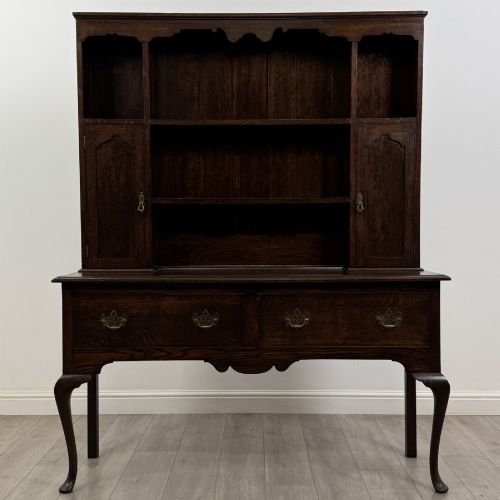
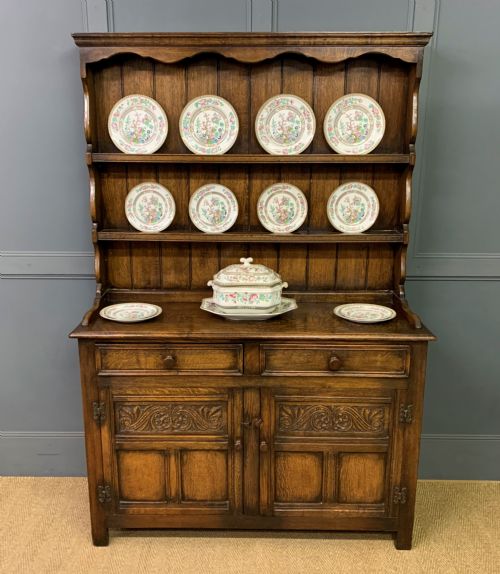
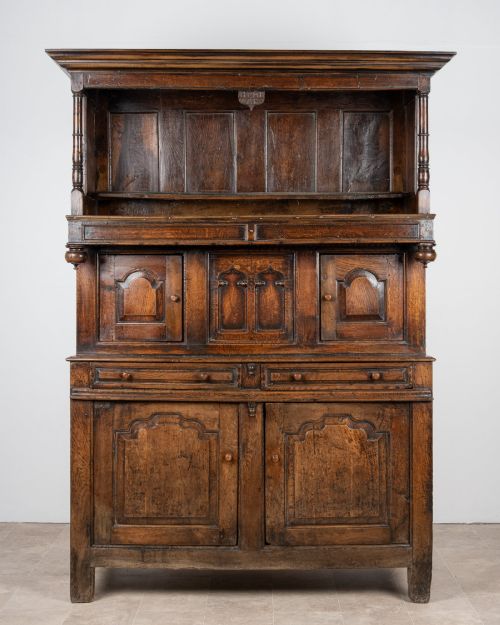
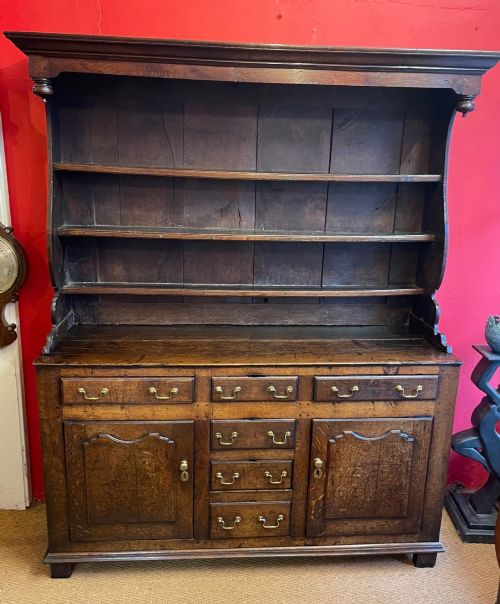
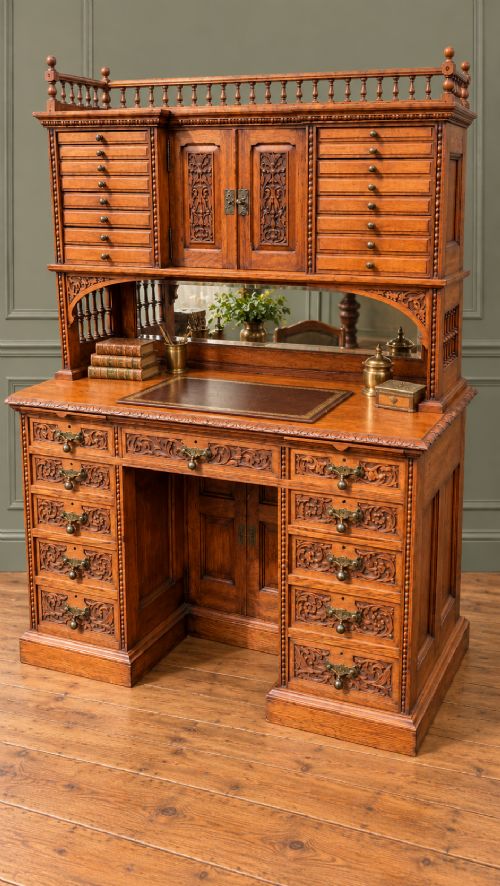
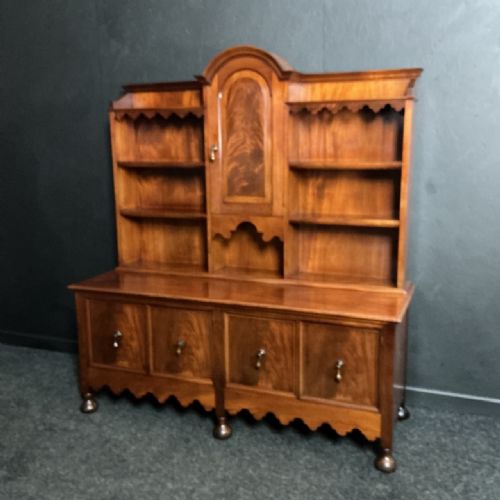
When you search for an antique carved hutch, you encounter solid timber storage furniture rooted in domestic utility. The listings show pieces spanning from the seventeenth century through the Edwardian era, incorporating regional forms like the Welsh dresser and food court cupboard.
Most examples you meet on this page are constructed from oak, though walnut, mahogany, and pine also appear. These utilitarian storage units evolved from simple food hutches and boarded cupboards into architectural display pieces with plate racks and fitted lower cabinets.
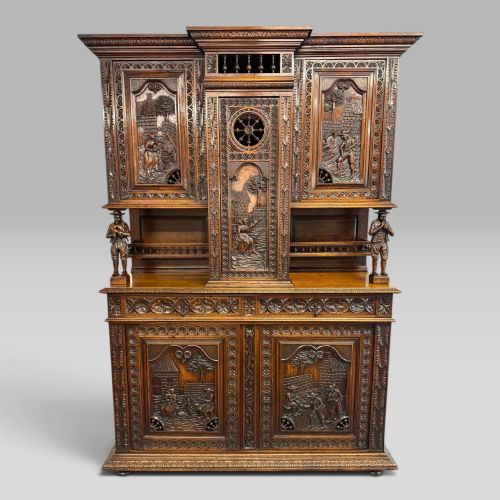
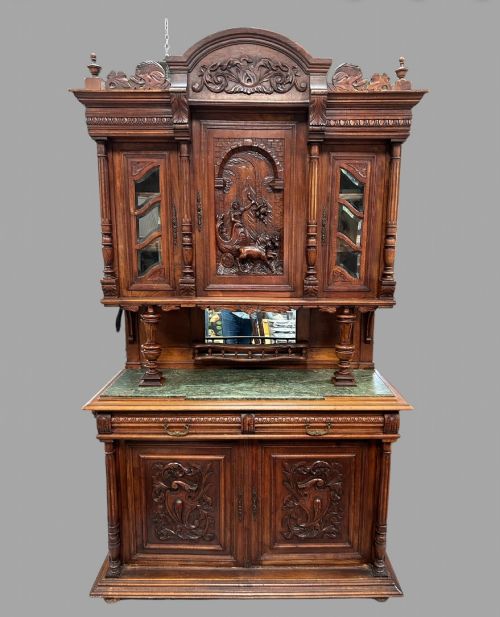
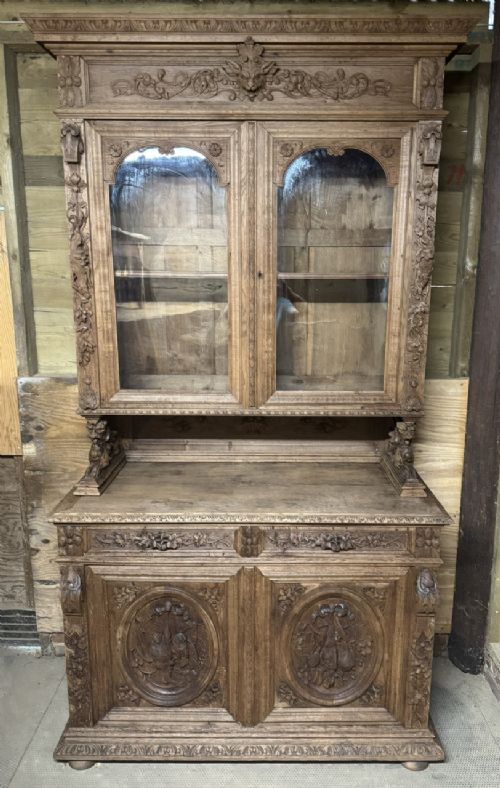
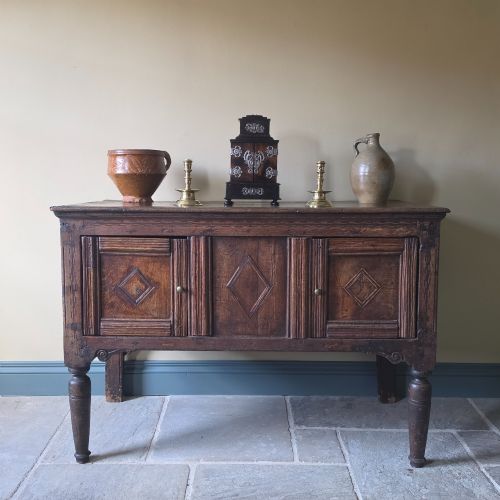
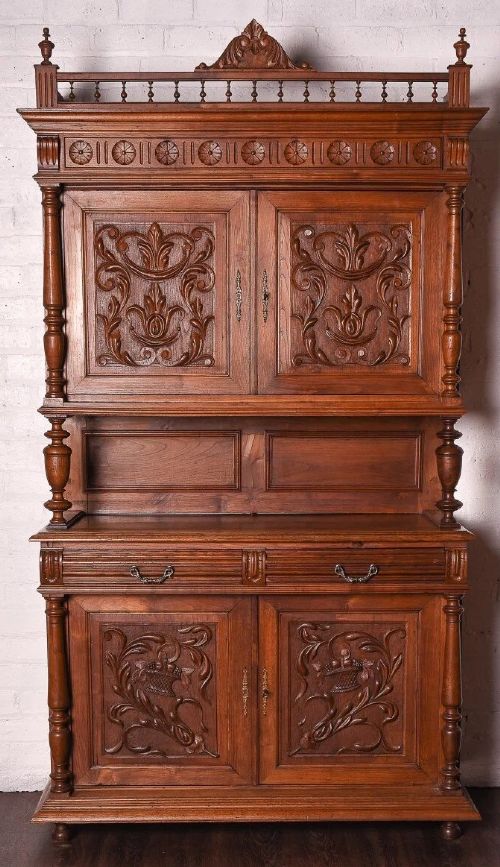
Makers and regional joiners applied surface decoration ranging from simple geometric panels to exuberant Green Man carvings and French provincial motifs. The surviving objects bridge the gap between vernacular country workshop production and refined revivalist styles.
Materials and Construction Methods
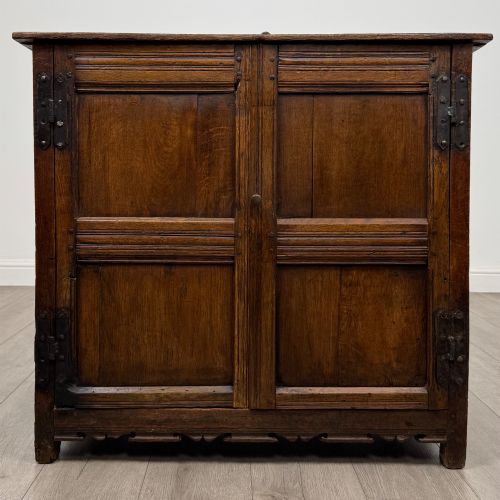
The primary material across the centuries is solid oak, frequently quarter-sawn to reveal the dense medullary rays of the timber. Joiners utilised traditional pegged mortise and tenon joints to build robust carcases that withstand heavy domestic use.
Secondary structural elements incorporate pine, walnut, and mahogany, depending on the regional origin and date of the piece. Metal hardware relies on forged iron or brass for hinges, drop handles, and night watch holders.
Carving was executed by hand using gouges and chisels directly into the seasoned timber, producing deep relief work and geometric patterns unique to each regional workshop.
Antique Carved Hutch Retail Price Guide 2026
Typical asking prices for carved hutch among the pieces listed under this phrase on Sellingantiques today, from the lower quarter to the upper quarter. They describe what is for sale here now, not the wider market.
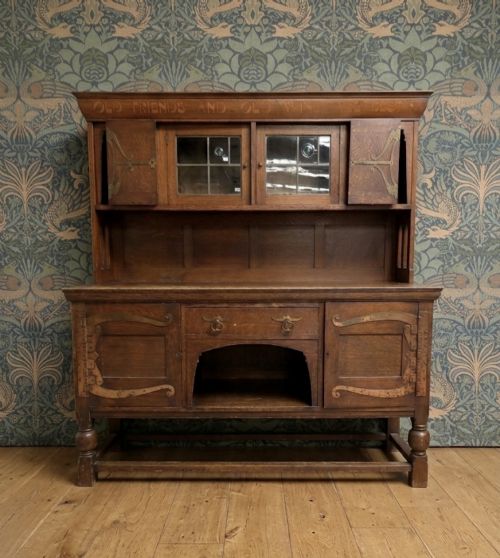
The listings on this page span several centuries, encompassing seventeenth-century food hutches, eighteenth-century country oak dressers, and twentieth-century Arts and Crafts sideboards.
Distinctions in Quality and Make
The hierarchy of quality rests upon the integrity of the timber selection and the depth of the hand-carved detail. Superior pieces maintain their original boarded backs, untouched surface patination, and closely matched drawer linings.
Lesser examples often suffer from unsympathetic modern alterations, replacement hardware, or pine boards substituted into primary oak carcases during later restoration work. The crispness of the chisel work on geometric panels or figural carvings dictates the upper tier of craftsmanship.
Ambrose Heal for Heal & Son·Heals of London
The Antique Carved Hutch Glossary
- Hutch
- A standing cabinet or enclosed storage chest used historically for provisions or valuables. It forms the base typology for many early oak cupboards and dressers.
- Welsh Dresser
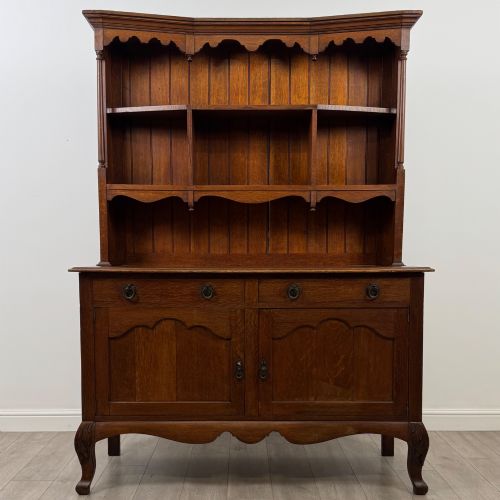
- A traditional kitchen unit featuring lower cupboards or drawers surmounted by open plate racks. These pieces were designed to display pewter and earthenware plates.
- Geometric Carving
- Surface decoration cut directly into the solid wood utilising shallow notches and repeating angled lines. This technique is prominent on seventeenth-century English joinery.
- Quarter-Sawn
- A method of cutting logs radially from the centre to produce stable boards with distinctive grain figures. This cut minimises timber warping over centuries.
Antique Carved Hutch: Frequently Asked Questions
What is an antique carved hutch?
An antique carved hutch is a sturdy wooden storage piece, often featuring hand-carved panels, doors, or open shelving.
These functional items evolved from early domestic food cupboards into decorative display furniture found across centuries of British and continental woodworking.
How were these hutches used?
Historically, early hutches stored perishable provisions, bread, and domestic valuables away from pests and dampness.
Later iterations incorporated plate racks and drawers to organise and display household ceramics and dining equipment in the main living quarters.
How do I live with an antique hutch?
Position your hutch against an interior wall away from direct heat sources and strong sunlight to protect the aged timber surface.
Utilise the open shelves for display and the enclosed lower cupboards to store modern tableware or linens out of sight.
How do I tell periods apart?
Seventeenth-century pieces display heavier oak construction, pegged joints, and geometric carved panels or simple stile legs.
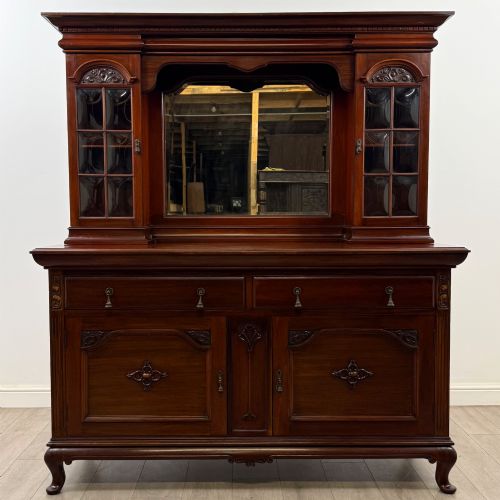
Nineteenth-century revival pieces often incorporate softer design elements like cabriole legs, leaded glass doors, or regional French provincial walnut work.