

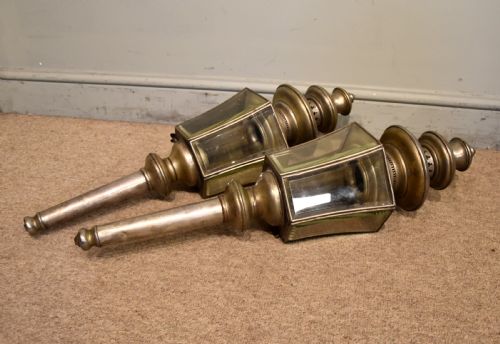


Antique Carriage Lanterns
Antique carriage lanterns bring historic brass, copper and bevelled glass into modern interiors as striking wall lights and coaching lamps.
Antique Carriage Lanterns
When you search for antique carriage lanterns, you are looking at heavy-duty outdoor and vehicular lighting adapted for interior walls and architectural display. These pieces originated as functional lighting for carriages, coaches, trains and ships before finding a second life as decorative wall lights.
The versions you are most likely to meet on this page span the nineteenth century up to the nineteen-thirties, taking forms such as coach-house style wall lanterns, coaching lamps and wall sconces. They arrive in pairs or singles, showing the sturdy construction required for travel.
Makers and designers drew upon Victorian, Neo-Classical, French Empire, Arts and Crafts and English Country House styles to shape these metal fixtures. Their survival demonstrates how utilitarian transport hardware evolved into decorative wall lighting for domestic interiors.
How they were made
The primary metals used in these pieces include brass, copper, iron, nickel and cast iron, often shaped into robust frames and mountings. Workshops combined verdigris patinated copper and wrought iron to build structures capable of withstanding rough travel and weather.
Glazing typically involves bevelled glass panes fitted securely into metal housings to protect the internal flame or bulb while diffusing light evenly. Workshops employed traditional metalworking, casting and joining techniques that left visible signs of handcrafting on each frame.
Antique Carriage Lanterns Retail Price Guide 2026
Typical asking prices for carriage lanterns among the pieces listed under this phrase on Sellingantiques today, from the lower quarter to the upper quarter. They describe what is for sale here now, not the wider market.
Some of these surviving lanterns spent their youth bolted to the sides of swaying trains before retiring to stationary living room walls.
What varies in quality
Quality in these lanterns rests upon the weight and purity of the metals utilised, alongside the complexity of the architectural styling. Heavy brass and cast iron foundations command attention for their substantial presence compared to lighter, purely decorative alternatives.
The condition and cut of the bevelled glass panes also separate standard utility items from finer decorative examples. Intricate details rooted in Neo-Classical, French Empire or Arts and Crafts traditions elevate the design from simple transport hardware to high-end interior lighting.
Daris
The Antique Carriage Lanterns Glossary
- Coach-house style
- A robust architectural lighting design intended to illuminate exterior carriage entrances and stable yards. These fixtures typically feature prominent brackets and weather-resistant metal hoods.
- Bevelled glass
- Glass panes with edges cut and polished at an angled border to refract light. This technique adds decorative depth and sparkle to the lantern housing.
- Verdigris patinated
- A green or bluish crust formed naturally or chemically on copper, brass or bronze through atmospheric oxidation. This aged surface finish provides historic character and visual texture.
- French Empire style
- A neoclassical design movement characterised by heavy classical motifs, military symbols and formal symmetry. Pieces in this style display restrained ornamentation and dignified proportions.
- Gimble lamp
- A lighting fixture suspended on a pivoting ring system that keeps the lamp level despite motion. Originally designed for unstable environments on ships or trains.
Antique Carriage Lanterns: Frequently Asked Questions
How were antique carriage lanterns originally powered?
These lanterns relied on oil or candle burners housed securely behind glass panes to withstand wind and motion during transit. Fuel reservoirs and small burners sat within the metal body.
Today, most examples have been safely converted to electricity for modern interior wall lighting while retaining their original exterior housings.
Can these carriage lanterns be used outdoors?
Many of these pieces began their lives outdoors on horse-drawn coaches, trains or carriage house walls. Their metal and glass construction made them naturally resistant to the elements.
However, modern electrical wiring inside vintage housings requires professional inspection and weatherproofing before outdoor installation.
How do I tell Victorian lamps apart from later styles?
Victorian models frequently display heavier cast iron and brass elements combined with straightforward utilitarian forms meant for active coaching use. They date from an era when horse-drawn transport dominated.
Later pieces from the nineteen-twenties and thirties often incorporate Arts and Crafts influences or cleaner lines reflecting early motoring and railway expansion.
Why are many of these lanterns offered in pairs?
Carriage lamps were manufactured to mount symmetrically on the left and right sides of a coach or carriage entrance. Surviving matching pairs remain highly sought after for interior wall placement.
Single lamps usually indicate that the companion piece was lost or damaged over decades of use and separation.