





Victorian Exterior Wall Lights
Victorian exterior wall lights bring authentic period character to a property entrance, combining robust metalwork with traditional glass panels for enduring architectural appeal.
Victorian Exterior Wall Lights
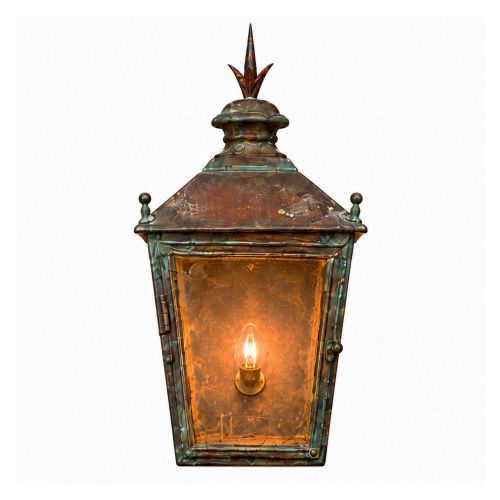
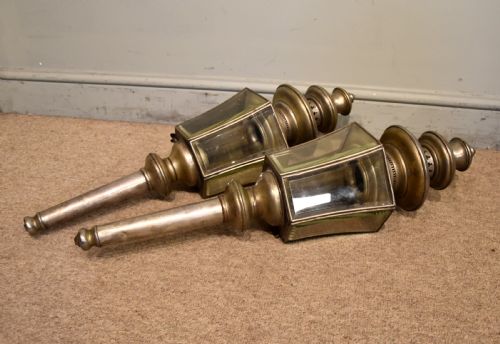
Victorian exterior wall lights comprise wall-mounted lanterns, carriage lamps, and coach-house fixtures designed to illuminate pathways and doorways. When you search for victorian exterior wall lights, you encounter heavy-duty outdoor lighting solutions originally engineered for gas or oil illumination before later conversion to electricity.
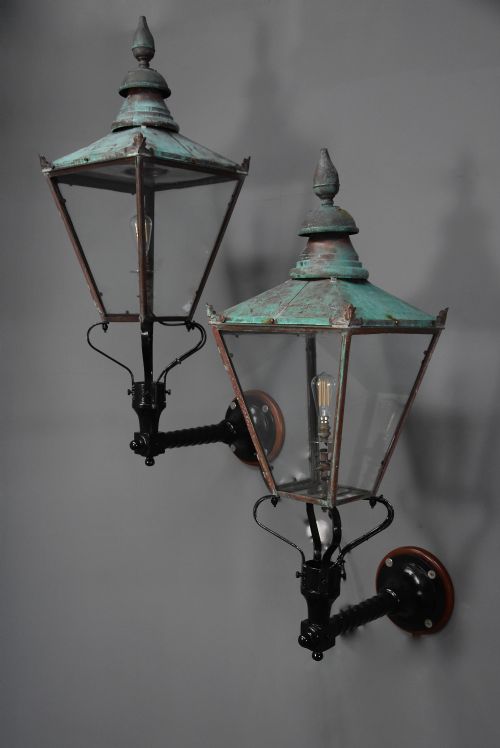
The pieces appearing on this page span the nineteenth century into the early twentieth century, incorporating later street lanterns and industrial adaptations alongside true Victorian items. These fixtures frequently survive in pairs, originally mounted flanking gates, doorways, or carriage entrances.
Forms range from simple bracket-supported lanterns to sophisticated neo-classical coach-house designs and spiral-twisted wall brackets. Many retain their original functional hardware, including ventilation caps, hinged access doors, and mounting arms.
How they were made
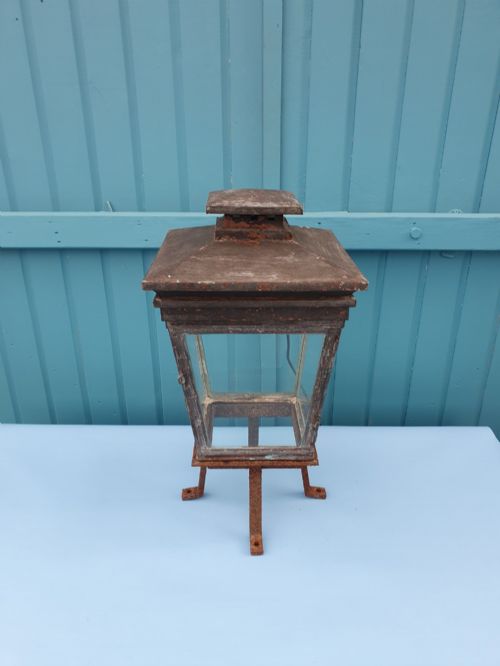
Makers constructed these exterior fixtures using durable metals capable of withstanding harsh weather conditions. Copper, brass, iron, cast iron, and wrought iron form the structural framework, often paired with clear or amber glass panes.
Techniques combined sheet metal fabrication with heavy casting and forging. Artisans soldered or riveted copper sheets to form lantern bodies, while structural supports relied on cast iron or hand-wrought iron brackets.
Victorian Exterior Wall Lights Retail Price Guide 2026
Typical asking prices for victorian exterior wall lights among the pieces listed under this phrase on Sellingantiques today, from the lower quarter to the upper quarter. They describe what is for sale here now, not the wider market.
Listings incorporate nineteenth and early twentieth-century lighting fixtures utilising copper, brass, cast iron, wrought iron, and wood.
What varies in quality
The distinction between standard utility lighting and superior pieces rests on the weight of the metal and the sophistication of the design. Heavier copper gauges, intricate neo-classical detailing, and complex bracket work elevate a piece above basic functional ironmongery.
Originality of surface patination and survival of authentic mounting hardware also determine overall merit. Fixtures retaining their original brackets and uncompromised glass panels demonstrate greater integrity than heavily restored examples.
Revo Tipton
The Victorian Exterior Wall Lights Glossary
- Carriage lamp
- A specialised exterior lighting fixture designed for mounting on horse-drawn vehicles or beside carriage house entrances. These pieces typically feature tapered sides and specialised ventilation hoods to survive movement and wind.
- Coach-house style
- An architectural lighting design mimicking the large lanterns mounted on nineteenth-century carriage houses. They often incorporate classical proportions and multiple glass panes.
- Verdigris patination
- The green chemical coating formed naturally on copper, brass, or bronze through atmospheric weathering. Collectors often prize this stable oxidized surface for its authentic aged appearance.
- Swan neck
- A curved mounting arm resembling a swan's neck used to project a wall lantern outward from a building facade. This profile provides clearance for architectural mouldings and wide doorways.
- Gas conversion
- The historical alteration of a lighting fixture from a gas burner system to electrical wiring. This process typically involves adapting the internal burner assembly to house an electrical bulb holder.
Victorian Exterior Wall Lights: Frequently Asked Questions
Were these lights originally electric?
Most of these fixtures originated as gas or oil-burning lamps before being converted for modern electrical use. This transition preserves the original exterior housing while updating the internal wiring for contemporary safety standards.
Buyers should inspect the internal fittings to understand how the conversion was executed and whether the original burner components remain intact inside the lantern body.
Can I mount these lights outdoors today?
These robust metal and glass fixtures were specifically engineered for exterior exposure and weather resistance. Their heavy-duty construction makes them well-suited for modern outdoor installation beside porches and doorways.
Professional electrical installation is recommended to ensure proper weather sealing and to accommodate modern electrical regulations for exterior fixtures.
How do I identify a true period piece?
Period identification relies on examining the construction techniques, metal types, and fasteners used in the assembly. Hand-soldered copper joints, heavy cast iron brackets, and period-appropriate glass indicate nineteenth or early twentieth-century manufacture.
Comparing the stylistic details, such as neo-classical motifs or industrial bracket shapes, helps contextualize the item within the broader timeline of exterior lighting.
Why do many of these lights come in pairs?
Original architectural practice frequently required balanced illumination flanking a grand entrance, carriage gateway, or stable door. Surviving pairs remain desirable for maintaining symmetry on either side of a modern doorway.
Matching sets require careful comparison of dimensions, patination, and glass configuration to ensure they form a cohesive pair on an exterior wall.