
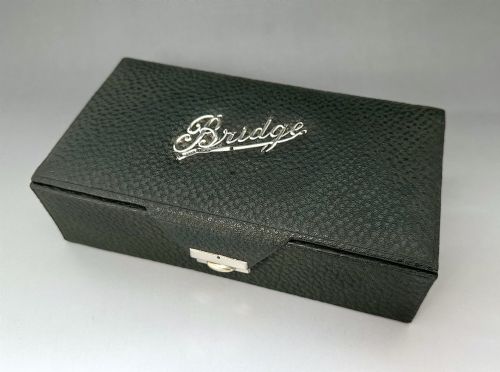


Antique Card Compendium
An antique card compendium brings together the polished timber boxes and tables designed to house the materials of nineteenth-century parlor games.
Antique Card Compendium
When you search for an antique card compendium, you encounter a range of specialised containers and tables built to hold playing cards, markers, and game sets. The forms on this page span from Victorian and Edwardian boxes to Georgian and Regency card tables, alongside specific pastimes like bridge, patience, and cribbage.
The materials recorded in these listings point directly to the domestic interiors of the nineteenth century and earlier. You will find items fashioned from mahogany, walnut, rosewood, and kingwood, frequently accented with brass mountings, leather, and silver details.
Origin and period vary across the selection, featuring English craftsmanship alongside Continental examples such as Black Forest carved wood and Italian lacquered pieces. These objects reflect the structured social gaming of the Victorian era and the refined furniture forms of the eighteenth century.
Materials and construction methods
Cabinetmakers constructed these pieces using dense hardwoods like mahogany, walnut, and rosewood, often selected for figured grains and durability. Surfaces received careful polish, while specialised containers incorporated internal partitions to organise cards, counters, and cribbage pegs.
Metalwork played a structural and decorative role, with brass bindings reinforcing box edges and silver mounts applied to leather and wooden surfaces. Finer examples integrated specialised techniques such as enamel work, black lacquer, and intricate hand-carving characteristic of the Black Forest style.
Listings feature Victorian, Edwardian, and eighteenth-century periods, utilising materials such as mahogany, rosewood, walnut, and silver.
Assessing quality and finish
Quality in these pieces rests upon the selection of timber and the precision of the joinery. Figured veneers, well-fitted brass hardware, and original internal fittings separate utilitarian boxes from works produced by notable makers.
The sophistication of the secondary decoration also defines the tier of a piece. Hand-carved relief work, fully intact silver mounts, and preserved interior compartments demonstrate a higher standard of workshop execution.
George Betjemann
The Antique Card Compendium Glossary
- Cribbage box
- A specialised container designed to hold a cribbage board, cards, and pegs. These compact boxes are frequently finished in woods such as kingwood or walnut.
- Bridge box
- A fitted container created to hold the accessories required for the card game bridge. They often feature leather bodies with silver mounts.
- Pope Joan game
- A traditional parlor game played on a specialised board with compartments for counters. Surviving sets often retain their painted or gilt decorations.
- Black Forest
- A regional style of wood carving originating in Central Europe. Pieces from this tradition feature deep, naturalistic animal and foliage carvings.
- Veneer
- A thin layer of figured wood applied to a secondary timber base. This technique allowed cabinetmakers to display decorative grain patterns across box lids and table tops.
Antique Card Compendium: Frequently Asked Questions
What fits inside an antique card compendium?
These boxes typically house decks of playing cards, bone or mother-of-pearl gaming counters, cribbage boards, and sometimes dice. The internal partitions are built specifically to keep these small items organised.
Larger compendiums may also include space for chess pieces, dominoes, or specialised components for nineteenth-century parlor games.
How do I date a Victorian games box?
Dating relies on a combination of timber choice, hardware style, and any maker stamps or hallmarks present on silver mounts. Walnut and rosewood were particularly popular during the mid-to-late nineteenth century.
Inscribed silver mounts often bear city assay marks and date letters that pinpoint the exact year of production.
Were these boxes used for travel?
While some smaller patience and bridge boxes were portable, most larger compendiums and card tables remained stationary furniture pieces in drawing rooms. Brass bindings on travel-intended boxes provided extra durability against movement.
Heavier wood structures and fitted interior trays were designed primarily for domestic parlor entertainment.
How should I care for polished wood boxes?
Maintain the timber by keeping the box away from direct sunlight and sudden temperature fluctuations, which can cause wood to split or veneer to lift. Dust gently with a dry, soft cloth.
Avoid using modern silicone sprays or heavy liquid polishes that can damage historic French polish or wax finishes.