




Antique Caplock Firearms
Antique caplock firearms are nineteenth-century mechanical pieces driven by percussion locks, offering collectors tactile pieces of historical gunsmithing.
Antique Caplock Firearms
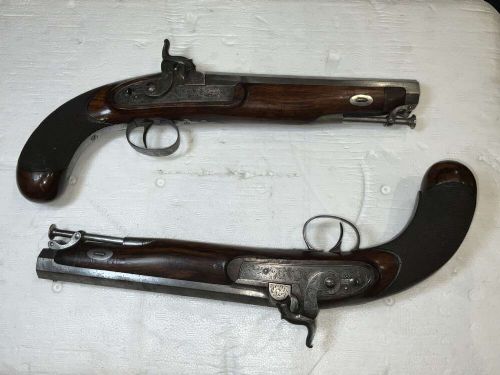
When searching for antique caplock firearms, a buyer examines nineteenth-century shooting arms built around the percussion ignition system. These items span pocket pistols, belt pistols, military arms, and sporting rifles.
The versions most commonly met on this page include pocket pistols and officers' sidearms from the mid-nineteenth century, alongside nineteenth-century military pieces and sporting arms.
Originating from British and continental European workshops, these pieces reflect the shift from flintlocks to percussion caps during the 1800s, utilising steel, iron, and brass.
How they were made
Makers constructed these arms using forged steel and iron for barrels and lock mechanisms, paired with shaped walnut stocks that provided grip and balance. Some models incorporate brass furniture and mounting plates.
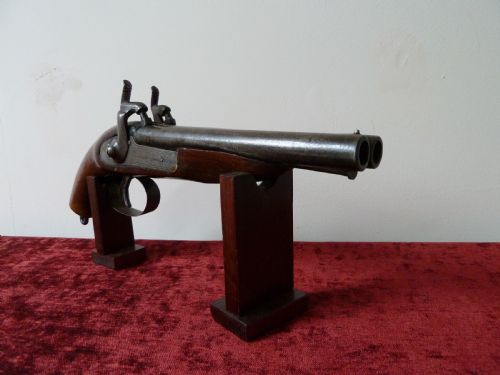
Specialised variations, such as boxlock pocket pistols, integrate flick bayonets or double barrels into the metal framework, demonstrating nineteenth-century mechanical ingenuity.
Antique Caplock Firearms Retail Price Guide 2026
Typical asking prices for caplock firearms among the pieces listed under this phrase on Sellingantiques today, from the lower quarter to the upper quarter. They describe what is for sale here now, not the wider market.
Current listings feature steel, iron, walnut, and brass components across nineteenth-century military and civilian forms.
What varies in quality
Quality rests in the crispness of the lock action, the precision of the engraving on the metal plates, and the grain and condition of the walnut stock. Maker signatures, such as those from Liège or renowned British workshops, elevate the standing of a piece.
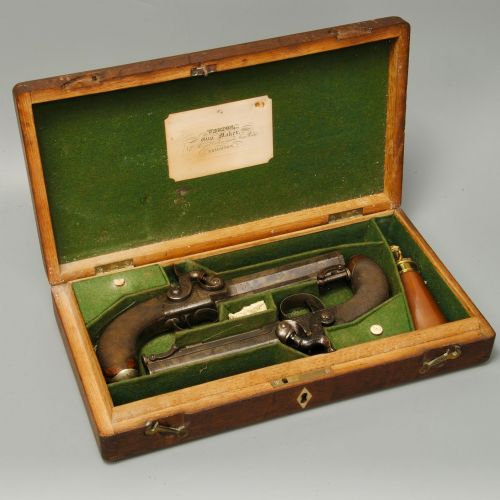
Simpler military issue arms show robust utility construction, whereas domestic pocket pistols and cased pairs display finer finishing, delicate scrollwork, and integrated accessories housed in baize-lined spaces.
Auguste Francotte·Mortimer
The Antique Caplock Firearms Glossary
- Caplock
- An ignition system for firearms that uses a percussion cap placed on a nipple, struck by the hammer to fire the charge. This mechanism superseded the flintlock in the nineteenth century.
- Boxlock
- A firearm design where the lock mechanism is enclosed within the frame rather than mounted on a sideplate. This layout is common in pocket pistols.
- Flick bayonet
- A spring-loaded blade attached beneath the barrel that releases forward when triggered. It provides close-quarters defence on portable firearms.
- Percussion cap
- A small metal cup containing a priming compound placed over the nipple of a caplock firearm. It detonate when crushed by the falling hammer.
Antique Caplock Firearms: Frequently Asked Questions
What is a caplock firearm?
A caplock firearm is a nineteenth-century weapon that uses a percussion cap struck by a hammer to ignite gunpowder. This system replaced earlier flintlock mechanisms.
These pieces range from small pocket pistols to military sidearms and sporting rifles, representing a major technological shift in personal armaments.
Were these firearms used by the military?
Many nineteenth-century arms served military and police forces, including standard issue pistols and belt arms. Officers often purchased private sidearms.
Military versions prioritise robust construction over decorative engraving, distinguishing them from civilian pocket and duelling arms.
How should I store a caplock pistol?
Store antique firearms in a dry, stable environment away from extreme humidity and direct sunlight to protect the steel and walnut stock. Traditional baize-lined cases offer suitable preservation.
Keeping the metal lightly oiled prevents oxidation and maintains the condition of the surface finish.