


Antique Canvas Wall Hanging
An antique canvas wall hanging brings texture and history to a room, offering painted scenes or needlework designed to anchor a space.
Antique Canvas Wall Hanging
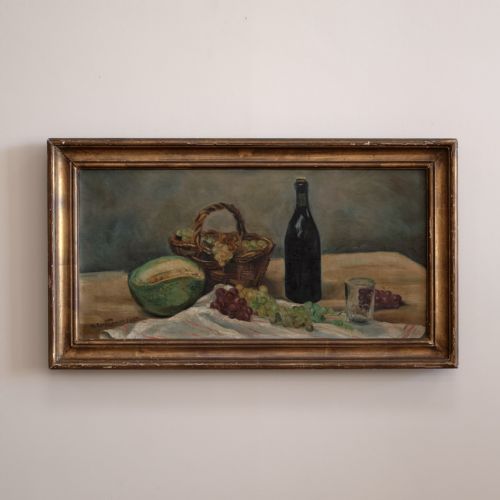
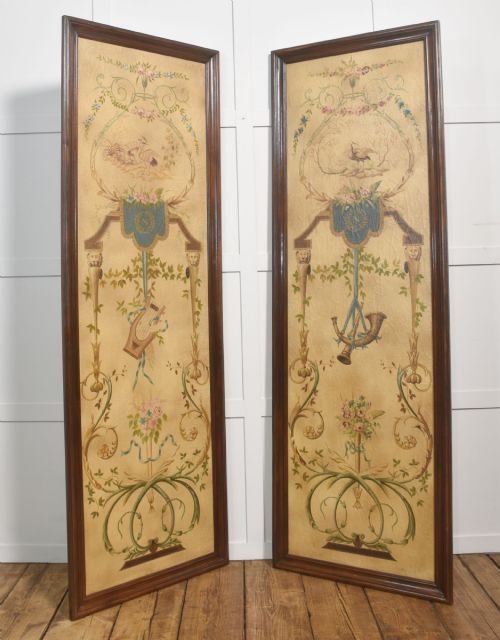
When you search for an antique canvas wall hanging, you encounter a variety of painted panels, decorative cloths, and framed works spanning several centuries. These objects range from French Chinoiserie and Neoclassical painted panels to Indian painted wall cloths and still-life canvases.
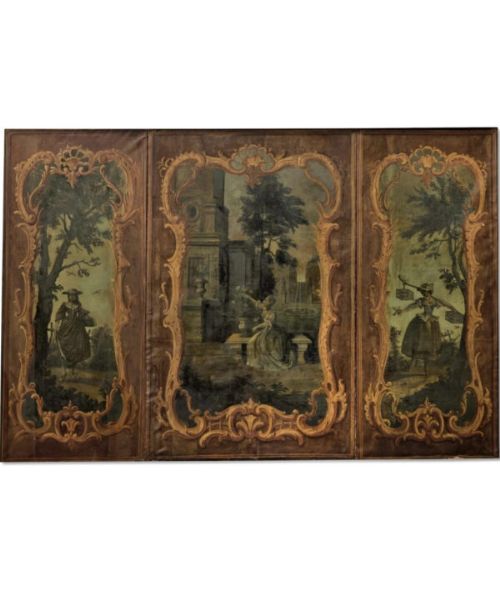
The pieces on this page lean heavily towards the nineteenth and early twentieth centuries, alongside eighteenth-century French examples. You find grand grisaille triptychs, landscape oil paintings, and Gros Point needlework pieces created for interior decoration.
Makers and artists vary widely, from anonymous hands producing decorative wall panels to listed painters like Frank Myers Boggs and Robert John Hammond. The unifying element is their function as textile or canvas wall art designed to be hung directly in domestic spaces.
How they were made
These works rely on canvas, wood, oil paint, pigment, and gilt, combined with supportive wooden frames or stretchers where appropriate. Artists and artisans applied oil paint and pigments directly onto canvas or woven cloth, frequently incorporating hand-painted details.
Needlework panels utilise wool stitched onto canvas foundations, as seen in Gros Point textile pieces. Decorative wall panels often feature wood and gilt elements to frame or structure the painted surface.
Listings feature items from the eighteenth, nineteenth, and early twentieth centuries, utilising canvas, wood, oil paint, wool, and gilt.
What varies in quality
The standard of a piece rests on the execution of the brushwork or needlework, the integrity of the canvas and wood, and the depth of the composition. Grand multi-panel works and detailed figurative scenes demand greater skill than simpler decorative pieces.
Preservation of the original paint, pigment, and gilt dictates the visual impact of each wall hanging. Pieces that retain their original tones without heavy intervention command more attention from collectors.
Frank Myers Boggs·Robert John Hammond
The Antique Canvas Wall Hanging Glossary
- Grisaille
- A painting executed entirely in shades of grey or neutral greyish-brown. This technique often mimics the appearance of relief sculpture.
- Gros Point
- A type of needlepoint embroidery worked on canvas with a coarse gauge. It produces a durable textile surface suitable for wall hangings.
- Triptych
- A picture or relief carving on three panels, typically hinged together side by side. Grand examples often feature a central larger panel flanked by two smaller ones.
- Neoclassical
- A Western cultural movement drawing inspiration from the art and culture of classical antiquity. It prioritises symmetry, restraint, and classical motifs.
Antique Canvas Wall Hanging: Frequently Asked Questions
What is an antique canvas wall hanging?
An antique canvas wall hanging is a decorative artwork, painted panel, or textile piece created centuries ago to adorn interior walls. These items include oil paintings, decorative panels, and painted cloth.
They serve as focal points in a room, combining historical artistic techniques with textile or canvas supports.
How do I hang a canvas panel safely?
Hanging these pieces requires assessing the weight of the canvas, wood, and any accompanying frame. Secure fixings suited to the wall type are essential for heavier wooden panels.
Keeping pieces away from direct sunlight and damp conditions preserves the paint, pigment, and canvas over time.
How do I identify the period of a wall hanging?
Dating relies on stylistic clues, the materials used, and the construction of the canvas or backing wood. Victorian, Edwardian, and eighteenth-century pieces display distinct artistic conventions.
Comparing the brushwork, framing style, and subject matter helps place the work within its historical context.