





Antique Canton Lamps
Antique canton lamps bring the rich palette of nineteenth-century Chinese porcelain and export design directly into domestic lighting.
Antique Canton Lamps
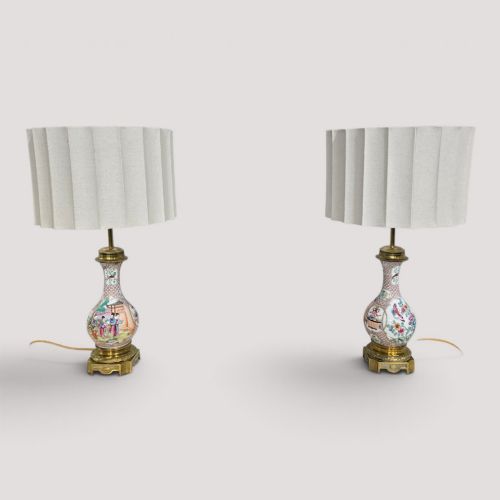
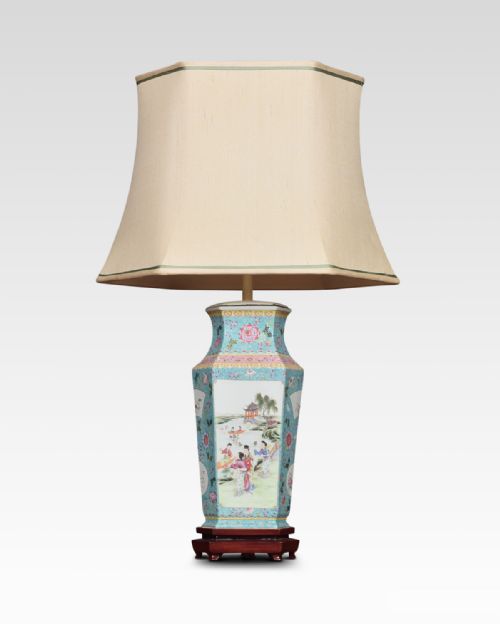
Antique canton lamps transform nineteenth-century Chinese porcelain vessels, particularly vases, into functional table lamps. Many examples originate as oil lanterns or decorative vases from the Qing dynasty and Chinese export traditions before receiving later electrical fittings.
The inventory on this page consists predominantly of nineteenth-century pieces, including specific nineteenth-century dates such as eighteen-seventy, eighteen-eighty, eighteen-ninety, and nineteen-hundred. Buyers frequently encounter symmetrical pairs designed for balanced placement on side tables or mantelpieces.
Design characteristics encompass distinct regional styles such as Chinese export, Chinoiserie, and Victorian Chinoiserie. These objects unite traditional Cantonese craftsmanship with domestic British and European interior requirements.
How they were made
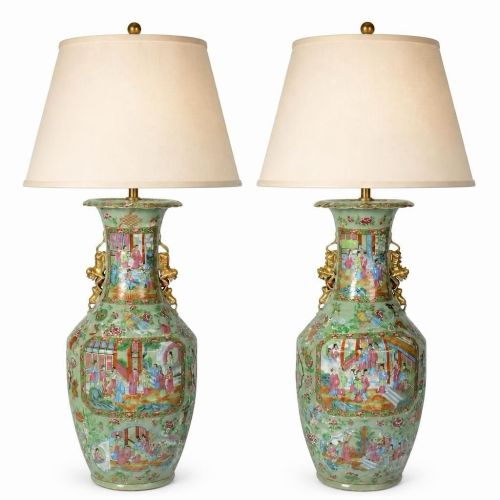
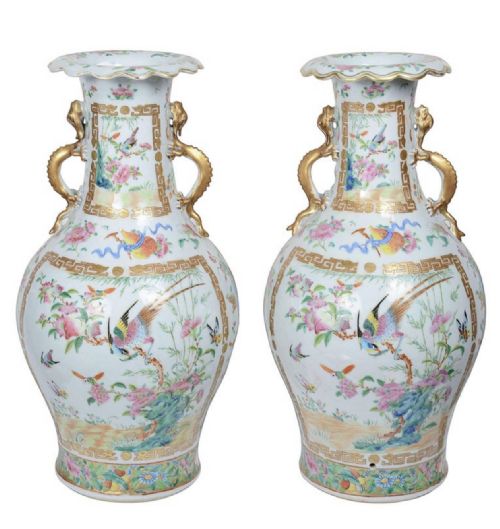
The foundation of these lamps relies on porcelain bodies shaped into vases and decorated with enamel pigments. Artisans applied detailed hand-painted scenes, incorporating the vibrant pinks and greens characteristic of famille rose and rose medallion palettes.
Mounts and structural elements utilise brass, gilt bronze, or ormolu to secure the porcelain and accommodate lamp fittings. Wood, glass, and fabric components further complete the construction of the assembled table lamps.
Antique Canton Lamps Retail Price Guide 2026
Typical asking prices for canton lamps among the pieces listed under this phrase on Sellingantiques today, from the lower quarter to the upper quarter. They describe what is for sale here now, not the wider market.
Nineteenth-century artisans painted tiny birds and butterflies onto these vases, blissfully unaware their handiwork would one day illuminate modern reading corners.
What varies in quality
The precision and complexity of the hand-painted enamel decoration distinguish finer pieces from simpler domestic wares. Superior examples display dense figural scenes and intricate floral borders executed with remarkable brush control.
The integration of metal mounts, whether brass, gilt bronze, or ormolu, influences the overall aesthetic coherence. High-quality mountings complement the porcelain body without obscuring the original nineteenth-century craftsmanship.
The Antique Canton Lamps Glossary
- Famille rose
- A major palette of Chinese ceramic glazes introduced in the Qing dynasty, distinguished by opaque pink enamel. This colour scheme dominates the painted surfaces of nineteenth-century export porcelain.
- Rose medallion
- A specific style of Cantonese porcelain decoration featuring panels filled with figures, birds, and flowers. These panels are typically arranged symmetrically around central medallions.
- Ormolu
- Finely ground high-carat gold applied to bronze mounts, commonly used in nineteenth-century decorative arts. It provides a rich, lustrous finish that secures and enhances porcelain lamp bodies.
- Chinoiserie
- European artistic style reflecting Chinese artistic influences, popular during the Victorian period. It frequently blends Eastern porcelain forms with Western furnishing requirements.
Antique Canton Lamps: Frequently Asked Questions
Are these lamps converted from old vases?
Many lamps begin life as nineteenth-century Chinese export vases or oil lanterns before receiving electrical wiring and mounting hardware.
This conversion process adapts decorative ceramic vessels for contemporary domestic use while retaining their original hand-painted artistry.
How do I identify rose medallion porcelain?
Rose medallion pieces feature distinct compartmentalised designs filled with painted figures, birds, and botanical motifs. These panels repeat in orderly sections around the porcelain body.
The palette relies heavily on rose pink enamel combined with greens, golds, and blues, creating a vibrant visual texture.
What is the difference between canton and Qing porcelain?
Canton porcelain refers specifically to items decorated and exported from the port of Guangzhou during the Qing dynasty. Qing dynasty is the broader dynastic period spanning Chinese history from sixteen-forty-four to nineteen-one-two.
Consequently, all canton pieces from this era belong to the Qing period, but not all Qing ceramics originate from Canton.
How should I clean fabric shades on antique lamps?
Silk and fabric shades require gentle dusting with a soft brush or a low-suction vacuum attachment. Avoid liquid cleaners or submerging the fabric, as older textiles degrade easily.
Consulting a professional textile conservator is advisable for older or delicate shades.