


Antique Candelabra Sconces
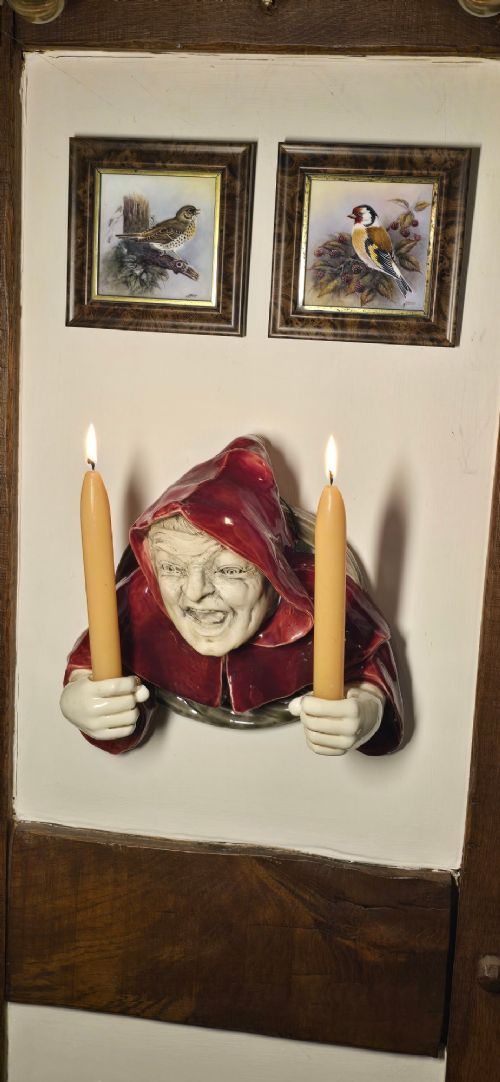
These antique candelabra sconces bring warm candle illumination and sculptural presence directly onto a wall.
Antique Candelabra Sconces
When you search for antique candelabra sconces, you encounter wall-mounted lighting fixtures designed to hold multiple candles, blending functional illumination with ornate metalwork or carved wood. These pieces originate predominantly from the nineteenth and early twentieth centuries, spanning French, Italian, and British workshops.
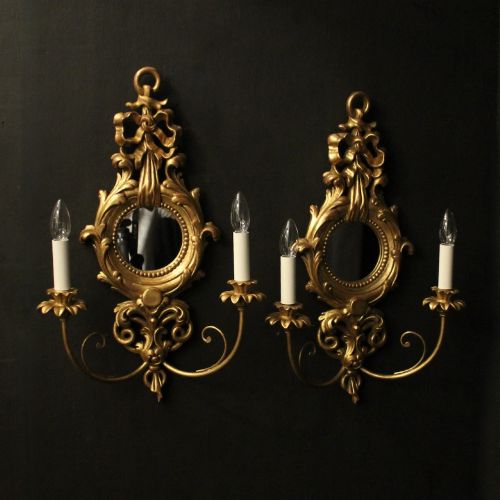
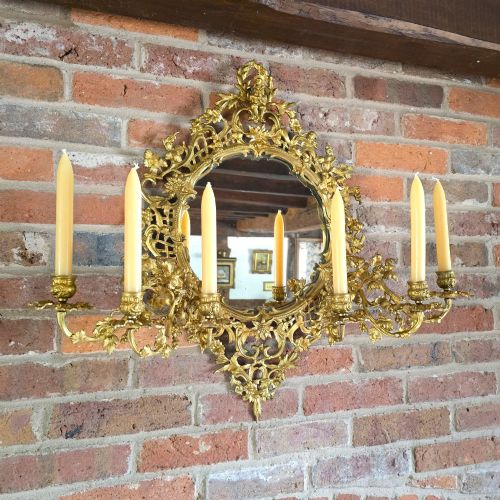
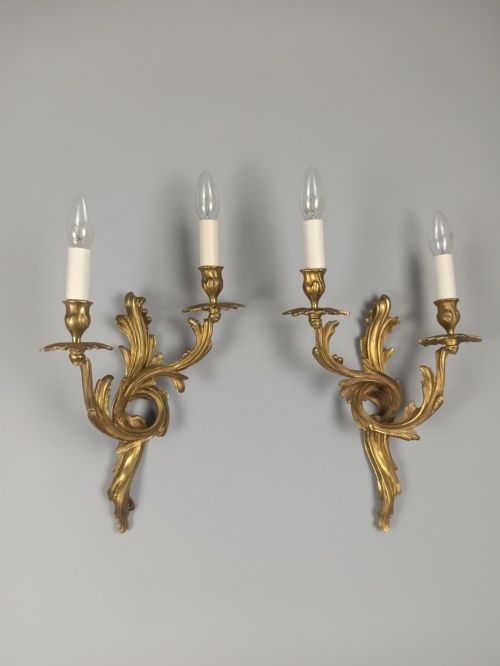
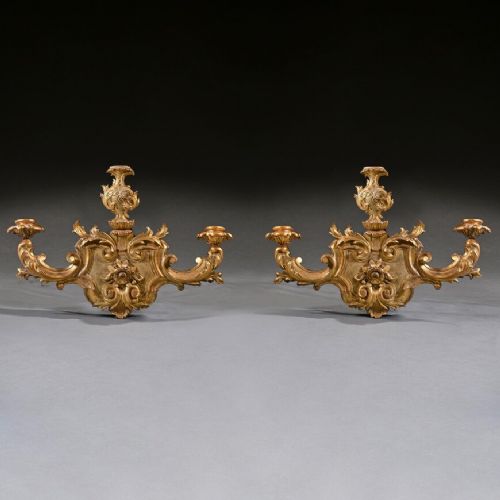
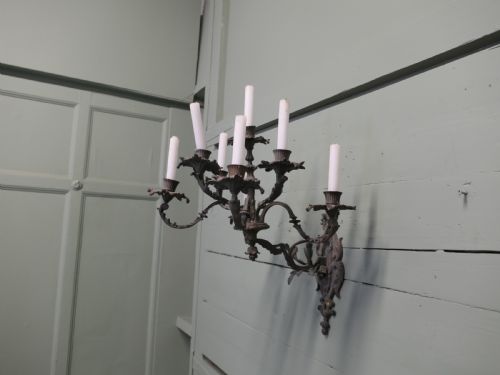
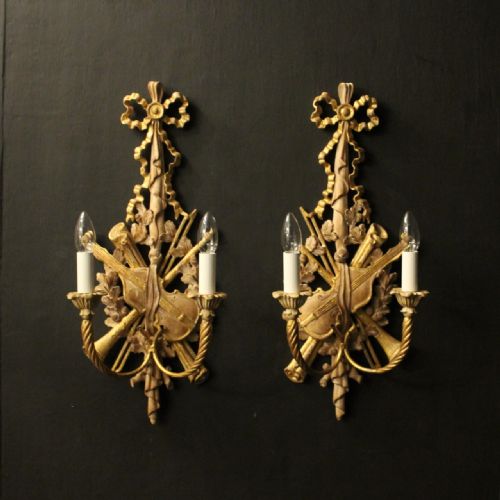
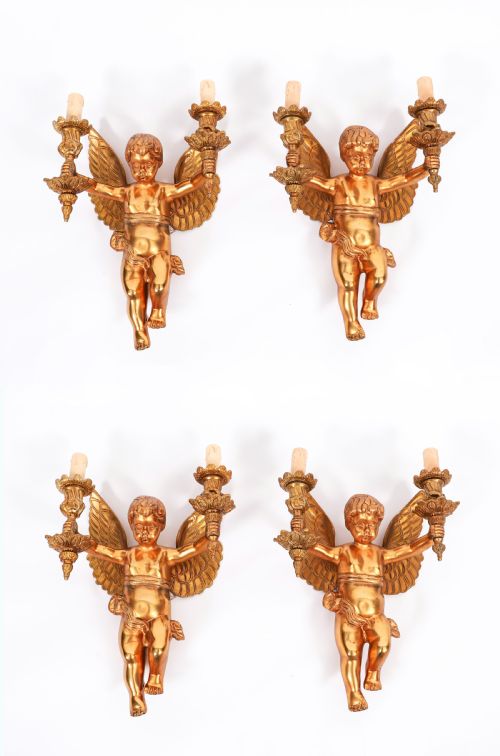
The most common forms on this page include pairs of twin-arm or triple-arm wall lights in French Rococo and Neoclassical styles. You also find single candelabra sconces, girandoles incorporating mirrors, and figurative brass or bronze pieces featuring cherubs or puttis.
How they were made
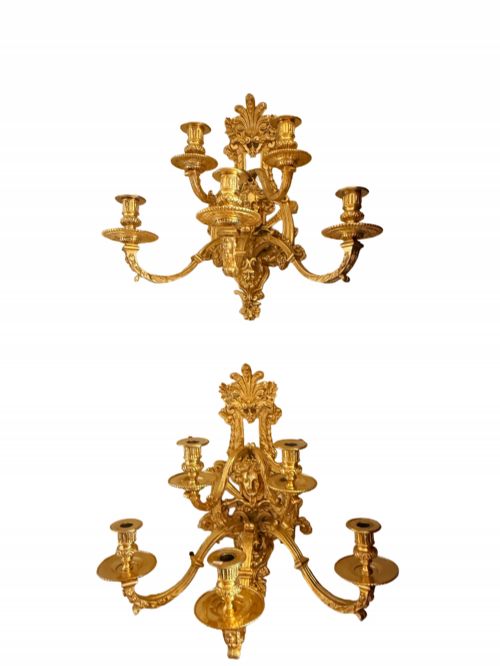
Foundry work dominates these listings, utilising cast bronze, brass, and ormolu for durable frames and intricate arms. Gilding is applied to bronze and carved wood surfaces to impart a rich golden finish.
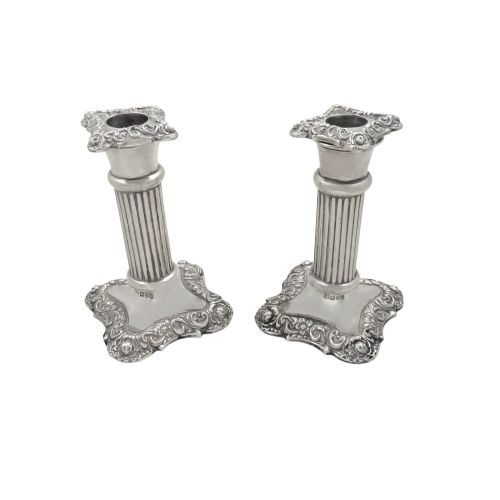
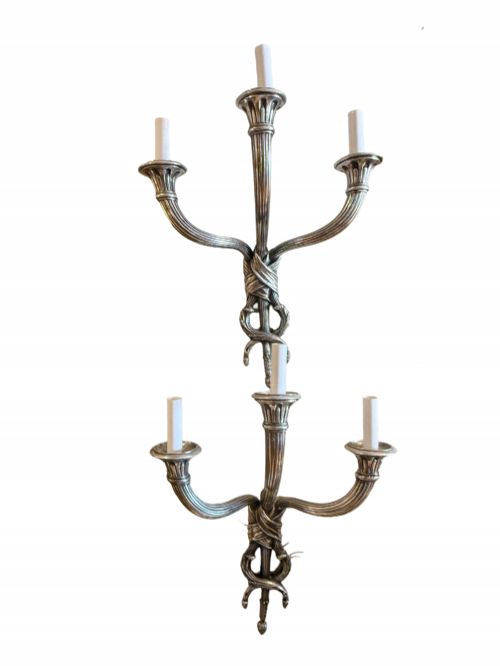
Carved wood and gesso construction appears in Italian and French giltwood sconces, providing lightweight architectural bodies for wall mounting. Silver plating and nickel plating provide alternative metallic finishes across late nineteenth and early twentieth century examples.
Listings feature wall sconces in gilt bronze, brass, ormolu, silver plate, and carved wood across French, Italian, and British regional styles.
What varies in quality
The clarity and depth of the casting separate standard pieces from superior examples. Finely chased bronze and ormolu retain crisp relief in foliage and figurative details, whereas inferior castings appear soft and shallow.
The integrity of the original gilding or silver plating determines the visual resonance of a wall light. Pieces retaining their original unpolished fire gilding or well-preserved giltwood show superior craftsmanship compared to poorly restored surfaces.
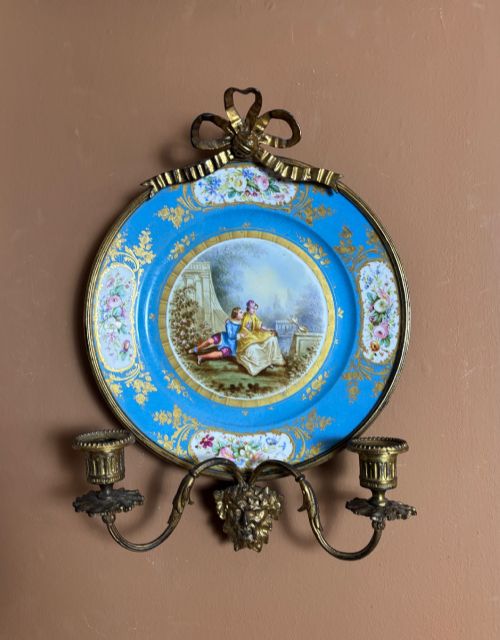
Sevres Porcelain·Royal Worcester Hadley·Liberty·Sitzendorf
The Antique Candelabra Sconces Glossary
- Ormolu
- Gilt bronze produced by applying a mercury and gold amalgam to cast bronze. This technique creates a durable, golden finish seen on nineteenth-century French lighting.
- Girandole
- An ornamental wall candelabra featuring a mirror backplate. The reflective glass multiplies the light cast by the candles.
- Giltwood
- Timber, typically gessoed and carved, coated in gold leaf. It provides a lightweight alternative to solid metal for large wall sconces.
- Rococo Revival
- A nineteenth-century design movement favouring asymmetrical scrolls, C-scrolls, and naturalistic shell motifs. It draws inspiration from eighteenth-century French court styles.
Antique Candelabra Sconces: Frequently Asked Questions
How do I mount antique sconces safely?
Wall sconces require secure fixing into solid masonry or direct attachment to wall studs using appropriate steel screws. Because many antique brass and bronze fixtures carry substantial weight, plaster alone will not support them safely.
Consult a professional installer to assess the wall structure and ensure the mounting brackets bear the load without pulling away from the surface.
Can these wall lights be converted to electricity?
Many buyers choose to wire these fixtures for modern electric lighting while preserving the candle cups and drip pans. Professional electricians can thread internal wiring through the arms without altering the exterior metalwork or wood.
Retaining the original sockets and wax catchers ensures the fixture maintains its visual identity as a candelabra even when illuminated by small, candle-shaped pygmy bulbs.
How do I date a pair of sconces?
Dating relies on examining the casting techniques, fixing screws, and stylistic markers such as Rococo revival scrolls or Adam neoclassical swags. Nineteenth-century pieces often display hand-filed brass components and distinct patination on the reverse.
Comparing the decorative vocabulary with known period manufacturing dates helps narrow down the origin to specific decades like the 1880s or 1920s.
How do I clean gilt bronze and brass?
Dust accumulation should be managed gently using a soft, dry artist brush or microfibre cloth to protect delicate chased surfaces and original gilding. Avoid chemical brass polishes on ormolu and gilt bronze, as abrasive liquids strip away the thin gold layers.
Professional conservation cleaning is recommended if tarnish or grime obscures the surface detail on antique metalwork.