

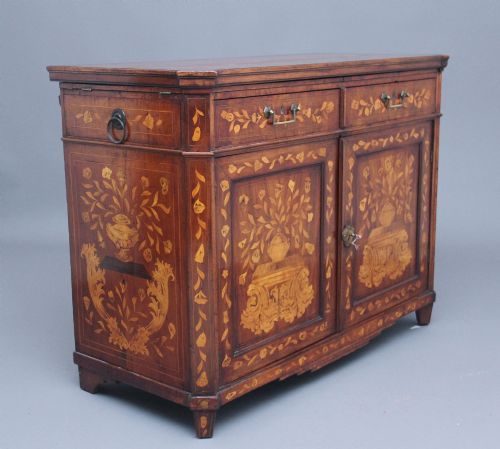
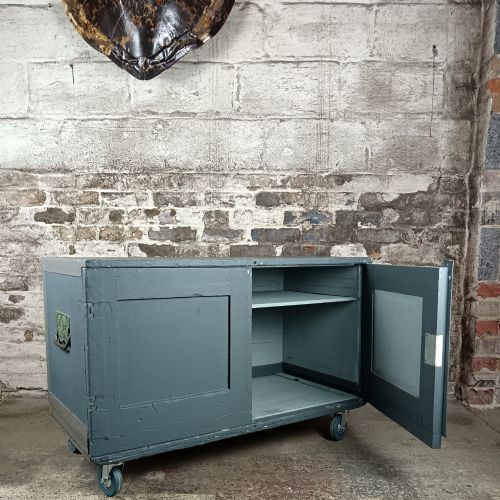
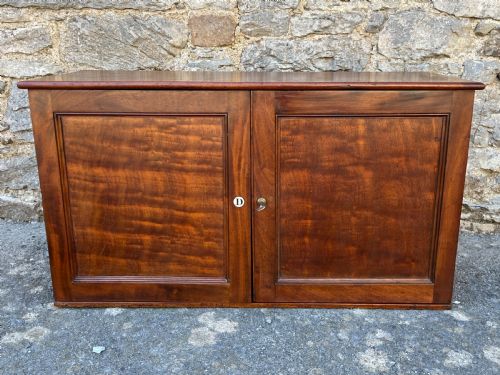
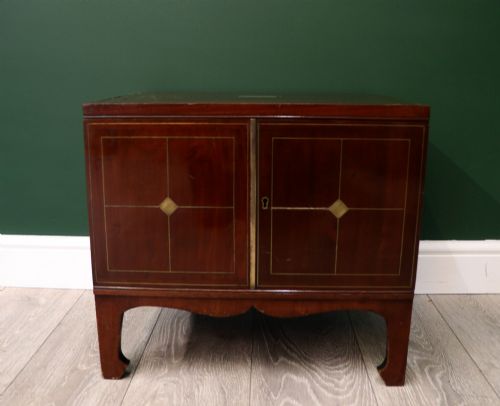
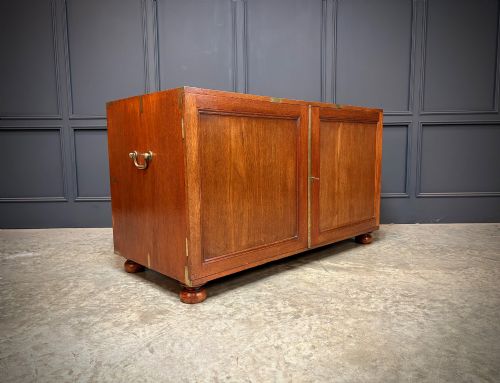


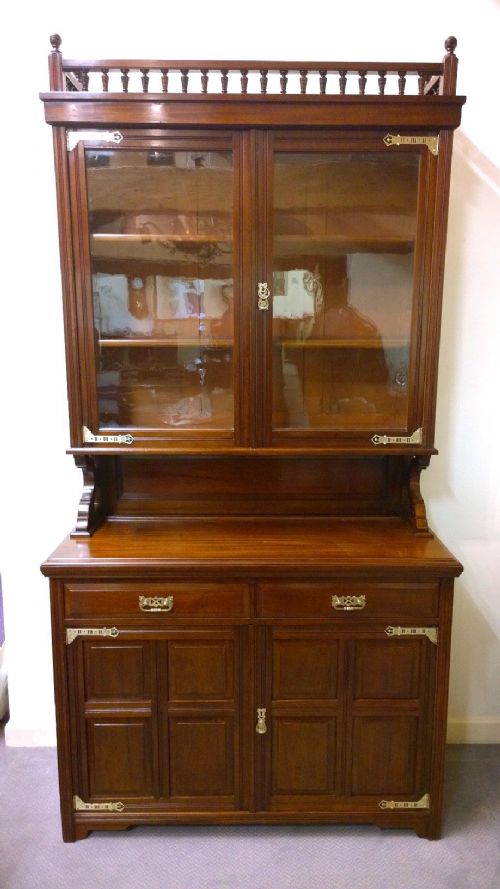

Antique Campaign Sideboard
An antique campaign sideboard brings clever portable engineering into a permanent room, combining rich timber with recessed brass mounts.
Antique Campaign Sideboard
When you search for an antique campaign sideboard, you are looking for sturdy British military furniture designed to travel on active service. The examples you meet on this page span the Georgian, Victorian, and later periods, including specific forms like side cabinets, chiffoniers, and serving cabinets.
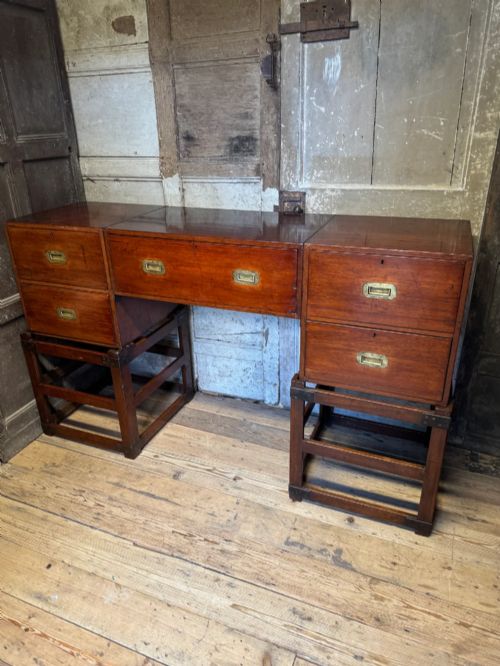
The practical needs of officers on the move meant these pieces were typically built in two parts for easier packing and transport. Mahogany, teak, and yew wood appear frequently alongside fitted brass corners and inset handles that prevented snagging during carriage.
Makers often adapted traditional forms into portable units, resulting in chests of drawers, console tables, and side cabinets adapted with military fittings. The items listed here range from early nineteenth-century travelling cabinets to nineteen-thirties campaign style reproductions.
Materials and construction
Construction relies heavily on dense hardwoods such as mahogany and teak, chosen for their ability to withstand tropical climates and rough handling. These timbers are paired with brass reinforcement on corners, edges, and drawer fronts to protect the wood from impact during transit.
Flush-fitting hardware and recessed ring handles allowed packing cases and side cabinets to stack tightly without projecting parts. Secondary timbers like pine appear in internal framing, while decorative touches like bone inlay, fruitwood, and intricate brass binding mark more elaborate pieces.
Antique Campaign Sideboard Retail Price Guide 2026
Typical asking prices for campaign sideboard among the pieces listed under this phrase on Sellingantiques today, from the lower quarter to the upper quarter. They describe what is for sale here now, not the wider market.
Materials recorded across the current selection include brass, bone, fruitwood, pine, and iron alongside primary cabinet timbers.
Factors that separate the finest pieces
Quality in these items rests on the precision of the brasswork and the tightness of the joinery. Superior examples show seamless integration of recessed handles and flush mounts where the metal sits entirely level with the timber surface.
The choice of timber grain and the integrity of the original two-part dismantling mechanism further distinguish high-grade pieces. Lesser items may lack the original internal fitted compartments or rely on later replacement hardware rather than period brass.
The Antique Campaign Sideboard Glossary
- Brass bound
- Furniture edged or reinforced with brass strips to protect vulnerable corners from heavy knocks during transport. This method also added structural rigidity to travelling trunks and side cabinets.
- Campaign style
- A design aesthetic mimicking portable military furnishings with inset handles, folding mechanisms, and sectional construction. It remained popular long after active military service ceased.
- Recessed handle
- A pull handle set into a shallow cavity in the wood so it does not project beyond the face of the drawer. This prevented snagging when items were packed into transport crates.
- Two-part chest
- A case piece built as two separate box sections stacked vertically for easier handling on the march. The top section typically lifts off the lower base unit.
Antique Campaign Sideboard: Frequently Asked Questions
What is an antique campaign sideboard?
An antique campaign sideboard is a portable storage piece derived from military furniture used by British officers on campaign. These items combined the utility of a dining room server with the robust, modular construction needed for travel.
Most examples utilise dense timbers like mahogany or teak, fitted with brass corners and recessed handles. They bridge the gap between practical transport trunks and formal domestic furniture.
How were these pieces transported?
Military furniture was built to dismantle into modular sections, often separating into upper and lower carcases for packing into canvas covers or wooden crates. Recessed brass hardware ensured no protruding knobs caught during loading onto carts or ships.
This clever engineering allowed officers to maintain a degree of domestic comfort in temporary quarters. Once unloaded, the sections reassembled quickly into stable sideboards, desks, or chests.
How do I date a campaign piece?
Dating relies on timber choice, construction methods, and the style of the brass hardware. Georgian and early nineteenth-century items usually feature solid mahogany with hand-cut dovetails and heavy cast brass mounts.
Later Victorian and early twentieth-century pieces often display machine-made screws, lighter brass work, or alternative woods like teak and yew. Comparing the interior secondary woods to known period standards helps confirm the era of manufacture.
Where did campaign furniture originate?
The tradition grew from the practical requirements of the British Army campaigning across colonies and foreign territories during the eighteenth and nineteenth centuries. Officers needed furnishings that could withstand extreme weather and frequent relocation without falling apart.
Cabinet makers in London and colonial workshops developed specialised folding and sectional designs to meet these exact demands. Over time, the rugged aesthetic became fashionable for permanent country houses and town residences alike.