

Antique Cabochon Pendant
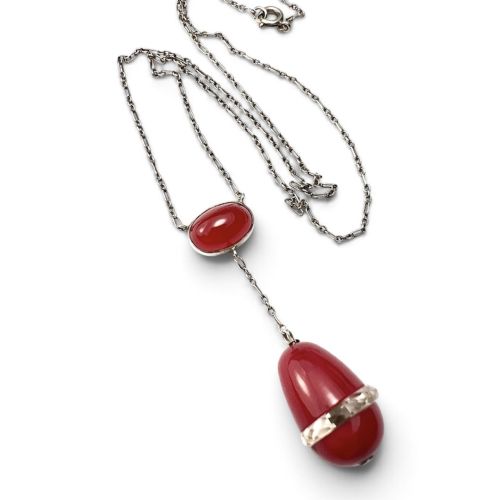
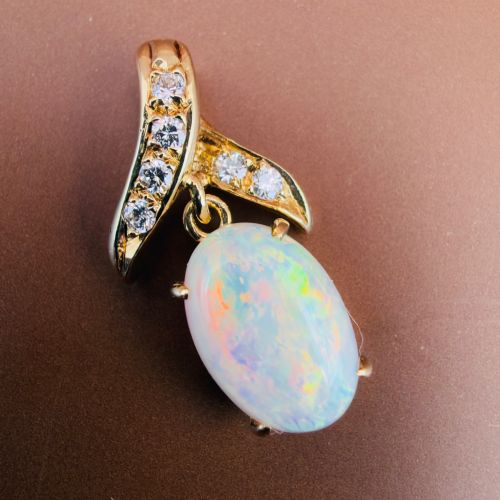
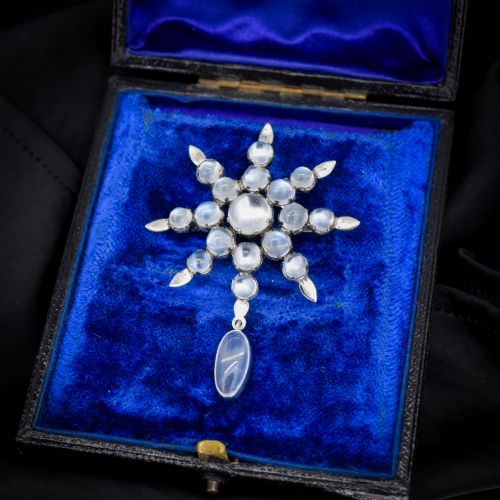
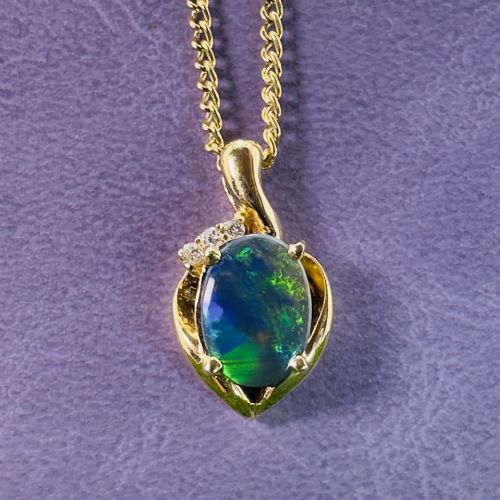
An antique cabochon pendant places an unfaceted, rounded gemstone at its centre, offering a tactile depth that faceted stones cannot match.
Antique Cabochon Pendant
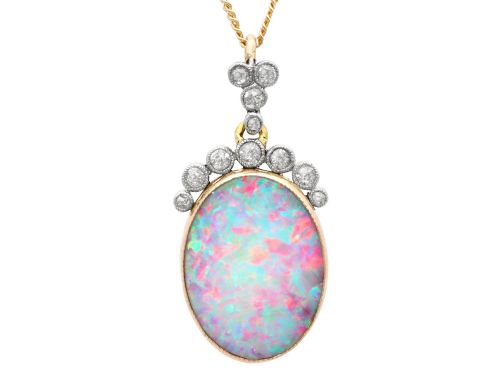
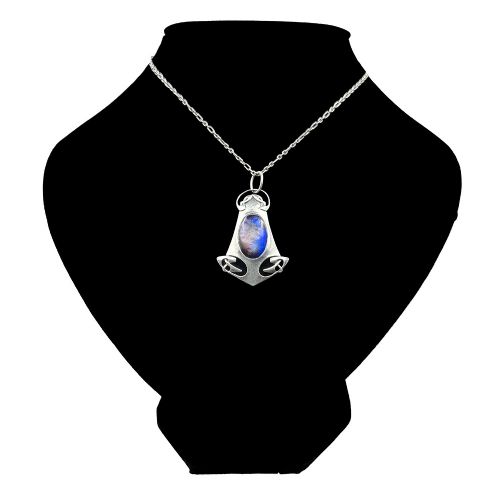
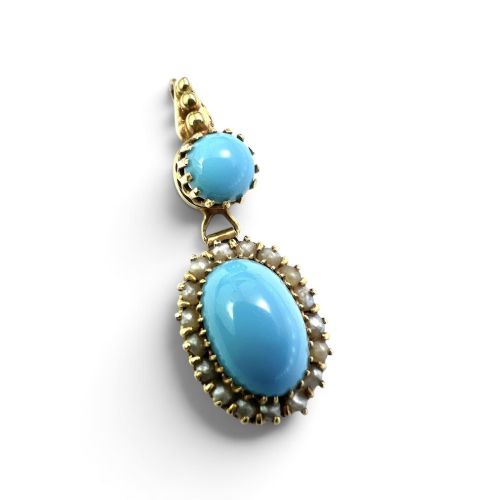
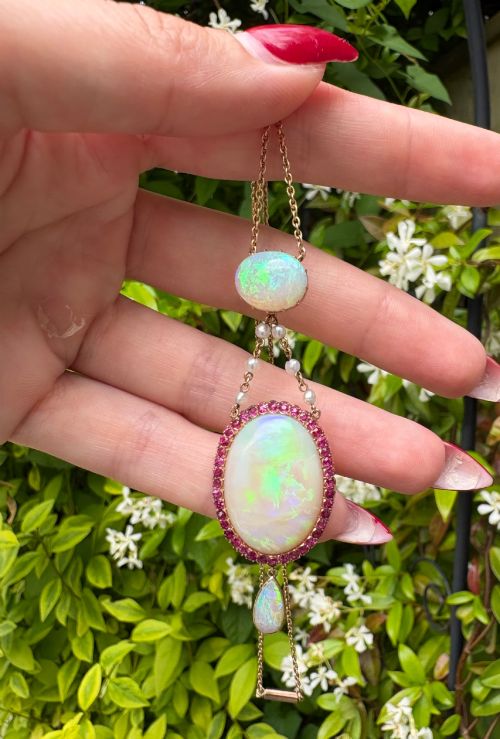
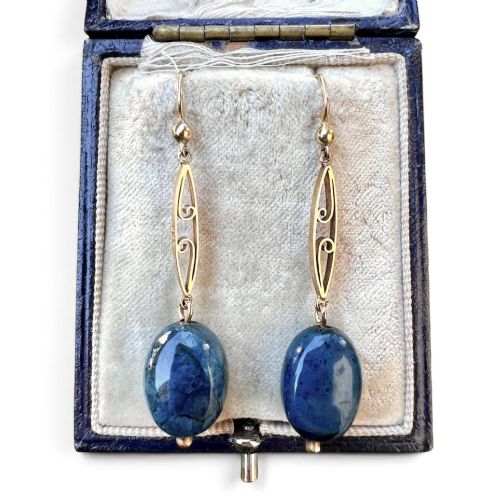
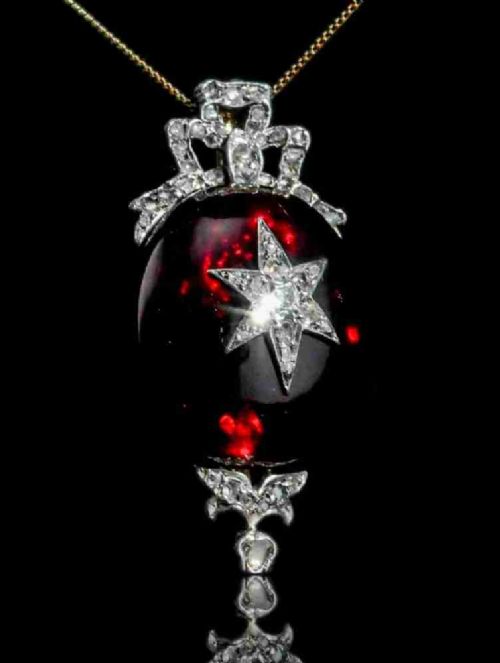
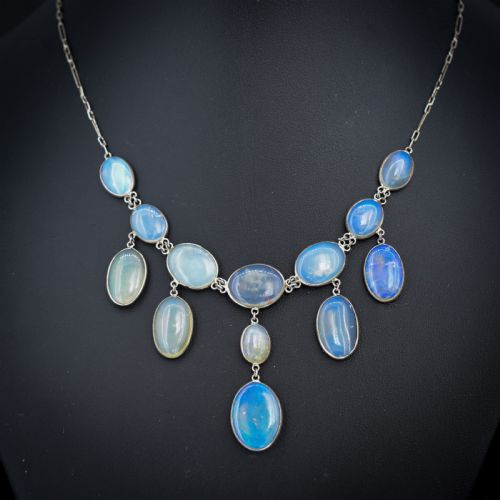
Victorian examples frequently display deep garnets, opals, and turquoise, often framed by seed pearls or set in yellow gold with Etruscan revival detailing. Edwardian and Art Deco iterations lean towards platinum and white gold, pairing opals and sapphires with diamonds in lighter, geometric or flowing lines. Arts and Crafts pieces showcase hammered silver paired with moonstones, chalcedony, and turquoise.
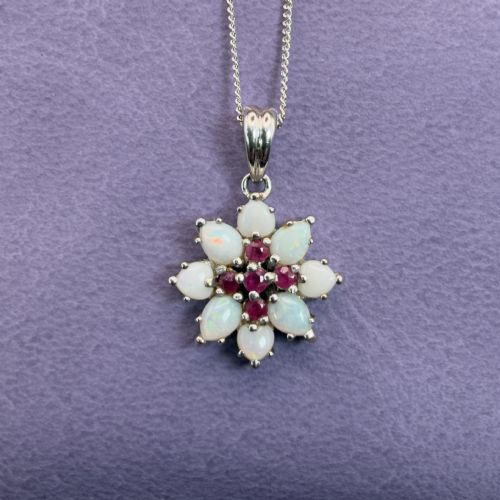
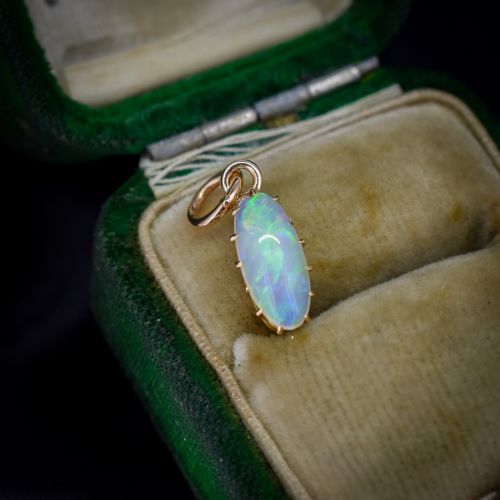
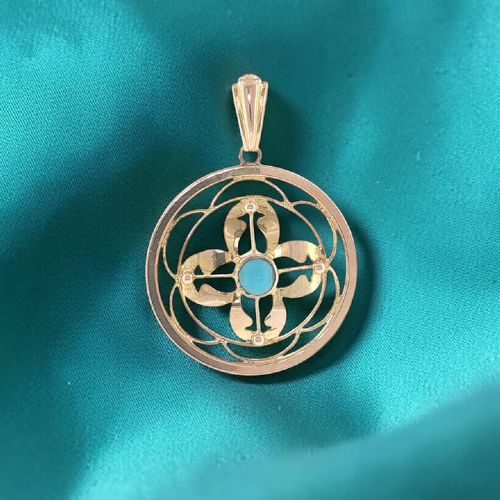
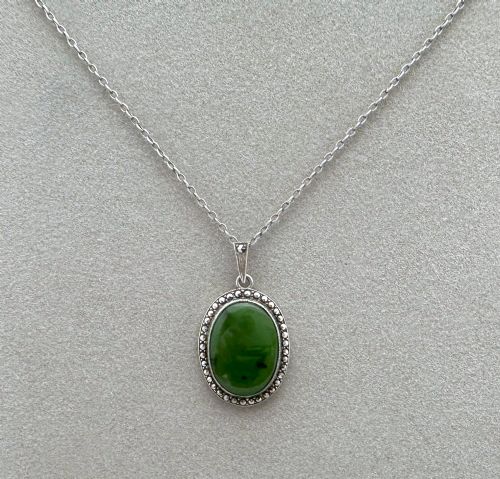
Most entries function as pendants on necklaces, though several double as brooches with integrated pin stems and loops. The stones themselves include opal, moonstone, turquoise, garnet, jade, apatite, and sapphire, shaped into ovals, stars, hearts, and teardrops.
How they were made
Goldsmiths and silversmiths shaped the precious metals using casting, wirework, granulation, and hand-beating techniques suited to each period. Gold carat weights range from nine to eighteen carats, alongside sterling silver, silver gilt, and platinum. Stones were typically secured in closed or open-backed collet settings designed to protect the rounded base of the cabochon.
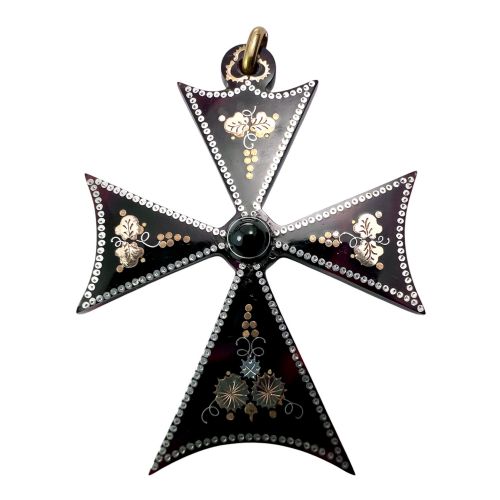
Decorative elements such as enamel, seed pearls, and small accent diamonds were hand-set into the metal mounts. Arts and Crafts examples display visible hammer marks and handcrafted bezels that emphasise the individual character of each moonstone or opal. Etruscan revival pieces incorporate intricate wire filigree and tiny gold granules soldered directly onto the metal surface.
Antique Cabochon Pendant Retail Price Guide 2026
Typical asking prices for cabochon pendant among the pieces listed under this phrase on Sellingantiques today, from the lower quarter to the upper quarter. They describe what is for sale here now, not the wider market.
Periods represented across the pieces include the Victorian era, the Edwardian period, the Arts and Crafts movement, Art Deco, and the nineteenth century.
What varies in quality
Quality rests upon the optical characteristics of the central cabochon and the structural integrity of the metalwork. Opals with strong play-of-colour, luminous moonstones with distinct adularescence, and high-grade turquoise command attention. The weight and purity of the gold, platinum, or silver mounts further define the standard of the piece.
Craftsmanship sets apart standard production from exceptional studio work, particularly within Arts and Crafts creations bearing named attribution. The precision of the setting work, the matching of secondary seed pearls or diamonds, and the survival of original components such as pins and suspension loops govern the overall execution.
W & G Neal·The Gaskins·Mary Thew·WH Haseler·Liberty and Co·Dorrie Nossiter·George Hunt
The Antique Cabochon Pendant Glossary
- Cabochon
- A gemstone shaped and polished with a rounded, convex upper surface and typically a flat base, rather than being faceted. This cut is used for stones like opals and moonstones to display their internal light effects.
- Adularescence
- The optical phenomenon where a milky, bluish light shimmers across the surface of a polished moonstone as it moves. It results from light scattering between microscopic layers of different feldspar minerals.
- Collet setting
- A band of metal that encircles the girdle of a gemstone to hold it securely in place within the jewellery mount. It can be left plain or decorated with millegrain or granulation.
- Parure
- A matching set of jewellery designed to be worn together, typically including a necklace, earrings, and a brooch. Surviving sets unite stones and metalwork across multiple matching components.
- Etruscan Revival
- A nineteenth-century design style inspired by ancient Italian metalwork discoveries, featuring applied wirework and tiny gold granules. Artisans utilised these classical motifs on heavy gold pendants and brooches.
Antique Cabochon Pendant: Frequently Asked Questions
What is a cabochon stone?
A cabochon is a gemstone cut with a smooth, rounded top and a flat or slightly curved bottom, lacking the flat planes known as facets. This historic cutting style allows stones with optical phenomena, such as star garnets and opals, to display their internal qualities fully.
Jewellers have utilised this method for millennia because it preserves more of the rough stone and protects softer minerals from chipping along sharp edges. On these pages, you will find opals, moonstones, and turquoise shaped in this manner.
How do I wear a convertible pendant brooch?
Convertible pieces feature a fold-down or detachable pin stem on the reverse alongside a fixed loop for a chain. This dual function allowed Victorian and Edwardian owners to pin the ornament to a bodice or suspend it from a ribbon or gold chain.
When wearing the piece as a pendant, tuck the pin safely against the backing to prevent snagging on clothing. Ensure the hinge and catch mechanism remain secure before suspending the jewel around your neck.
How do I care for antique opals?
Antique opals require gentle handling because they contain water within their microscopic silica spheres and possess a moderate hardness. Avoid exposing them to sudden temperature shifts, harsh chemicals, ultrasonic cleaners, and prolonged immersion in water.
Store your opal pendant separately in a soft pouch to prevent scratching from harder gemstones like diamonds. Wearing the piece regularly allows natural moisture from the skin to maintain the stone's environment.
How do I tell Victorian from Edwardian pieces?
Victorian jewellery, spanning the mid to late nineteenth century, frequently employs yellow gold, garnet, turquoise, and heavy symbolic motifs like mourning hair compartments and Etruscan granulation. The aesthetic leans towards robust warmth and historical revival styles.
Edwardian pieces, dating from the early twentieth century, favour platinum and white gold paired with diamonds and pale gems like seed pearls and aquamarines. The designs utilise millegrain edges and lace-like openwork to create an impression of lightness and airy elegance.