



Antique Cabochon Drop Earrings
Antique cabochon drop earrings suspend smooth, unfaceted polished stones from secure fittings, offering wearable history from Georgian, Victorian, Edwardian, and mid-century eras.
Antique Cabochon Drop Earrings
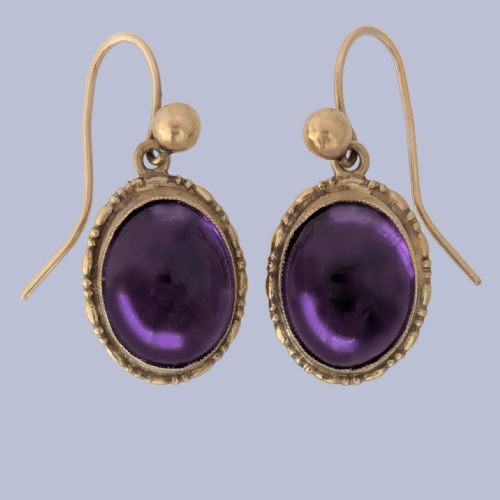
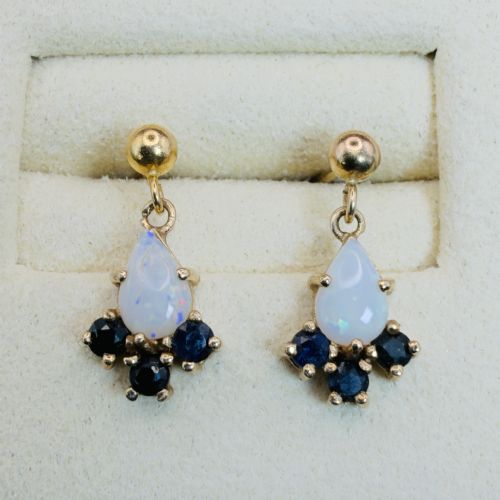
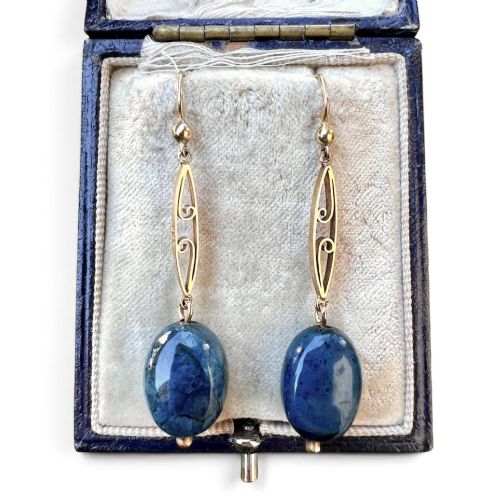
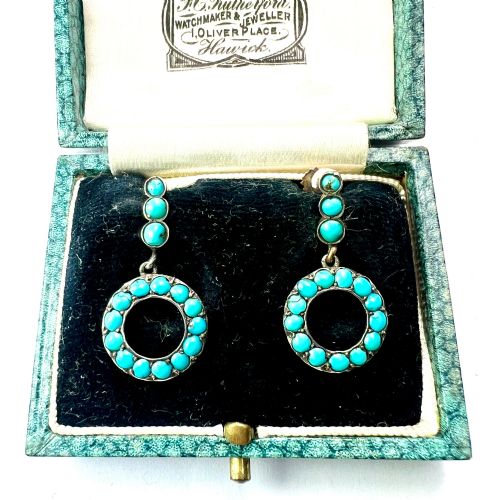
When you search for antique cabochon drop earrings, you encounter pairs that suspend rounded, dome-cut stones rather than faceted gems. These items span Georgian, Victorian, Edwardian, Arts and Crafts, Art Deco, and mid-century periods, appearing frequently as drop earrings, dangling hoops, and occasional matching jewellery suites.
The drops rely on movement, hanging just below the earlobe to catch the light across curved surfaces. You meet them in diverse configurations, from simple single-stone pendants to elaborate Etruscan Revival and Arts and Crafts designs incorporating multiple gems.
How they were made
Maker workshops shaped these pieces using gold, silver, and 15ct or 9ct yellow gold settings to secure polished stones by hand. Metalsmiths employed bezel settings and wirework to frame each smooth dome securely.
The stones themselves - turquoise, moonstone, pearl, diamond, agate, apatite, blue John, amethyst, and garnet - underwent polishing rather than multifaceted cutting to highlight their natural opaque or translucent qualities.
Antique Cabochon Drop Earrings Retail Price Guide 2026
Typical asking prices for cabochon drop earrings among the pieces listed under this phrase on Sellingantiques today, from the lower quarter to the upper quarter. They describe what is for sale here now, not the wider market.
Some moonstone drops capture an internal blue glow that Victorian wearers believed shifted with the phases of the moon.
What varies in quality
Quality rests on the selection and matching of the cabochon stones, where uniform colour, natural matrix patterns, and smooth doming distinguish finer examples. The precision of the metalwork, whether delicate Etruscan granulation or sturdy Arts and Crafts bezel construction, also marks the distinction between standard workshop output and superior craftsmanship.
The integrity of the original fixings and the harmony of design across paired drops determine the overall standing of the piece. Settings that securely hold the curved stones without obscuring their profile represent higher levels of period execution.
The Antique Cabochon Drop Earrings Glossary
- Cabochon
- A gemstone shaped and polished with a smooth, convex dome rather than faceted edges. This ancient cutting style emphasises the natural colour and lustre of opaque or translucent minerals.
- Drop earrings
- Earrings designed to hang below the earlobe, often incorporating movement through hinged or linked connections. They appear across multiple historical periods in varied lengths and drop configurations.
- Etruscan Revival
- A nineteenth-century design style inspired by archaeological discoveries of ancient Italian jewellery. It is characterised by applied wirework, tiny gold granules, and classical motifs.
- Parure
- A matched set of jewellery designed to be worn together, commonly including earrings, a necklace, and a matching ring or brooch. They utilise uniform materials and stylistic themes across all pieces.
- Bezel setting
- A method of holding a gemstone in place by means of a metal collar that wraps around the entire perimeter of the stone. This technique secures the curved edge of a cabochon firmly against the backing metal.
Antique Cabochon Drop Earrings: Frequently Asked Questions
How do I care for antique drop earrings?
These pieces require gentle handling due to the delicate nature of soft historic stones like turquoise, pearls, and moonstones. Cleaning should involve only a soft, dry cloth without harsh chemical dips or ultrasonic machines.
Store them individually to prevent the stones and metalwork from scratching against other items in your collection.
How can I tell Victorian from Edwardian earrings?
Victorian pieces often display heavier gold weights, darker garnet or banded agate stones, and elaborate Etruscan or romantic motifs. They reflect the sentimental and ornate design preferences of the nineteenth century.
Edwardian items generally shift towards lighter gold work, brighter gemstones like apatite, and more delicate, airy frameworks influenced by the transition into the twentieth century.
Were these always worn as drops?
The drop configuration was specifically fashioned to provide gentle movement and frame the jawline during social occasions. Many surviving pairs retain their original length, though some historic pieces were adapted from larger components or matching suite elements over time.