



Turquoise Drop Earrings
Turquoise drop earrings are historic items of jewellery offering distinctive blue stones suspended for movement, sought after by collectors of antique styles.
Turquoise Drop Earrings
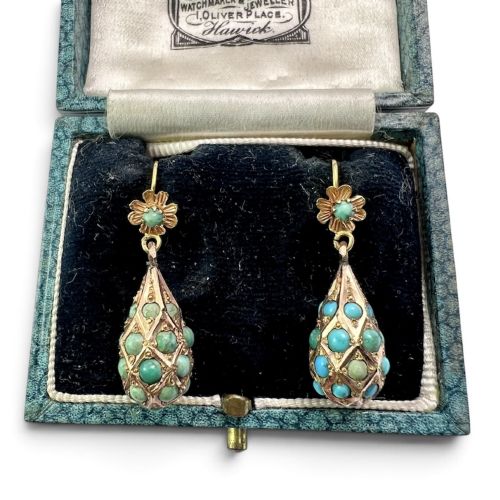
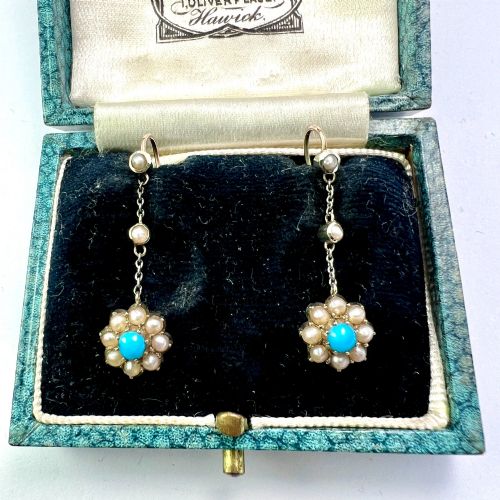
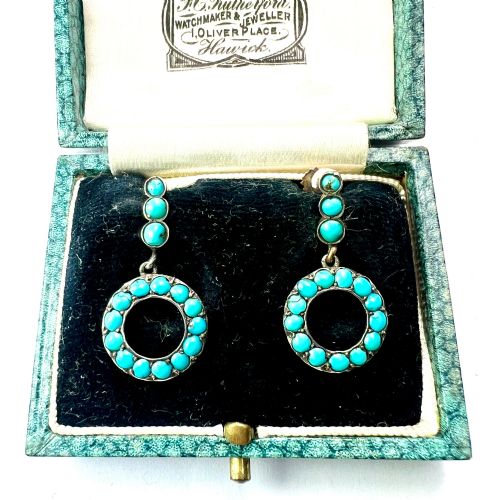
Turquoise drop earrings span several historical periods, appearing frequently in Victorian and Edwardian iterations alongside mid-century and nineteenth-century examples. These pieces typically take the form of dangling teardrop, flower, hoop, or chain designs that incorporate suspended elements for gentle movement when worn.
The materials paired with turquoise in these listings include gold, silver, fourteen-carat gold, fifteen-carat gold, nine-carat gold, sterling silver, pearl, seed pearl, and turquoise matrix. Alongside standalone earrings, the selection occasionally encompasses larger jewellery suites, sets, and parures that include matching components.
Stylistic influences range from classic Victorian and Edwardian aesthetics to Etruscan Revival, Arts and Crafts, and Art Nouveau designs. Buyers encountering this category will find both simple drop configurations and complex clustered arrangements featuring floral or horseshoe motifs.
How they were made
Goldsmiths and silversmiths shaped precious metals into settings that secure natural turquoise stones, often combining gold and silver or utilising fourteen-carat and fifteen-carat gold standards. Drop elements hang from hooks or posts, sometimes linked by delicate chains to maximise motion.
Craftsmen enhanced many designs by incorporating seed pearls or pearls alongside the central turquoise stones, arranging them in floral clusters or geometric patterns. Matrix turquoise and heavier gold work also appear, reflecting the specific metalworking techniques favoured during the nineteenth and early twentieth centuries.
Turquoise Drop Earrings Retail Price Guide 2026
Typical asking prices for turquoise drop earrings among the pieces listed under this phrase on Sellingantiques today, from the lower quarter to the upper quarter. They describe what is for sale here now, not the wider market.
What varies in quality
The finesse of the metalwork and the uniformity of the turquoise stones determine the distinction between average pieces and superior examples. Finer items display meticulous stone matching and intricate wirework or granulation typical of revivalist styles.
The structural integrity of the drop mechanism and the integration of secondary materials like seed pearls indicate the level of craftsmanship involved. Pieces forming part of a larger jewellery suite or parure often demonstrate greater cohesion in design and material selection.
The Turquoise Drop Earrings Glossary
- Turquoise drop earrings
- A pair of dangling ornaments featuring turquoise stones suspended beneath the earlobe. These items rely on hooks, wires, or lever-backs for attachment.
- Parure
- A matching set of jewellery designed to be worn together, typically comprising earrings accompanied by a necklace, ring, or brooch.
- Etruscan Revival
- A nineteenth-century design style inspired by ancient archaeological discoveries. This aesthetic utilises granulation and applied wirework on gold.
- Turquoise matrix
- Turquoise stone that retains portions of its host rock in the cut gem. This creates webbed or mottled patterns across the surface.
- Seed pearl
- A very small natural pearl, often drilled and threaded or set closely in clusters. These pearls frequently accent nineteenth-century drop designs.
Turquoise Drop Earrings: Frequently Asked Questions
What periods do these earrings come from?
The pieces span the Victorian and Edwardian eras, alongside nineteenth-century and mid-century examples. Specific design markers often align with these historical periods.
Craftsmanship and materials shift subtly across these decades, moving from heavier gold settings toward lighter Edwardian and later configurations.
How should I wear antique drop earrings?
These items suit formal occasions or daily wear, depending on their size and complexity. Their dangling design provides natural movement.
Matching sets or parures allow coordination with other pieces from the same period if desired.
Are pearls always used with turquoise?
Pearls and seed pearls appear frequently alongside turquoise, particularly in floral and cluster arrangements. However, many examples feature turquoise alone set in gold or silver.
The inclusion of pearls depends on the specific stylistic preferences of the maker and the period.
What metals support turquoise stones?
Goldsmiths utilised various grades of gold, including nine-carat, fourteen-carat, and fifteen-carat varieties, alongside sterling silver and standard silver. Dual-metal combinations also occur.
The choice of metal generally reflects the date of manufacture and prevailing stylistic conventions.