


Antique Cabinet with Plaques
An antique cabinet with plaques is a display of refined surface work, uniting fine cabinetry with decorative painted panels to elevate a room.
Antique Cabinet with Plaques
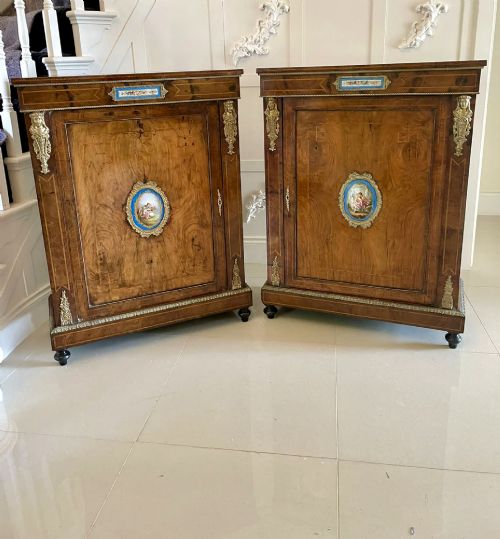
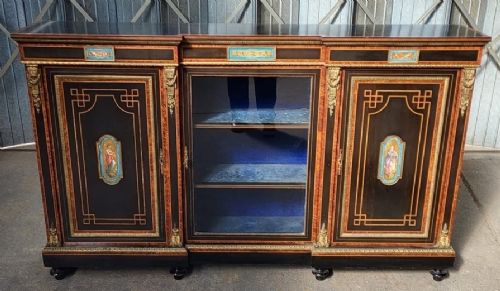
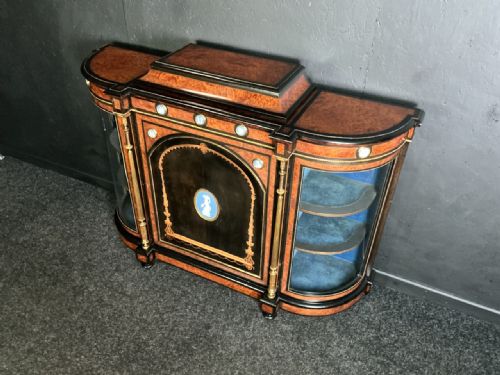
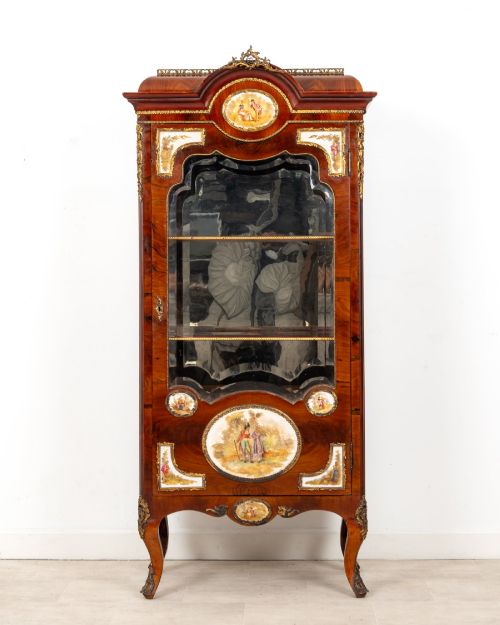
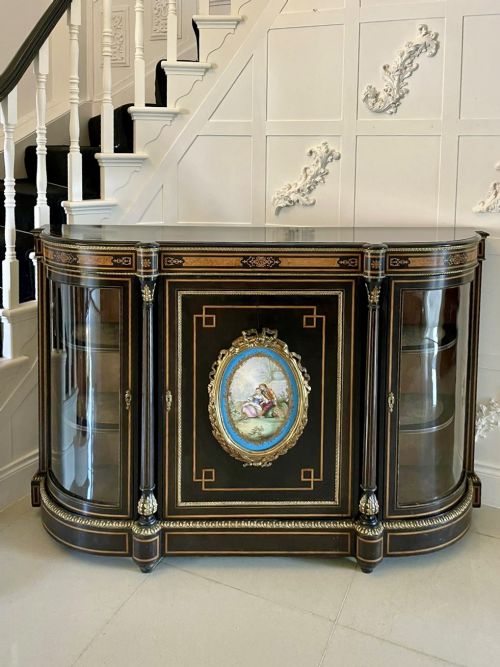
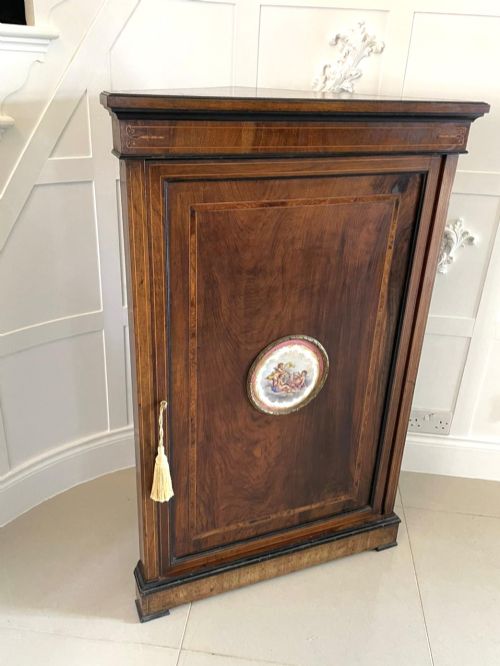
An antique cabinet with plaques brings together rich timber cabinetry and decorative porcelain or majolica inserts. Buyers seek these pieces for their combination of useful storage or display space and striking pictorial panels.
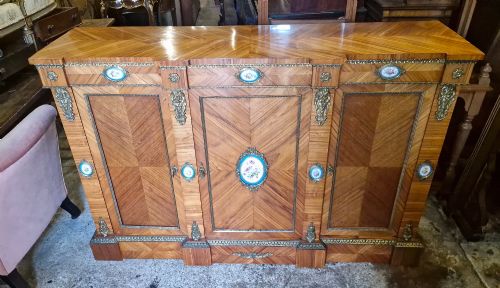
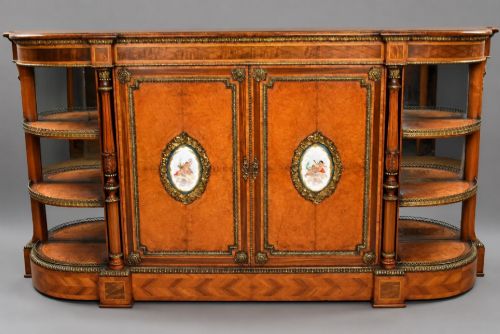
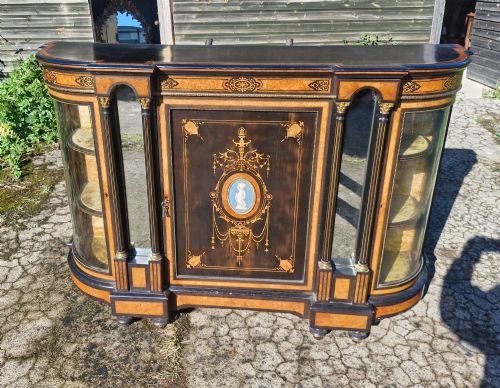
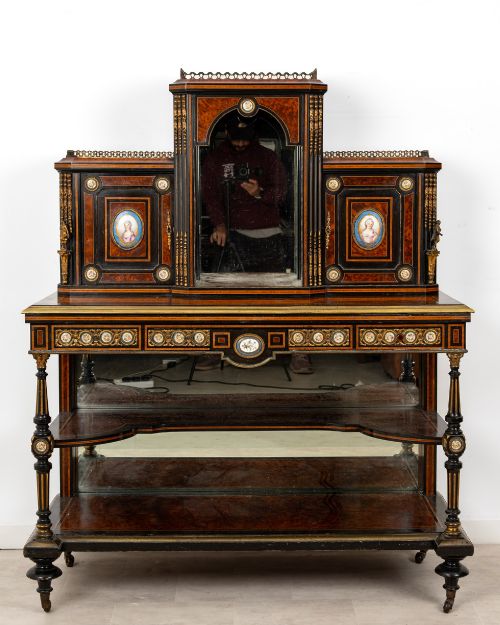
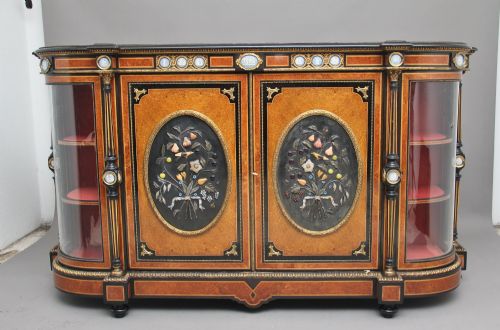
The versions most commonly met on this page span the nineteenth century, including Victorian side cabinets, credenzas, and French bureau desks. These furniture forms provide ideal flat or curved surfaces to showcase painted ceramic plaques alongside metal mounts.
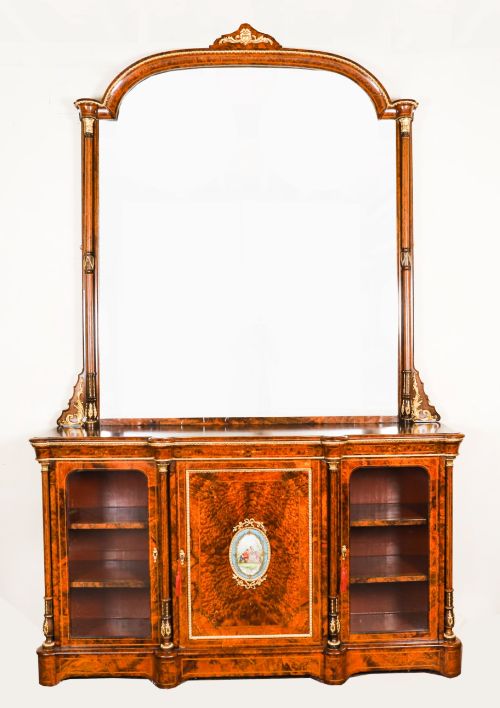
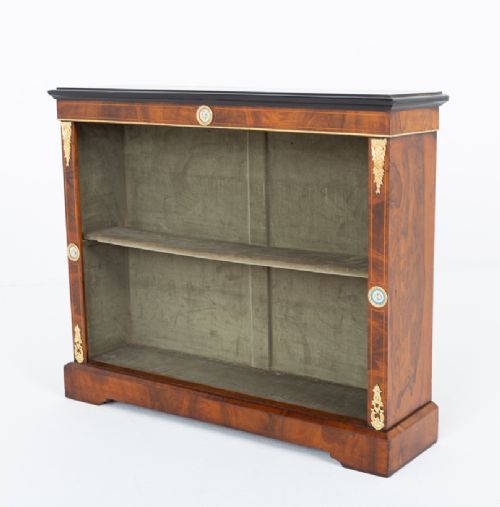
Makers integrated these ceramic panels into furniture frames using contrasting timbers such as burr walnut, kingwood, ebonised wood, and amboyna. The resulting forms range from mirrored back display cabinets to compact writing desks.
How they were made
Cabinetmakers constructed the carcases from dense hardwoods like walnut and kingwood, often applying veneers and intricate inlay. Ebonised finishes and amboyna woods provided dark or figured backgrounds that made the applied decorative elements stand out.
Ormolu mounts and brass framing secured the porcelain plaques into the wooden structure, protecting the edges of the ceramics. Glazed doors and brass details completed the assembly, uniting the metalwork, wood, and porcelain into a stable piece of furniture.
Antique Cabinet with Plaques Retail Price Guide 2026
Typical asking prices for cabinet with plaques among the pieces listed under this phrase on Sellingantiques today, from the lower quarter to the upper quarter. They describe what is for sale here now, not the wider market.
What varies in quality
Quality rests on the depth of figure in the timber veneers and the precision of the joinery shaping the carcase. Finer pieces display carefully chosen burr walnut or kingwood with balanced grain patterns across the doors and panels.
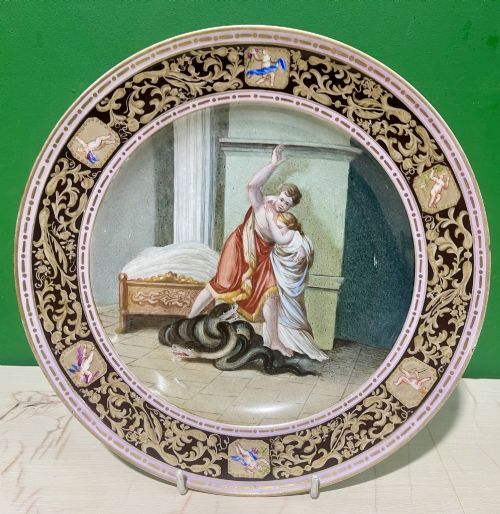
The standard of the decorative elements dictates the upper range of these furnishings, seen in the painting detail on the porcelain plaques and the weight of the ormolu mounts. Finer ceramic panels feature hand-painted botanical or figurative scenes set within gilt borders.
Milners
The Antique Cabinet with Plaques Glossary
- Ormolu
- Gilded bronze used for decorative mounts, feet, and framing on nineteenth-century furniture. It provides a bright metallic contrast to dark woods and porcelain.
- Kingwood
- A dense, richly figured tropical timber prized for its contrasting dark and golden brown stripes. Cabinetmakers used it extensively for veneering fine French desks and cabinets.
- Bonheur du jour
- A small, light writing desk featuring a cabinet or tiers of shelves on top of the writing surface. These desks often incorporate small drawers and decorative plaques.
- Credenza
- A low dining room or parlour cabinet, frequently fitted with glass doors and decorative side cupboards. Victorian examples often incorporate inlaid woodwork and porcelain plaques.
- Majolica
- A type of tin-glazed earthenware known for its bright, opaque colours. It appears on certain decorative panels and cabinet inserts from around nineteen hundred.
Antique Cabinet with Plaques: Frequently Asked Questions
What is an antique cabinet with plaques?
These pieces are nineteenth-century furniture items such as credenzas, side cabinets, and writing desks that incorporate painted ceramic plaques into their wooden structure. They combine practical storage with decorative art.
Cabinetmakers used porcelain and majolica panels as focal points, framing them with ormolu mounts and rich timbers like burr walnut and kingwood.
How do I date an antique cabinet with plaques?
Dating relies on observing the timber species, furniture styles, and the manufacturing characteristics of the mounts and ceramics. Nineteenth-century examples often display Victorian revival styles or French Louis XV influences.
Examining the construction methods inside the drawers and the style of the porcelain painting helps narrow the decade of production.
Where were these cabinets placed originally?
Wealthy households placed these furnishings in reception rooms, drawing rooms, and parlours where guests could admire the fine woodwork and painted ceramic panels. Display cabinets and credenzas served to exhibit decorative objects alongside the built-in plaques.
Bonheur du jour desks stood in private boudoirs or studies as elegant writing furniture.
How do I clean an antique cabinet with plaques?
Dust the wooden surfaces and ormolu mounts gently with a dry, soft cloth to prevent accumulation of grit. Avoid harsh chemical polishes that can damage old wood finishes and gilt surfaces.
Clean the porcelain plaques very carefully with a barely damp cloth, ensuring moisture does not seep behind the mounts into the wood.